
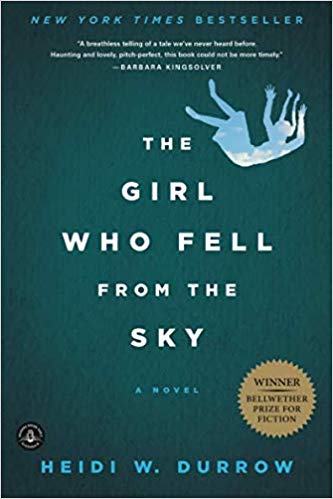
The Girl Who Fell from the Sky by Heidi W. Durrow

The Girl Who Fell From the Sky

The Girl Who Fell from the Sky

Heidi W. Durrow (Adult Fiction)

Rachel Morse is eleven years old and living with her paternal grandmother in Portland, Oregon.  Born to a Danish mother and an African-American GI father, she finds herself caught between two very different worlds and struggles to find a place somewhere in the middle.  However, it is the early 1980s and Rachel is often forced to choose between black and white: “I see people two different ways now: people who look like me and people who don’t look like me.”  She builds her world around “last-time things” (like speaking Danish or saying Mor, which means mother) and “first-time things” (like feeling shame or excluded) and lives each day storing her anger and hurt inside an imaginary bottle.  Fighting against a tragic past and facing an uncertain future, will Rachel have to give up one part of herself in order to embrace the other?

Durrow gives us a haunting and heartbreaking coming-of-age story about a biracial girl desperately trying to find her place in the world.  Like Rachel, Durrow’s mother was Danish, her father was a black serviceman, and she possesses a set of piercing-blue eyes.  We can see what Durrow must have dealt with as we see Rachel longing to fit in and be accepted.  Rachel’s backstory is tragic and unimaginable and one can only imagine the inner strength our young heroine possesses in order to avoid a fate like her mother’s.  The beginning of the book is a little confusing as Durrow floods the reader with several characters in various situations across different points in time.  The storyline eventually smooths out, but then you begin to understand the meaning behind the title.  This launches the story in an unpredictable direction and the pace never slows from there.

Perhaps the most distressing storyline belongs to Nella, Rachel’s mother.  A Danish immigrant, she is unused to the treatment her biracial children face in America (her marriage was generally accepted in Europe).  As a mother, she loves her children unconditionally and vows to protect them at all costs.  She is broken by the injustices thrown at her children and wonders why people are unable to see her children as she does: “My children are one half of black.  They are also one half of me.  I want them to be anything.  They are not just a color that people see.”

The Girl Who Fell from the Sky is haunting and harrowing.  It is not one of those feel-good books that is wrapped up in a pretty bow.  Instead, we are given a story that is raw and poignant and uncomfortably ugly but honest.  Under anyone else’s pen, the reader might be left with a sense of hopelessness, but Durrow is, in a sense, telling us her own story which, at its very core, is a story of survival.  A story where a girl refuses to be boiled down to simply this or that.  She is more than just the sum of her parts and her acceptance of this is enough to give us a relatively satisfying ending.  As Rachel says, “I’m not the new girl.  I’m not the color of my skin.  I’m a story.  One with a past and a future unwritten.”  And with that, the girl who fell from the sky realized that she had wings and could fly.

Rating: 4/5

*Book cover image attributed to www.amazon.com

 

Slaughterhouse-Five by Kurt Vonnegut

Slaughterhouse-Five

Slaughterhouse-Five

Kurt Vonnegut (Adult Fiction)

By all measures, Billy Pilgrim would be considered a lucky fellow.  He’s survived the bombing of Dresden in 1945, a POW camp, and a mountainside plane crash.  He’s married, has children, and enjoys financial security as a successful optometrist.  But, Billy also time jumps, which can prove inconvenient at times.  He’s also been kidnapped by aliens and taken to another planet where he spends his time as a zoo exhibit.  Did I mention that he’s in the sights of a hired assassin?  It’s just another day in the life of Billy Pilgrim.

Slaughterhouse-Five is considered semi-autobiographical as Vonnegut shares many of the same military experiences as his main character.  His novel is an anti-war dark comedy that delivers a bitter social commentary on the pitfalls of free will and the destructive nature of man.  It also flirts with being a bit anti-American since the description of the American POWs—as compared to the other detainees—are far less flattering and the particular slaughterhouse (Slaughterhouse-Five) chosen to hold the Americans was once used to house pigs.  Although Vonnegut was born and raised in Indiana, this novel and its message were undoubtedly influenced by the current events of the late 60s: Woodstock, the Vietnam War, the Civil Rights Protests, and the assassinations of John F. Kennedy and Martin Luther King.  Vonnegut lays it all out there and has no qualms letting us know that he was none too pleased about the current states of affairs at that time.

Vonnegut’s novel was selected by the Modern Library as one of the 100 best novels of all time, although I personally found it difficult to enjoy.  Given the time of its publication (1969), I understand the sentiments that Slaughterhouse-Five articulates, but I think less would have been more in this case.  Combining the firebombing of Dresden with time travel and then adding alien abduction on top of it left the story feeling disjointed and haphazard.  Just when the reader is feeling engrossed in a particular storyline, we are catapulted to a different time or planet.  It’s like trying to stand on the deck of a ship during rough seas and not seeing any sign of calm waters on the horizon.  Rather than being able to admire the overall view, you just want the voyage to be over so you can return to solid, stable ground.

Vonnegut also uses a lot of sensory imagery and phrasal repetition to reinforce the feeling of pain, the approach of danger, or the smell of death.  He is particularly partial to the phrase “So it goes” and one individual even took the time to count each occurrence…which turned out to be 106.  These three simple words always followed a mention of death and served as a convenient means of topic transition; however, by the fiftieth time you’ve seen it, it begins to lose its impact and has outlived its intended purpose.  Solid ground never seemed so far out of reach.

With all of the blatant anti-war messaging found throughout the book, I thought nothing stated Vonnegut’s intended message more simply and effectively than a rather benign scene where Billy jumped back in time and was watching a late movie.  It was running in reverse and showed American bombers during WWII.  As Billy watched, planes once pockmarked with bullet holes were suddenly pristine, German fighter planes were busy sucking bombs back into their holds, smoke and fire were lifted from the ravaged city, crewmen and civilians were again healthy and whole, and the dangerous minerals used to make those deadly weapons of war were safely restored back to the ground and no longer a danger.  Unfortunately, we know all too well that this didn’t happen.  So it goes.

Rating: 3/5

*Book cover image attributed to www.amazon.com
 

Astrid & Veronika by Linda Olsson

Astrid and Veronika

Astrid & Veronika

Linda Olsson (Adult Fiction)

“’And who will you dream of, Veronika?’ Astrid said, without taking her eyes off the water.  ‘With the flowers under your pillow.  Who?’  Veronika didn’t answer.  She sat with her legs pulled up and her arms clasped around them, her chin resting on her knees.  ‘I came here to escape my dreams,’ she said eventually.”

Author Veronika Bergman arrived in Stockholm, Sweden with just a few bags and her personal belongings.  Her rental home was next door to Astrid Mattson, the village witch—at least that’s what the people in town call her.  Astrid is nearly eighty years old and keeps to herself.  She doesn’t like people and has left the village only once in her life.  She likes her secrets and her solitude, but when she meets Veronika, something remarkable happens.  Something quite unexpected.  Astrid begins to care and slowly these two women discover that although loss and heartbreak connect them, friendship would forever bind them.

Astrid & Veronika is Linda Olsson’s first novel and was originally published in New Zealand under the title Let Me Sing You Gentle Songs.  Her writing is fluid and the storytelling is effortless and captivating.  Olsson gives readers Veronika and Astrid—two women tormented by their past, haunted by their memories, and brought together by fate.  These two restless souls form a committed bond that becomes instinctive—each aptly anticipating the other’s needs and providing comfort, support, and understanding.

I truly enjoyed this book, but found that there were too many unanswered questions that kept me from wholly appreciating Olsson’s extraordinary debut work.  In particular, Astrid’s story had one pivotal plot point that left me confused and frankly horrified at the choice she made.  Her backstory lacked sufficient detail that might have allowed me to be more sympathetic to her and the action she took.  Instead, Olsson put the burden on me to draw my own conclusions, which is seldom a sufficient or satisfying solution.

Olsson’s original book title came from a poem by Karin Boye called “Min stackars unge, My poor little child”, which she includes in her book.  It accurately describes our heroines and reads in part,

“My poor child, so afraid of the dark,

who have met ghosts and another kind,

who always among those clad in white

glimpses those with evil faces,

now let me sing you gentle songs,

from fright they free, from force and cramp.”

Astrid and Veronika are two women separated by age and circumstance but connected through the ghosts of their pasts.  Both lost mothers and loves, but through patience and understanding, they formed their own gentle song and found the strength and courage to live and to love again.

Rating: 4/5

*Book cover image attributed to www.amazon.com
 

The Distinguished Guest by Sue Miller

The Distinguished Guest

The Distinguished Guest

Sue Miller (Adult Fiction)

“It is probably fair to ask to what extent Lily Maynard is conscious of the effect she makes, but it’s not a question you’ll easily find the answer to.”

Lily Roberts Maynard reached literary fame at age seventy-two with The Integrationist: A Spiritual Memoir.  She’s had moderate success with various fictional short stories that followed, but nothing to the scale of her memoir.  Now Lily, who was once celebrated and sought after, finds herself living in relative seclusion with her architect son, Alan, and his wife as Parkinson’s disease slowly consumes her body and mind.  Finding themselves once again under the same roof, both Lily and Alan confront decisions made in the past while trying to find a way to move forward.

This is the third book by Sue Miller that I’ve read (the other two being The World Below and Lost in the Forest) and I continue to find myself underwhelmed with her work.  The Distinguished Guest is described as a “moving story of a mother and son”, but in reality, Miller gives us a story of a mother and son…and her late husband…and her deceased parents, as well as a son…and his wife…and his two siblings…and his two sons.  Throw in a visiting journalist who has her own messy backstory and you have a novel simply overburdened and overwhelmed with relationships.  This might be the reason I have trouble connecting with Miller’s books.  She inundates her stories with too many character profiles, backstories, and conflicts that spread the reader’s focus entirely too thin and leave little or nothing left to hold onto.  Just as “too many cooks spoil the broth”, Miller gives us far too many relationships that ultimately spoil the story.

I wish I liked this book more since there are several interesting and important issues that Miller encounters head on: race relations, religious faith versus spirituality, social conformity, and infidelity.  But these subjects are not enough to lift The Distinguished Guest from its own emotional saturation and social mire.  Ayn Rand once said, “If it’s worth doing, it’s worth overdoing.”  In this case, a few less cooks would have made for a much more pleasing broth.

Rating: 3/5

*Book cover image attributed to www.amazon.com
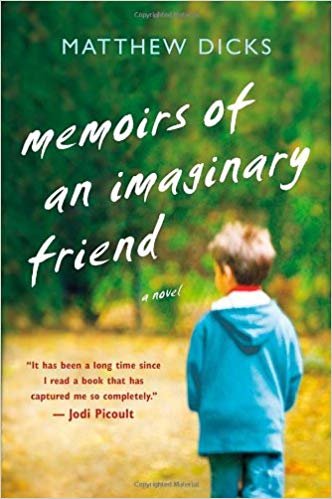
 

Memoirs of an Imaginary Friend by Matthew Dicks

Memoirs of an Imaginary Friend

Memoirs of an Imaginary Friend

Matthew Dicks (Adult Fiction)

Max Delaney is eight years old, in the third grade, and likes rules.  In fact, he likes lots and lots of rules.  Rules like bedtime is at 8:30 p.m. (no sooner and no later) and no breakfast after 9:00 a.m. or only wearing seven pieces of clothing at one time (not counting shoes).  This is who Max is and this is his world and nobody knows this world better than Budo—Max’s imaginary friend.  Budo knows Max inside and out.  He talks to him, plays with him, and watches him every night before he goes to sleep.  Budo is Max’s best friend and as long as Max thinks Budo is real, Budo won’t disappear and NOT disappearing is very important to Budo.  But when Max doesn’t come home from school one day, Budo is forced to decide between Max’s freedom and his own possible extinction.

Memoirs of an Imaginary Friend is narrated by Budo who invites us to share his life with an extraordinary little boy with autism.  According to the Center for Disease Control, approximately 1 in 59 children was diagnosed with an autism spectrum disorder (ASD) in 2018, so it is very likely that you (like me) know someone with autism.  Dicks’s description of Max and his habits, daily activities, and mannerisms are meticulously detailed and painfully accurate.  Those familiar with autism know all too well the helplessness that Max’s parents experience on a daily basis.  Their never-ending quest for “normalcy” only adds to their compounded stress while their desire to connect with their child is heartbreaking in its futility.

Dicks just doesn’t deliver an accurate portrayal of a child who, as Budo says, “…doesn’t live on the outside.  Max is all inside.”, but he also gives us a book of devotion and friendship.  It’s a story about putting someone else’s wants and needs above your own; about doing what is right versus what is expedient; and about finding that inner strength that you never knew you possessed.  Budo often said that Max was the bravest little boy in the world: “Max is not like any other person in the whole world.  Kids make fun of him because he is different.  His mom tries to change him into a different boy and his dad tries to treat him like he is someone else.  Even his teachers treat him differently, and not always nicely.  With all that, Max still gets out of bed every morning and goes to school and the park and the bus stop and even the kitchen table.  But you have to be the bravest person in the world to go out every day, being yourself when no one likes who you are.”

This novel successfully checks all the boxes: suspenseful, emotional, insightful, compelling, humorous, heartwarming, chilling, and simply unforgettable.  Max and Budo will stay in your heart and mind long after you’ve read the last page.  People often said that Max couldn’t see the forest for the trees, as people with autism generally hone in on the small details without seeing the overall bigger picture.  Perhaps Max can’t see the forest for the trees, but he does see the blade of grass and the rock and the ladybug and the clover and perhaps that alone is something to be celebrated and appreciated.

Rating: 5/5

*Book cover image attributed to www.amazon.com
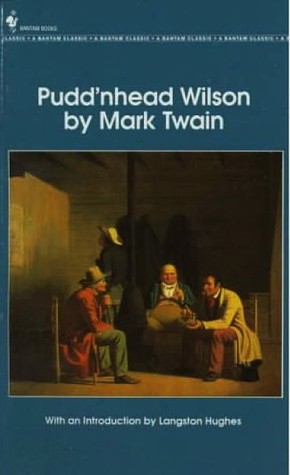


Pudd’nhead Wilson by Mark Twain

puddnheadwilson

Pudd’nhead Wilson

Mark Twain (Adult Fiction)

Thomas Paine once said, “Titles are but nicknames, and every nickname is a title.”  Whichever you choose to use—title or nickname—one thing is for certain and that is Mr. David Wilson has got himself a doozy.  David Wilson is a lawyer and a newcomer to Dawson’s Landing, a slaveholding town on the Missouri side of the Mississippi River.  Since irony is apparently lost on the good folks of Dawson’s Landing, Mr. Wilson’s first (and last) attempt at humor falls somewhat flat and results in the people thinking their newest citizen is a fool; therefore, it is only reasonable that they give him the equally fitting nickname of “Pudd’nhead”.  Fortunately, what Pudd’nhead lacks in comedy he more than makes up for with fads.  He has a penchant for palmistry and finger marks and is so enamored with the latter, he goes all around town collecting as many as he can from anyone he meets.  Little does he know how useful these marks will prove to be when a case of mistaken identity, a series of robberies, and a brutal murder will ultimately point to the fact that perhaps Pudd’nhead Wilson isn’t such a fool after all.

Pudd’nhead Wilson is part murder mystery, part social commentary, and part psychological study of nature versus nurture.  Combined, it’s a humorous and thought-provoking story of good intentions, broken promises, honor, love, and the ultimate price of sin.  Twain gives us a story of two babies—one free and one slave—who were switched at birth and grow up according to their station in life.  The slave is bound to his master while the other is bound by his uncle’s and society’s expectations.  Twain also delivers one of the most infuriating and insufferable characters ever to grace the written page (honestly, you just want to reach in and give him a good wallop).  Our young Tom, who has been given every privilege imaginable, is crass, spoiled, smug, selfish, ungrateful, untrustworthy, and cowardly.  If ever there was a character truly deserving of a comeuppance, it would be Tom.

Mark Twain was born in the slave state of Missouri and slavery was a central theme in his writings.  However, Pudd’nhead Wilson doesn’t focus so much on slavery as it does on two men and how their lives are ultimately determined by the cradle in which they sleep.  A simple switch and both lives are irrevocably changed forever.  One man is given everything only to squander it away while the other is given nothing, but makes the most of what little life has to offer.  Pudd’nhead Wilson is a commentary on grace versus greed, dignity versus disgrace, and affection versus apathy and Twain delivers it all masterfully.  But of course, Mark Twain would know a thing or two about fools.  After all, it was he who gave us the quote, “It is better to keep your mouth closed and let people think you are a fool than to open it and remove all doubt.”  Oh, if only Pudd’nhead had known.

Rating: 5/5

*Book cover image attributed to www.goodreads.com


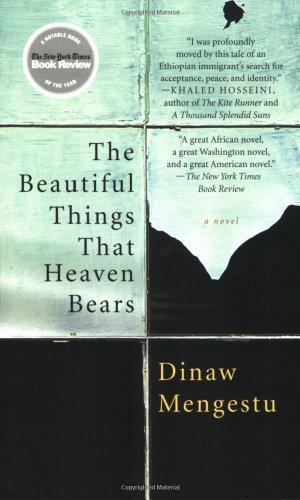
The Beautiful Things That Heaven Bears by Dinaw Mengestu

the beautiful things that heaven bears

The Beautiful Things That Heaven Bears

Dinaw Mengestu (Adult Fiction)

Seventeen years ago, Sepha Stephanos fled his home and the revolution in Ethiopia for the United States.  He shares an apartment with his uncle, attends college, and pursues the American dream.  Years later, Sepha owns and operates a grocery store in a poor and crime-ridden part of Washington, D.C.  As dilapidated buildings are bought and renovated and later occupied by affluent professionals, the neighborhood begins to experience a rebirth while Sepha experiences his own sense of awakening when he befriends his white neighbor Judith and her biracial daughter.  But as racial tensions rise within the neighborhood, Sepha soon finds that family and stability are once again threatened by forces beyond his control.

Mengestu is a talented writer whose words dance across the page and read like a finely-crafted poem.  When describing Judith’s house, he writes, “Its elaborately tiled roof, flaking like dried skin, was echoed in the shutters that still clung out of stubbornness to the delicately molded windows arched like a pair of cartoon eyes on both sides of the house.”  Unfortunately, the beauty of Mengestu’s prose isn’t enough to overcome an unsympathetic protagonist, as well as a tedious storyline that offers a wonderful description of the streets, sights, and sounds of the District of Columbia, but little else.  Had this novel been a memoir, I would understand and almost excuse the depressing and despondent nature of this book.  But since this is a work of fiction, it’s not clear why Mengestu made Sepha so unlikeable and unrelatable.  For example, Sepha has been in America for 17 years, but has managed to make only two friends (both fellow African immigrants).  Also, this same individual—who can wax Dante, Dickinson, and Dostoevsky with the best of them—is at an utter loss as to why his business is doing so poorly when he keeps inconsistent store hours (he opens the store when the mood strikes him) and stocks expired food on dusty shelves that sit atop dirty floors.

The Beautiful Things That Heaven Bears began like Sepha’s expectations when he came to America: full of hope and promise.  But as Sepha once said to his friend Kenneth, “Once you walk out on your life, it’s difficult to come back to it.”  That was almost the feeling I had with this book.  The constant self-pitying and overabundance of defeatism that can be found on just about every page made it difficult to come back to this book and to Sepha…and he deserves much better than that.

Rating: 3/5

*Book cover image attributed to www.textbookstar.com


Lunch at the Piccadilly by Clyde Edgerton

lunch at the piccadilly

Lunch at the Piccadilly

Clyde Edgerton (Adult Fiction)

Carl Turnage is watching his beloved Aunt Lil—the last leaf of his family tree—slowly slip through his fingers.  Seeing that she is no longer safe living alone in her apartment and quite unreliable behind the wheel of her car, Carl sends her to a convalescent home to recuperate after suffering from a fall.  There she joins several other residents including Flora Talbert (who owns four colored housecoats and has an obsession with footwear), Clara Cochran (has a glass eye and a penchant for spewing obscenities), Maudie Lowe (the little woman), Beatrice Satterwhite (owns the “Cadillac” of walkers), and L. Ray Flowers (who is quick with a sermon and always looking for a song).  Despite the laidback atmosphere that Rosehaven Convalescence Center offers, Aunt Lil isn’t ready to take it easy just yet.  She wants adventure and she is bound and determined to find it…one way or another.

Lunch at the Piccadilly clocks in at 238 pages (not counting the Epilogue).  After reading ninety-three percent of the book, it inexplicably fell apart.  It was absolutely agonizing to see this witty and charming book careen so horribly and fatally off course.  The last few pages lacked what the entire book simply overflowed with:  heart and soul.  Edgerton’s novel was a poignant, funny (with a few laugh-out-loud moments), and compassionate book with characters dealing with loss of mobility, loss of independence, and loss of memory.  He gives us several women with an insatiable zest for life, but know that the mortality clock is ticking louder and louder with each passing day.  Why this same passion and fervor failed to carry through until the last page is both confusing and disappointing.  However, the ending wasn’t the only problem.  There was also a salacious backstory that kept resurfacing throughout various points of the story.  This past event between two of Rosehaven’s residents really had no purpose, lent no value to the story, and only managed to introduce some unneeded drama and friction.  Also, L. Ray’s need to break out into lengthy religions sermons broke the momentum of the story and was irritating at best.

It truly was heartbreaking and frustrating to see a book with this much promise and value self-destruct so quickly.  I felt a little duped in the emotional commitment I invested in caring about these sassy, snarky, and spirited seniors who are making the best of what little life they have left.  In the end, I felt as if this book was like one of Rosehaven’s residents who stands steadfastly by the front door, waiting for visiting family or friends that will never come.  No matter how many times I might flip back in the book, looking tirelessly for my sense of closure, I realize that that too will never come.

Rating: 3/5

*Book cover image attributed to www.amazon.com
 

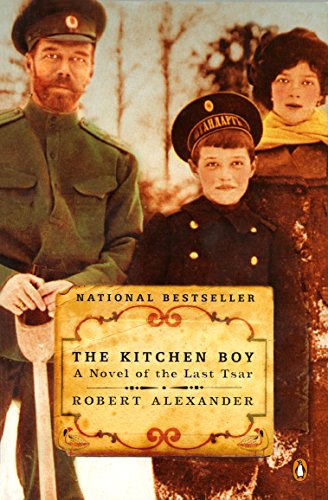
The Kitchen Boy: A Novel of the Last Tsar by Robert Alexander

the kitchen boy

The Kitchen Boy: A Novel of the Last Tsar

Robert Alexander (Adult Fiction)

“My name is Mikhail Semyonov.  No, my real name—the one given to me at birth—was Leonid Sednyov, and I was known as Leonka.  Please forgive my years of lies, but now I tell you the truth.  What I wish to confess is that I was the kitchen boy in the Ipatiev House where the Tsar and Tsarista, Nikolai and Aleksandra, were imprisoned…and I saw them shot.  Trust me, believe me, when I say this: I am the last living witness and I alone know what really happened that awful night…just as I alone know where the bodies of the two missing children are to be found.  You see, I took care of them with my own hands.”

Mikhail (Misha) Semyonov is ninety-four years old.  He’s a man who’s tired of living with the knowledge of what he has caused, what he has seen, and what he has done.  Before he dies, he begins dictating his story into a small black tape recorder that will be given to his granddaughter upon his death.  Misha desires neither understanding nor absolution.  He merely wants the truth to finally be known and perhaps, at last, it will.

It’s one thing to read about the execution of the Romanov family during the late-night/early hours of July 16-17, 1918.  The information gleaned from a history book or online is rather antiseptic—a blurb here, a mention there.  On the contrary, what we get from Robert Alexander is an emotional, personal, and in-depth portrayal of a father, a mother, and their five children.  We get a glimpse of Nikolai Aleksandrovich and Aleksandra Fyodorovna not as Tsar and Tsarista, but as a loving husband and wife and doting parents.  Viewing them in this light makes reading about their horrific and heinous murders all the more gut-wrenching and abhorrent.  They are not merely line items, but flesh and blood who love, hate, fear, and trust.  Because of this humanistic portrayal of the royal family and the two weeks leading up to their execution, we almost forget that this is based on fact, and we futilely hold out hope for a courageous midnight rescue or a perilous, well-planned escape…although history reminds us that neither will happen.

This book held a few surprises for me.  First, the number of secret notes, letters, and diaries that not only survived, but were preserved.  I found this astonishing given the Bolsheviks’ ruthless intent to wholly wipe out the very existence of the Romanovs.  It was also interesting to learn how the Romanovs planned to smuggle their vast family fortune once they acquired liberation (I will not elaborate further should this be new to you as well).  Third, the ending was purely unexpected and opened up a whole new prospect of “What if….”.  Just when you think you’ve reached the end of the story, Alexander gives us one final jolt that depletes the room of oxygen and leaves us wishing that his work of fiction was indeed fact.  What if…

Rating: 5/5

*Book cover image attributed to www.amazon.com


The Bell Jar by Sylvia Plath

The Bell Jar

The Bell Jar

Sylvia Plath (Adult Fiction)

Esther Greenwood knew something was wrong with her that summer, and it wasn’t just the electrocution of the Rosenbergs or all the non-stop talk surrounding it.  She was supposed to be having the time of her life.  She was in New York and living the high life—a far cry from her 19 years living in a small New England town.  It was the summer of 1953 and what Esther knew for certain was that one of her troubles was Doreen.

Published in 1963, The Bell Jar was poet Sylvia Plath’s first and only novel.  Weeks after her book’s publication, Plath committed suicide at the age of 30.  Given that Plath’s personal struggles with money and depression parallels those of her main character, it is understandable why many view The Bell Jar as being semi-autobiographical.  Although this book deals with grave and bleak issues, Plath’s poetic prowess shines through giving readers a story that is poignant yet subtly lighthearted.  Although Plath’s future as a novelist would never be fully realized, she managed to give us a heroine that epitomized the women of her day.  The feminist movement saw its beginnings in 1963 and Plath put Esther right on the front lines—questioning societal views on conformity, conservatism, femininity, marriage, and family.

Much has changed since the release of The Bell Jar, but the increasing number of individuals diagnosed with depression or anxiety, as well as the rise in suicides, continue to make this novel timely and relevant.  Throughout the story, told in first-person narrative, Esther often describes herself as existing inside a bell jar: continually experiencing isolation and detachment from the outside world, always feeling that she is on display and expected to be more than she is or ever will be, and constantly struggling to be “perfect”.  When Esther learned that the famous novelist, Philomena Guinea, would be willing to pay for her treatment and education, Esther could conjure up neither gratitude nor any amount of relief: “I knew I should be grateful to Mrs. Guinea, only I couldn’t feel a thing.  If Mrs. Guinea had given me a ticket to Europe, or a round-the-world cruise, it wouldn’t have made one scrap of difference to me, because wherever I sat—on the deck of a ship or at a street café in Paris or Bangkok—I would be sitting under the same bell jar, stewing in my own sour air.”

Esther Greenwood is a young woman trapped in a life that she is tired of living, yet afraid of leaving.  During her story, I often found myself silently cheering those times when the seal of her bell jar was lifted just enough to allow a bit a fresh air to seep through.  It was during these times that I hoped Esther, and others who suffer under their own bell jar, would be able to momentarily experience a feeling of joy, worth, and hope.

Rating: 5/5

*Book cover image attributed to www.barnesandnoble.com