
Current Book Review

Balzac and the Little Chinese Seamstress by Dai Sijie

Balzac and the Little Chinese Seamstress

Balzac and the Little Chinese Seamstress

Dai Sijie (Adult Fiction)

It was in early 1971 when two “city youths”—ages 17 and 18—were banished to the mountain known as the Phoenix of the Sky.  Boyhood friends, they were to be re-educated as part of Chairman Mao’s Cultural Revolution in China.  If they were fortunate, they would be reunited with their families after two years.  But they were not the offspring of average parents.  Instead, their parents—professional, respected, educated—were classed as enemies of the people, and their chances of release currently stood at three in a thousand.  So, the two spent their days laboring in the paddy fields, working in the mines, or carrying human and animal waste on their backs.  But one fateful day, their village headman sent them to the district of Yong Jing.  That journey would culminate with the princess of Phoenix Mountain, a miller, and an author named Honoré de Balzac.

Dai Sijie himself was re-educated and spent between 1971 to 1974 in the mountains of Sichuan Province.  His experiences undoubtedly gave this novel its authenticity, depth, and richness.  I knew very little of Mao Zedong’s 10-year movement to preserve Chinese Communism through the cultural eradication of capitalism and tradition.  Needless to say, the results were disastrous: economically, politically, and societally.  Sijie gives us a glimpse of the isolation, fear, and hysteria suffered by those who were sent away through the eyes of our 17-year old narrator (unnamed) and his 18-year friend, Luo.  When the two come across a hidden collection of translated Western classics, their worlds expand as they are introduced to the foreign feelings of lust, jealousy, revenge, and honor.  Matters are further complicated when they share these novels with the local tailor’s daughter, the Little Seamstress.

I truly enjoyed this book and found it as light and airy as a basting stitch.  It read like a well-crafted fable and the scenes were sewn together seamlessly.  It was a delightful read that reinforces the idea that the written word is often just as powerful suppressed as it is unleashed.  Albert Einstein said, “A little knowledge is a dangerous thing.  So is a lot.”  Balzac and the Little Chinese Seamstress reminds us that once a book is opened, so is the mind and when the mind is opened, the heart takes flight.  Perhaps for this reason alone, there are still those in the world who wish books to remain closed.

Rating: 4/5

* Book cover image attributed to www.amazon.com 


I Don’t Know How the Story Ends by J. B. Cheaney (YA Historical Fiction)

I Dont Know How the Story Ends

I Don’t Know How the Story Ends

J. B. Cheaney (Young Adult Historical Fiction)

“The first I heard of Mother’s big idea was May 20, 1918, at 4:35 p.m. in the entrance hall of our house on Fifth Street.  That was where my little sister ended up after I pushed her down the stairs.”

Matilda Ransom was tired of the dreariness of Seattle and the restlessness of her daughters and decided that the three of them would spend the summer in California.  Isobel (Izzy) wasn’t too keen on the idea, but between her father being in France serving in the Great War and her constant bickering with her little sister, Sylvie, her mother’s mind was made up.  The family was off to visit Aunt Buzzy in Los Angeles.  Izzy would soon find herself pulled away from the security of her books and thrust into the world of early Hollywood—filled with silent screen stars, bigger-than-life directors, Keystone Cops, a moving panorama, and a headstrong boy determined to make a name for himself in film.  For a girl who loves to tell stories, this summer would undoubtedly provide Izzy with more than enough content.

Historical Fiction is my favorite genre, so when I see an interesting topic written especially for younger readers, I am beyond thrilled.  Being surrounded by everything digital, it was a joy to escape to Hollywood’s earliest years and learn more about the world of the silent screen.  Cheaney introduces her readers to such directorial deity as D. W. Griffith, Mark Sennett, and Cecil B. DeMille, as well as screen legends Charlie Chaplin, Douglas Fairbanks, and Mary Pickford.  Cheaney allows us to be a part of the action by giving us a first-hand look at staging, lighting, makeup, filming, and post-production editing.  We often forget just how skilled and talented these early filmmakers were and I, for one, am grateful to her for reminding us of their groundbreaking brilliance.

In addition to the glamour and glitz of Hollywood, this book also examines the reality of a world at war and the brave men who returned home, but forever left a part of themselves on the battlefield.  During a particularly difficult moment, Izzy’s friend, Sam, once said to her, “Some film can’t be cut” meaning that some things just can’t be fixed and some matters can’t be undone.  While the entire book is informative and entertaining, it is the last few pages that are the most touching, emotional, and poignant.  For the first time, Izzy sees her story told and knows exactly how it ends.  Izzy’s Aunt Buzzy once told her, “Life is like that—the strangest or most unwelcome, even the saddest things that happen can come to make sense in the end.”  Like the movies in early Hollywood, Izzy’s story didn’t need any sound.  All it needed was a picture…a picture of what true love really looked like.

“Remember how small the world was before I came along?  I brought it all to life: I moved the whole world onto a 20-foot screen.”—D. W. Griffith, Director, Writer, Producer.  Thank you for making the world a whole lot bigger Mr. Griffith.

Rating: 5/5

* Book cover image attributed to www.goodreads.com 


The Bell Jar by Sylvia Plath

The Bell Jar

The Bell Jar

Sylvia Plath (Adult Fiction)

Esther Greenwood knew something was wrong with her that summer, and it wasn’t just the electrocution of the Rosenbergs or all the non-stop talk surrounding it.  She was supposed to be having the time of her life.  She was in New York and living the high life—a far cry from her 19 years living in a small New England town.  It was the summer of 1953 and what Esther knew for certain was that one of her troubles was Doreen.

Published in 1963, The Bell Jar was poet Sylvia Plath’s first and only novel.  Weeks after her book’s publication, Plath committed suicide at the age of 30.  Given that Plath’s personal struggles with money and depression parallels those of her main character, it is understandable why many view The Bell Jar as being semi-autobiographical.  Although this book deals with grave and bleak issues, Plath’s poetic prowess shines through giving readers a story that is poignant yet subtly lighthearted.  Although Plath’s future as a novelist would never be fully realized, she managed to give us a heroine that epitomized the women of her day.  The feminist movement saw its beginnings in 1963 and Plath put Esther right on the front lines—questioning societal views on conformity, conservatism, femininity, marriage, and family.

Much has changed since the release of The Bell Jar, but the increasing number of individuals diagnosed with depression or anxiety, as well as the rise in suicides, continue to make this novel timely and relevant.  Throughout the story, told in first-person narrative, Esther often describes herself as existing inside a bell jar: continually experiencing isolation and detachment from the outside world, always feeling that she is on display and expected to be more than she is or ever will be, and constantly struggling to be “perfect”.  When Esther learned that the famous novelist, Philomena Guinea, would be willing to pay for her treatment and education, Esther could conjure up neither gratitude nor any amount of relief: “I knew I should be grateful to Mrs. Guinea, only I couldn’t feel a thing.  If Mrs. Guinea had given me a ticket to Europe, or a round-the-world cruise, it wouldn’t have made one scrap of difference to me, because wherever I sat—on the deck of a ship or at a street café in Paris or Bangkok—I would be sitting under the same bell jar, stewing in my own sour air.”

Esther Greenwood is a young woman trapped in a life that she is tired of living, yet afraid of leaving.  During her story, I often found myself silently cheering those times when the seal of her bell jar was lifted just enough to allow a bit a fresh air to seep through.  It was during these times that I hoped Esther, and others who suffer under their own bell jar, would be able to momentarily experience a feeling of joy, worth, and hope.

Rating: 5/5

*Book cover image attributed to www.barnesandnoble.com


Dogsong by Gary Paulsen (YA)

Dogsong.jpg

Dogsong    

Gary Paulsen (Young Adult Fiction)

During the winter, Russel Susskit and his father live in a sixteen by twenty government house in a small Eskimo village.  Come summer, both will move to the fish camps.  For now, Russel wakes up every morning to his father’s smoking-induced cough; the absence of his mother, who left with a white trapper; and the growing unhappiness he feels when he thinks of his current life and, more importantly, his future.  Russel wants to be more, but when he looks ahead, he only sees less.  Russel’s father sends him to the local shaman, Oogruk, who owns the last team of dogs in the village.  Oogruk tells Russel that he needs to discover his own song and returning to the old ways of his people may help.  Driven by a recurring dream and a team of five great red dogs, Russel heads north searching for answers and a song.

Dogsong is divided into two parts: Russel’s training with Oogruk and his solitary journey north.  It is the second part of this book that is disappointing and not particularly compelling.  We find ourselves caught in a seemingly tedious storyline loop:  run, eat, dream, repeat.  The story drags like a sled maneuvering through slush and Paulsen fails to provide enough action to hold either the reader’s interest or attention.  A sudden story twist near the end arrives far too late to save what could have been an interesting boy-versus-nature adventure story.

One notable bright spot was Oogruk’s advice to Russel about life and living.  “It isn’t the destination that counts,” Oogruk said.  “It is the journey.  That is what life is.  A journey.  Make it the right way and you will fill it correctly with days.  Pay attention to the journey.”  All too often we find ourselves consumed or distracted by the things that have little to no effect on our life or circumstances.  In hindsight, we often come to realize that it is the small things that have the biggest impact.  If we take an old shaman’s advice and simply look up, look around, and pay attention, perhaps we too can find the words to our own song.

Rating: 3/5

* Book cover image attributed to www.amazon.com 

 

Top 10 Picks for 2018

The Dusty Jacket’s Top 10 Picks for 2018*

Adult Fiction/Biography

  1. The Kitchen House by Kathleen Grissom (reviewed March 2018)
  2. Little Bee by Chris Cleave (reviewed May 2018)
  3. Whistling Past the Graveyard by Susan Crandall (reviewed June 2018)
  4. The Invisible Wall (Biography) by Harry Bernstein (reviewed June 2018)
  5. A Long Way Gone: Memoirs of a Boy Soldier (Biography) by Ishmael Beah (reviewed July 2018)
  6. The Dressmaker by Kate Alcott (reviewed July 2018)
  7. Snow Flower and the Secret Fan by Lisa See (reviewed August 2018)
  8. The Beggar King and the Secret of Happiness (Biography) by Joel ben Izzy (reviewed September 2018)
  9. The Miracle Life of Edgar Mint by Brady Udall (reviewed November 2018)
  10. The Reader by Bernhard Schlink (reviewed November 2018)

Juvenile/Young Adult

  1. My Side of the Mountain (J) by Jean Craighead George (reviewed March 2018)
  2. The Devil’s Arithmetic (YA) by Jane Yolen (reviewed April 2018)
  3. Sadako and the Thousand Paper Cranes (J Biography) by Eleanor Coerr (reviewed April 2018)
  4. Island of the Blue Dolphins (J) by Scott O’Dell (reviewed April 2018)
  5. Homeless Bird (YA) by Gloria Whelan (reviewed May 2018)
  6. Fever 1793 (YA) by Laurie Halse Anderson (reviewed June 2018)
  7. The Seven Wonders of Sassafras Springs (J) by Betty G. Birney (reviewed August 2018)
  8. The Miraculous Journey of Edward Tulane (J) by Kate DiCamillo (reviewed August 2018)
  9. The Incredible Journey (J) by Sheila Burnford (reviewed November 2018)
  10. The Terrible Thing That Happened to Barnaby Brocket (J) by John Boyne (reviewed November 2018)


*List contains selections reviewed in 2018


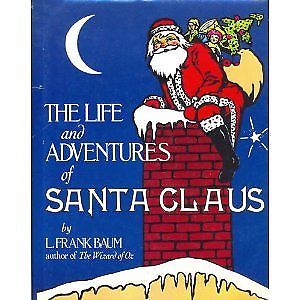
The Life and Adventures of Santa Claus by L. Frank Baum (J)

The Life and Adventures of Santa Claus

The Life and Adventures of Santa Claus     

L. Frank Baum (Juvenile Fiction)

Did you ever wonder why Santa delivers presents on Christmas Eve or why he climbs down a chimney?  Why reindeer were chosen to pull his sleigh or how the first Christmas tree came about?  All of these questions and more are answered about the jolly old man who delivers joy and happiness to every child around the globe on one very special night each year.  From his introduction as a helpless infant who was discovered by the Wood-Nymph Necile in the Forest of Burzee to the night he escaped the Spirit of Death by being given the Mantle of Immortality, the life of Santa Claus is finally shared and what you thought you knew about the man in red may never be the same again.

Two years after The Wonderful Wizard of Oz was published in 1900, L. Frank Baum delighted audiences again with another tale of mythical creatures and magical worlds.  The Life and Adventures of Santa Claus is not just a history of one of the world’s most notable and recognized figures, but it is a heartwarming story of selflessness, devotion, family, and love.  More importantly, Baum gives us a book extolling and celebrating the virtues of inclusion.  As an abandoned baby, Claus was lovingly adopted and wholly accepted within the secret and protected world of immortals.  As an adult, he once questioned whether or not wealthy children were also deserving of gifts since they already possessed so much.  The Queen of the Fairies replied, “Whether it be rich or poor, a child’s longings for pretty playthings are natural.  I think, friend Claus, it is your duty to make all little ones glad, whether they chance to live in palaces or in cottages.”

Children and adults alike can benefit from the messages Baum delivers in this classic children’s story.  The idea of extending grace, mercy, and joy to everyone we encounter is something we should aspire to every day of the year and not just one.

“’In all this world, there is nothing so beautiful as a happy child,’ says good old Santa Claus; and if he had his way the children would all be beautiful, for all would be happy.”

Merry Christmas from The Dusty Jacket.

Rating: 5/5


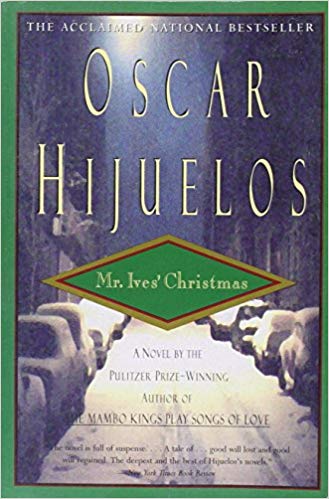
Mr. Ives’ Christmas by Oscar Hijuelos

Mr Ives Christmas

Mr. Ives’ Christmas    

Oscar Hijuelos (Adult Fiction)

It was around Christmas when a young foundling named Edward was given a home, a family, and a last name.  His adoptive father, Mr. Ives Senior (a foundling himself), managed a printing plant and gave his new son two brothers and a sister, provided him with a good amount of encouragement, and—most importantly—taught him how to pray.  While growing up, Edward basked in the cultural richness that surrounded him in New York during the 20s and 30s.  By the 1950s, his creativity landed him in a Madison Avenue ad agency where he worked, thrived, and would eventually retire.  His simple and humble life would involve marriage, children, delight and despair and through it all, Edward will come to realize that the life he imagined for himself is very different from the life that he’s been given.

Oscar Hijuelos delivers a beautifully written novel that is vividly detailed and rich in historical insights and context, yet I found myself disappointed and wishing that I had enjoyed this book more.  First, it was difficult connecting with the main character.  Hijuelos often interjects various characters’ backstories throughout the book.  This was helpful in creating history and perspective, but the constant interruptions ultimately sacrificed intimacy for insight and greatly hampered the flow of the story, which leads to the second point.  It was extremely challenging to stay immersed in the story.  Rather than focus on a central theme, this book read more like a series of random thoughts, insights, and memories.  Hijuelos simply went off on one tangent too many and the book becomes a regrettable product of information overload.

This book mainly centers on New York and spans over several decades.  In that respect, it was interesting to see a city in constant transformation and evolution during the cultural, political, and social movements of the 50s, 60s, and 70s.  I also appreciated the spiritual issues that Hijuelos covered without being overtly religious.  We see Edward’s struggle to reconcile his religion with his faith and the eventual effect it has on his physical and mental health.  But through life’s tragedies and triumphs, Mr. Edward Ives remains a sentimental, kind, and honorable man, father, husband, and friend who realizes that Christmas isn’t his story, but it’s His story—the babe born in a manger who would die on a cross.  Although Edward often finds himself grappling with a life full of uncertainty and anguish, through his faith and belief, Mr. Ives finds peace in knowing that his afterlife is secured and in good hands.  Merry Christmas, Mr. Ives.

Rating: 3/5

* Book cover image attributed to www.amazon.com


A Christmas Memory by Truman Capote (J)

A Christmas Memory

A Christmas Memory     

Truman Capote (Juvenile Fiction)

There was something special about that late November morning: the air lacked the songs of birds; the courthouse bell sounded cold and clear; and the once-empty hearth boasted a blazing fire.  All of these meant only one thing—it was fruitcake weather!

A Christmas Memory is Truman Capote’s earliest memories of his life in a small rural Alabama town.  Up until the age of ten, he lived there with a family of distant and elderly cousins.  One cousin, in particular, he was especially fond of and considered her to be his best friend.  She called him “Buddy”, after her former best friend who died in the 1880’s, and he referred to her as simply “my friend”.  Capote’s book is filled with his personal heartwarming memories of Christmas—beginning with the inaugural baking of the fruitcakes (which includes a charming visit to one Mr. Haha Jones) and followed by searching for the perfect tree, hanging wreaths on all the front windows, and making gifts for the family.  Capote’s vivid descriptions and eloquent prose allow us to smell the fruitcakes baking in the oven and luxuriate in the warmth emanating from the home’s stone fireplace.

On Christmas Eve night, “my friend” confesses to Buddy her desperate desire to give him a bicycle for Christmas, but her inability to do so for lack of money.  “It’s bad enough in life to do without something you want,” she laments, “but confound it, what gets my goat is not being able to give somebody something you want them to have.”  During this time of year, we seem to be inundated with an endless barrage of commercials, movies, and television shows that all seek to remind us about the true meaning of Christmas through animated animals, complicated romantic triangles, or splashy musicals.  I’m grateful for Mr. Capote for sharing his personal Christmas memory and for showing us in a loving, compassionate, and quiet way that we should be thankful not for the gifts that lie under our tree, but rather for those who gather around it.

Rating: 5/5

* Book cover image attributed to www.goodreads.com 


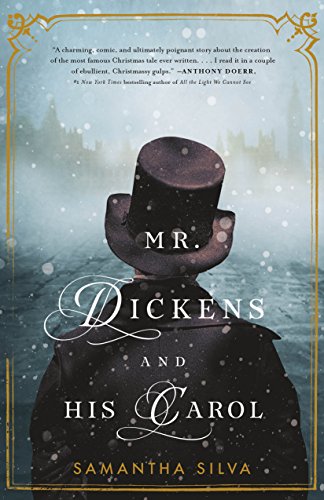
Mr. Dickens and His Carol by Samantha Silva

All during the month of December, we’re reviewing books that celebrate the season.  Enjoy!

Mr Dickens and His Carol

Mr. Dickens and His Carol    

Samantha Silva (Adult Fiction)

Throughout history, authors have credited some of their most famous works to muses: Dante had Beatrice Portinari; F. Scott Fitzgerald had his wife, Zelda Sayre; and Charles Dickens has a poor seamstress by the name of Eleanor Lovejoy.

Dickens leads an abundantly blessed and expensive lifestyle, and between his growing household, numerous philanthropic endeavors, and covering the debts of relatives, the coffers are quickly running low.  Despite past successes, Dickens’ newest book is selling poorly and the fast-approaching Christmas holiday is proving to be not so merry or bright.  Threatening to withhold future pay, his publisher insists Dickens write a “Christmas book” in just a matter of weeks.  Overwhelmed, under pressure, and fresh out of ideas, it’s enough to make even the great Boz Dickens say, “Bah, humbug.”

Weaving bits of facts with threads of fancy, Samantha Silva gives readers a wonderful behind-the-scenes look into one of the world’s most beloved Christmas tales.  The origins of Ebenezer Scrooge, Jacob Marley, Bob Cratchit, and Tiny Tim are all so plausible, that you forget this is a work of fiction and instead allow yourself to be dropped into this charming story like a cinnamon stick into a bowl of wassail punch.  As you read, you can begin to imagine and appreciate the mounting pressures and expectations placed upon a man so highly heralded yet so hopelessly human.  As Scrooge was cursed with malevolence, Dickens was equally cursed with benevolence and when life proved to be too much, he sought serenity, solitude, and anonymity.  Silva tells us that Dickens dabbled in magic and, at one point in her story, he noted that behind every illusion, fiction, and lie, was our great desire to believe.  This leads us to reconsider the idea that perhaps even a character as detestable as Ebenezer Scrooge wanted desperately to believe in something or someone but simply lacked the energy or the will to do so.  Like his creator, perhaps Ebenezer Scrooge was a man eventually beaten down by the burdens of life.

Near the end of the book, Dickens is in his darkest hour and Eleanor attempts to remind him about the importance of his books and what Christmas is truly all about: “And the colder it was, the nearer we were to each other, and to the truth of Christmas.  The truth of your books…That despite what is cold and dark in the world, perhaps it is a loving place after all.”  It’s easy to see why Silva’s book is more fiction than fact, for with words like these, a muse like Eleanor Lovejoy would indeed be difficult to find…even by the great Charles Dickens.

Rating: 4/5

* Book cover image attributed to www.amazon.com
 

The Latke Who Couldn’t Stop Screaming by Lemony Snicket (J)

The Latke Who Couldnt Stop Screaming

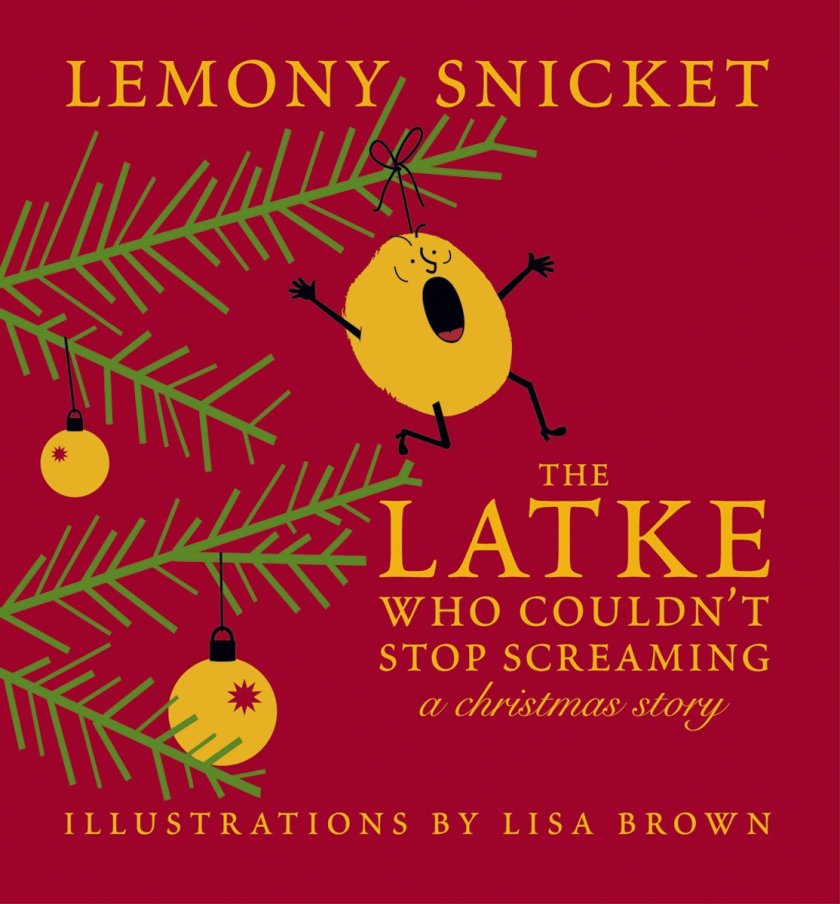
The Latke Who Couldn’t Stop Screaming: A Christmas Story     

Lemony Snicket (Juvenile Fiction)

“This story ends in someone’s mouth, but it begins in a tiny village more or less covered in snow.”

This is no ordinary Christmas story.  This is a story of a latke—that delicious, traditional part of the Hanukah celebration.  This particular latke talks—food and animals often talk in stories such as this—and this talking latke is trying very hard to explain exactly what it is and what it represents.  It’s not having much luck.  Well, YOU try explaining Hanukah to a string of lights, a candy cane, and a pine tree…ALL of which keep comparing your traditions to Christmas.  Hanukah is NOT Christmas.  It’s a totally different thing.  Will they EVER get it right?

In true Lemony Snicket spirit, this story is a wickedly funny and dastardly delightful tale about likenesses, differences, traditions, and the need to find a common thread that connects us all.  This book is a wonderful way to introduce young readers to the history of Hanukah and the symbolism behind the eight-day celebration.  Pre-readers can become a fun and interactive part of the story by providing the AAAHHHHHHHH!!! parts that the latke screams out of frustration.  Snicket describes this as “A Christmas Story”, but Hanukah is a totally different thing.  Just ask the latke.

Lemony Snicket has entertained readers with a number of unpleasant books, but this one offers a sweet and valuable lesson.  When the latke explains how Christmas and Hanukah are completely different things, this time to a pine tree, the tree replies, “But different things can often blend together.”  It would serve us all well to carry this message with us, not just at Christmas or Hanukah, but during all the days of the year.  Different things can indeed blend together—like applesauce or sour cream blends with, for instance, latkes!  AAAHHHHHHHH!!!

Rating: 4/5

Posted: 12/11/2018

* Book cover image attributed to www.amazon.com