
Slaughterhouse-Five by Kurt Vonnegut

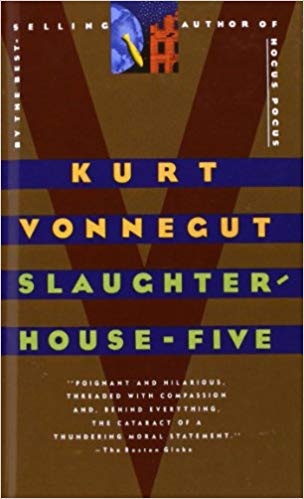
Slaughterhouse-Five

Slaughterhouse-Five

Kurt Vonnegut (Adult Fiction)

By all measures, Billy Pilgrim would be considered a lucky fellow.  He’s survived the bombing of Dresden in 1945, a POW camp, and a mountainside plane crash.  He’s married, has children, and enjoys financial security as a successful optometrist.  But, Billy also time jumps, which can prove inconvenient at times.  He’s also been kidnapped by aliens and taken to another planet where he spends his time as a zoo exhibit.  Did I mention that he’s in the sights of a hired assassin?  It’s just another day in the life of Billy Pilgrim.

Slaughterhouse-Five is considered semi-autobiographical as Vonnegut shares many of the same military experiences as his main character.  His novel is an anti-war dark comedy that delivers a bitter social commentary on the pitfalls of free will and the destructive nature of man.  It also flirts with being a bit anti-American since the description of the American POWs—as compared to the other detainees—are far less flattering and the particular slaughterhouse (Slaughterhouse-Five) chosen to hold the Americans was once used to house pigs.  Although Vonnegut was born and raised in Indiana, this novel and its message were undoubtedly influenced by the current events of the late 60s: Woodstock, the Vietnam War, the Civil Rights Protests, and the assassinations of John F. Kennedy and Martin Luther King.  Vonnegut lays it all out there and has no qualms letting us know that he was none too pleased about the current states of affairs at that time.

Vonnegut’s novel was selected by the Modern Library as one of the 100 best novels of all time, although I personally found it difficult to enjoy.  Given the time of its publication (1969), I understand the sentiments that Slaughterhouse-Five articulates, but I think less would have been more in this case.  Combining the firebombing of Dresden with time travel and then adding alien abduction on top of it left the story feeling disjointed and haphazard.  Just when the reader is feeling engrossed in a particular storyline, we are catapulted to a different time or planet.  It’s like trying to stand on the deck of a ship during rough seas and not seeing any sign of calm waters on the horizon.  Rather than being able to admire the overall view, you just want the voyage to be over so you can return to solid, stable ground.

Vonnegut also uses a lot of sensory imagery and phrasal repetition to reinforce the feeling of pain, the approach of danger, or the smell of death.  He is particularly partial to the phrase “So it goes” and one individual even took the time to count each occurrence…which turned out to be 106.  These three simple words always followed a mention of death and served as a convenient means of topic transition; however, by the fiftieth time you’ve seen it, it begins to lose its impact and has outlived its intended purpose.  Solid ground never seemed so far out of reach.

With all of the blatant anti-war messaging found throughout the book, I thought nothing stated Vonnegut’s intended message more simply and effectively than a rather benign scene where Billy jumped back in time and was watching a late movie.  It was running in reverse and showed American bombers during WWII.  As Billy watched, planes once pockmarked with bullet holes were suddenly pristine, German fighter planes were busy sucking bombs back into their holds, smoke and fire were lifted from the ravaged city, crewmen and civilians were again healthy and whole, and the dangerous minerals used to make those deadly weapons of war were safely restored back to the ground and no longer a danger.  Unfortunately, we know all too well that this didn’t happen.  So it goes.

Rating: 3/5

*Book cover image attributed to www.amazon.com
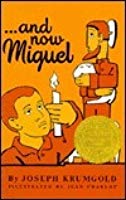
 

…and now Miguel by Joseph Krumgold (J)

And Now Miguel

…and now Miguel    

Joseph Krumgold (Juvenile Fiction)

“I am Miguel.  For most people it does not make so much difference that I am Miguel.  But for me, often, it is a very great trouble.”

Twelve-year-old Miguel is a Chavez and in the Chavez family there is always one thing—sheep.  To raise sheep is the work of the family.  Wherever you find a Chavez man, you’ll find a flock of sheep.  Miguel lives near Taos, New Mexico and is straddled between two brothers who have it easy: little Pedro is small and has all that he wants and big brother Gabriel is old enough that anything he wants he can get.  But being Miguel is not so easy.  What he wants, what he truly desires, is to go to the Sangre de Cristo mountains where the Chavez men take the sheep to graze each summer.  But year after year, Miguel is left behind.  How can he prove to his father that he is finally ready for this responsibility?  But since he is only Miguel, he knows that this will not be an easy thing to do.

…and now Miguel is based on actual people whom Krumgold spent time with and got to know.  Hearing him tell Miguel’s story and his desire to prove himself worthy to a father he adores and respects is intimate and personal.  The reader deeply connects with Miguel as he attempts to be needed and longs to make a difference.  Miguel’s biggest obstacle is not his will or desire, but simply time.  As his mother once said to him, “To become something different from what you are, it takes more than being strong.  Even a little time is needed as well.”  How often do we find ourselves pursuing opportunities that we know we aren’t ready for?

This story has so many positive messages and relatable situations for young readers (aged ten and above).  Unfortunately, it does lag quite a bit near the end when Miguel and Gabriel discuss the strengths and weaknesses of making a wish, which is actually the two coming into their own spiritual awakening through the recognition of Devine intervention and providence.  This was a weighty and lengthy dialogue between the two that could have been greatly condensed and had the same effect.  Although this is a pivotal moment for the two brothers, the momentum of the story ultimately suffered and was never able to fully recover.

Miguel reminds us that things don’t always go the way we wish or plan for life always seems to get in the way somehow.  Big surprises or unexpected announcements are never delivered or received in the way in which we hope.  Miguel is a deeply devoted boy who, in the end, realizes that his life—his fate—is not in his control.  He must rely on his faith in knowing that everything will work out as it should.  His mother and father understand this, Gabriel understands this…and now Miguel will understand this and will realize that by him just being Miguel has already made a great difference.

Rating: 4/5

* Book cover image attributed to www.goodreads.com 


Astrid & Veronika by Linda Olsson

Astrid and Veronika

Astrid & Veronika

Linda Olsson (Adult Fiction)

“’And who will you dream of, Veronika?’ Astrid said, without taking her eyes off the water.  ‘With the flowers under your pillow.  Who?’  Veronika didn’t answer.  She sat with her legs pulled up and her arms clasped around them, her chin resting on her knees.  ‘I came here to escape my dreams,’ she said eventually.”

Author Veronika Bergman arrived in Stockholm, Sweden with just a few bags and her personal belongings.  Her rental home was next door to Astrid Mattson, the village witch—at least that’s what the people in town call her.  Astrid is nearly eighty years old and keeps to herself.  She doesn’t like people and has left the village only once in her life.  She likes her secrets and her solitude, but when she meets Veronika, something remarkable happens.  Something quite unexpected.  Astrid begins to care and slowly these two women discover that although loss and heartbreak connect them, friendship would forever bind them.

Astrid & Veronika is Linda Olsson’s first novel and was originally published in New Zealand under the title Let Me Sing You Gentle Songs.  Her writing is fluid and the storytelling is effortless and captivating.  Olsson gives readers Veronika and Astrid—two women tormented by their past, haunted by their memories, and brought together by fate.  These two restless souls form a committed bond that becomes instinctive—each aptly anticipating the other’s needs and providing comfort, support, and understanding.

I truly enjoyed this book, but found that there were too many unanswered questions that kept me from wholly appreciating Olsson’s extraordinary debut work.  In particular, Astrid’s story had one pivotal plot point that left me confused and frankly horrified at the choice she made.  Her backstory lacked sufficient detail that might have allowed me to be more sympathetic to her and the action she took.  Instead, Olsson put the burden on me to draw my own conclusions, which is seldom a sufficient or satisfying solution.

Olsson’s original book title came from a poem by Karin Boye called “Min stackars unge, My poor little child”, which she includes in her book.  It accurately describes our heroines and reads in part,

“My poor child, so afraid of the dark,

who have met ghosts and another kind,

who always among those clad in white

glimpses those with evil faces,

now let me sing you gentle songs,

from fright they free, from force and cramp.”

Astrid and Veronika are two women separated by age and circumstance but connected through the ghosts of their pasts.  Both lost mothers and loves, but through patience and understanding, they formed their own gentle song and found the strength and courage to live and to love again.

Rating: 4/5

*Book cover image attributed to www.amazon.com
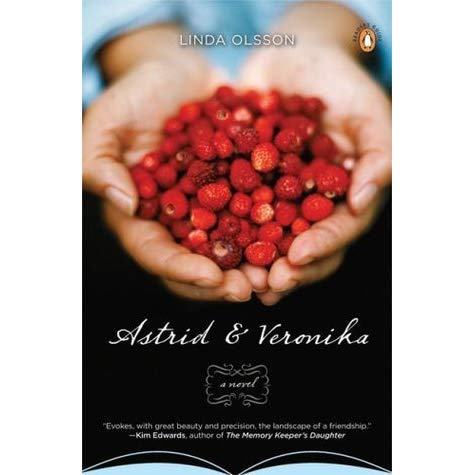
 

Bud, Not Buddy by Christopher Paul Curtis (J)

Bud Not Buddy

Bud, Not Buddy    

Christopher Paul Curtis (Juvenile Fiction)

“Here we go again.”  Bud (not Buddy) Caldwell is growing up during the Great Depression in Flint, Michigan.  He is ten-years old, currently on his third foster home, and presently being rightly pummeled by his current foster family’s son.  But Bud is determined that this will be his last foster family, as well as his last night in Flint because woop, zoop, sloop, just 120 miles away in Grand Rapids is his father, the famous jazz musician Herman E. Calloway.  At least he THINKS this is his father.  His mother wasn’t very specific about his father’s identity before she passed away, but he does have a cardboard suitcase full of clues and a heart full of hope.  But before he reaches his destination, Bud will have to confront a vampire, closet monsters, fear, and hunger.  Woop, zoop, sloop!  This is going to be the adventure of a lifetime!

Christopher Paul Curtis delights and engages readers with a charming boy who is not only an aspiring musician, but also the author of Bud Caldwell’s Rules and Things for Having a Funner Life and Making a Better Liar Out of Yourself.  Bud’s many rules give readers practical and humorous pointers on how to navigate life’s unexpected twists and turns.  For example, Rules and Things Number 3: “If You Got to Tell a Lie, Make Sure It’s Simple and Easy to Remember.” or Number 83: “If a Adult Tell You Not to Worry, and You Weren’t Worried Before, You Better Hurry Up and Start ‘Cause You’re Already Running Late.”  Although Bud was orphaned at the age of six, his mother would have been proud at the young man he has become: always saying “sir” and “ma’am”, “please” and “thank you”, and lying ONLY when absolutely necessary.  He’s brave, determined, resourceful, and fiercely optimistic during a time when hope and promise are a scarcity.

Throughout the book, Bud is always reminding people that his name is Bud, not Buddy.  His mother named him Bud after a flower bud…a flower-in-waiting.  “Waiting for just the right warmth and care to open up.  It’s a little fist of love waiting to unfold and be seen by the world,” his mother would often say to him.  We’ll never know if the name made the boy or the boy made the name, but one thing we can be sure about is that Bud, not Buddy, has plenty of love to share and enough spirit and pride to make his own warmth and to shine his own light.  Woop, zoop, sloop.

Rating: 5/5

* Book cover image attributed to www.walmart.com 

The Distinguished Guest by Sue Miller

The Distinguished Guest

The Distinguished Guest

Sue Miller (Adult Fiction)

“It is probably fair to ask to what extent Lily Maynard is conscious of the effect she makes, but it’s not a question you’ll easily find the answer to.”

Lily Roberts Maynard reached literary fame at age seventy-two with The Integrationist: A Spiritual Memoir.  She’s had moderate success with various fictional short stories that followed, but nothing to the scale of her memoir.  Now Lily, who was once celebrated and sought after, finds herself living in relative seclusion with her architect son, Alan, and his wife as Parkinson’s disease slowly consumes her body and mind.  Finding themselves once again under the same roof, both Lily and Alan confront decisions made in the past while trying to find a way to move forward.

This is the third book by Sue Miller that I’ve read (the other two being The World Below and Lost in the Forest) and I continue to find myself underwhelmed with her work.  The Distinguished Guest is described as a “moving story of a mother and son”, but in reality, Miller gives us a story of a mother and son…and her late husband…and her deceased parents, as well as a son…and his wife…and his two siblings…and his two sons.  Throw in a visiting journalist who has her own messy backstory and you have a novel simply overburdened and overwhelmed with relationships.  This might be the reason I have trouble connecting with Miller’s books.  She inundates her stories with too many character profiles, backstories, and conflicts that spread the reader’s focus entirely too thin and leave little or nothing left to hold onto.  Just as “too many cooks spoil the broth”, Miller gives us far too many relationships that ultimately spoil the story.

I wish I liked this book more since there are several interesting and important issues that Miller encounters head on: race relations, religious faith versus spirituality, social conformity, and infidelity.  But these subjects are not enough to lift The Distinguished Guest from its own emotional saturation and social mire.  Ayn Rand once said, “If it’s worth doing, it’s worth overdoing.”  In this case, a few less cooks would have made for a much more pleasing broth.

Rating: 3/5

*Book cover image attributed to www.amazon.com
 

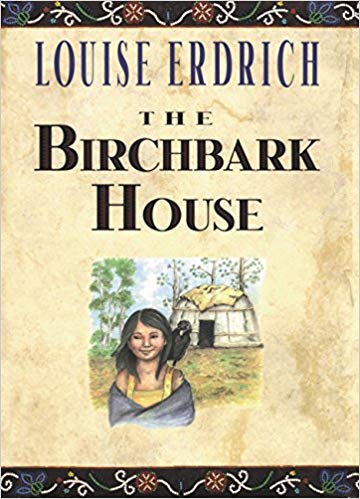
The Birchbark House by Louise Erdrich (J)

The Birchbark House

The Birchbark House    

Louise Erdrich (Juvenile Fiction)

“She was named Omakayas, or Little Frog, because her first step was a hop.”

Omakayas is seven years old and lives on an island in Lake Superior with her family.  They are Native American and belong to the Ojibwa tribe.  It is the summer of 1847 and everyone is busy preparing for fall.  Once their birchbark house is built, there are skins to soften and tan, berries to gather, and the corn patch to tend.  The family works together to ensure their survival from season to season, but all Omakayas is focused on is avoiding her pesky little brother, thinking of ways to be more like her big sister, and watching her father worry about the ever-increasing encroachment of the “chimookoman”, the white people.  Still, life is good for Omakayas and her family until that one winter night when a stranger enters their community and makes Omakayas reevaluate everything that she once thought important.

The Birchbark House is reminiscent of The Little House on the Prairie by Laura Ingalls Wilder, only Erdrich tells her story from the Native American point of view.  We follow Omakayas and her family through one full year and learn how they gather and preserve their food, construct their lodgings, deal with the harshness and dangers of their environment, treat their sick and wounded, and struggle for survival.  Any fan of our spirited prairie heroine, Laura Ingalls, will appreciate this new perspective on the same issues that we all encounter: love, loss, family, friendship, and finding your place in a very big world.

There is an Ojibwa proverb that says, “Sometimes I go about pitying myself and all the while I am being carried across the sky by beautiful clouds.”  There is point in the story where Omakayas is thrown into a very deep and dark place that tests both her strength and faith.  But in time, she realizes all the gifts that life has yet to offer and that is just enough to allow her to rise above her sorrow and look up to the sky—into the clouds—for hope.

*Reviewer’s note: The Birchbark House is the first in a series of five books by Louise Erdrich that follows the life of Omakayas and her Ojibwa community.

Rating: 5/5

* Book cover image attributed to www.amazon.com 
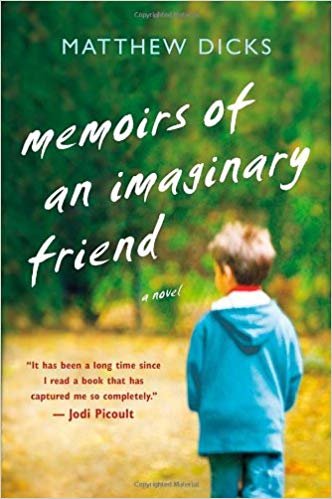
Memoirs of an Imaginary Friend by Matthew Dicks

Memoirs of an Imaginary Friend

Memoirs of an Imaginary Friend

Matthew Dicks (Adult Fiction)

Max Delaney is eight years old, in the third grade, and likes rules.  In fact, he likes lots and lots of rules.  Rules like bedtime is at 8:30 p.m. (no sooner and no later) and no breakfast after 9:00 a.m. or only wearing seven pieces of clothing at one time (not counting shoes).  This is who Max is and this is his world and nobody knows this world better than Budo—Max’s imaginary friend.  Budo knows Max inside and out.  He talks to him, plays with him, and watches him every night before he goes to sleep.  Budo is Max’s best friend and as long as Max thinks Budo is real, Budo won’t disappear and NOT disappearing is very important to Budo.  But when Max doesn’t come home from school one day, Budo is forced to decide between Max’s freedom and his own possible extinction.

Memoirs of an Imaginary Friend is narrated by Budo who invites us to share his life with an extraordinary little boy with autism.  According to the Center for Disease Control, approximately 1 in 59 children was diagnosed with an autism spectrum disorder (ASD) in 2018, so it is very likely that you (like me) know someone with autism.  Dicks’s description of Max and his habits, daily activities, and mannerisms are meticulously detailed and painfully accurate.  Those familiar with autism know all too well the helplessness that Max’s parents experience on a daily basis.  Their never-ending quest for “normalcy” only adds to their compounded stress while their desire to connect with their child is heartbreaking in its futility.

Dicks just doesn’t deliver an accurate portrayal of a child who, as Budo says, “…doesn’t live on the outside.  Max is all inside.”, but he also gives us a book of devotion and friendship.  It’s a story about putting someone else’s wants and needs above your own; about doing what is right versus what is expedient; and about finding that inner strength that you never knew you possessed.  Budo often said that Max was the bravest little boy in the world: “Max is not like any other person in the whole world.  Kids make fun of him because he is different.  His mom tries to change him into a different boy and his dad tries to treat him like he is someone else.  Even his teachers treat him differently, and not always nicely.  With all that, Max still gets out of bed every morning and goes to school and the park and the bus stop and even the kitchen table.  But you have to be the bravest person in the world to go out every day, being yourself when no one likes who you are.”

This novel successfully checks all the boxes: suspenseful, emotional, insightful, compelling, humorous, heartwarming, chilling, and simply unforgettable.  Max and Budo will stay in your heart and mind long after you’ve read the last page.  People often said that Max couldn’t see the forest for the trees, as people with autism generally hone in on the small details without seeing the overall bigger picture.  Perhaps Max can’t see the forest for the trees, but he does see the blade of grass and the rock and the ladybug and the clover and perhaps that alone is something to be celebrated and appreciated.

Rating: 5/5

*Book cover image attributed to www.amazon.com


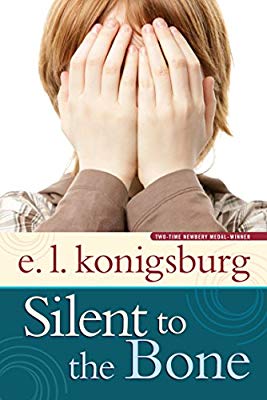
Silent to the Bone by E. L. Konigsburg (YA)

silent to the bone

Silent to the Bone    

E. L. Konigsburg (Young Adult Fiction)

“It is easy to pinpoint the minute when my friend Branwell began his silence.  It was Wednesday, November 25, 2:43 P.M., Eastern Standard Time.  It was there—or, I guess you could say not there—on the tape of the 911 call.”

They say, “For every Yin, there is a Yang”.  If that’s true, then Branwell Zamborska is the Yin to Connor Kane’s Yang.  Two friends the same age (born just weeks apart), going to the same school, and living just houses away from each other.  Connor will tell you that the biggest difference between them is that Branwell “is just plain different”.  He stands out in a crowd (quite literally—he is tall with bright red hair), is clumsy (he’s always dropping things), and likes offbeat music.  Still, they complement each other and even share secret “codes”.  Like BLUE PETER means “ready to go” and DAY CARE refers to their school.  Or SIAS, which requires you to “Summarize In A Sentence” a selected topic with points awarded afterward.  Given their closeness, it isn’t difficult to understand why Connor rushes to the aid of his friend, who has been rendered mute after his baby sister suffers a horrible accident and is struggling for life.  The message on the 911 tape is enough to send Barnwell to the Clarion County Juvenile Behavioral Center, but Connor knows his friend and is certain that Branwell is innocent.  But with Branwell rendered voiceless, how can the truth—whatever it is—be heard?

It is astonishing how many sensitive and provocative topics E. L. Konigsburg has dogpiled into one book:  psychological trauma, sexual awareness, emotional manipulation, divorce, jealousy, revenge.  But this isn’t the tawdry and explicit book that one might expect.  Instead, Konigsburg handles each subject with sensitivity and care and scratches just enough of the surface to allow readers to reach their own obvious conclusions.  This book is targeted from readers ages 10 and up, so some concepts may get a perplexed look from those on the younger end of the scale (“Hey, what’s Viagra?”) so be prepared for some possible teachable moments.

In addition to tackling so many complex issues with such finesse, Silent to the Bone received my highest review because of the deep bond that these two boys shared.  This book was published in 2000, and you don’t often see the kind of unshakable, unquestioning, and unwavering devotion that Connor has for Branwell in many of today’s young adult books.  In this age of jealousy, popularity, spite, ego, and peer pressure, friends are easily interchangeable.  Connor is placed in the most impossible and unthinkable of circumstances by a friend who has totally withdrawn from the world.  At any moment (and there are many), he could have simply given up and walked away.  But somehow Connor finds a faint voice in the silence and that alone drives him to not give up on his friend nor abandon his cause.

E.L. Konigsburg gives readers a suspenseful book that explores the bond of friendship and demonstrates just how far that connection can be stretched without ever really breaking.  I think if I had to SISA this book, I’d use the words of Yolanda, the day worker who lives across the street from the Zamborskas.  When Connor explained to her how he had found a way to “talk” with Branwell, she said, “Friends always find a way to keep in touch.”  Nine words.  I wonder how many points Connor and Branwell would give me for that one?

Rating: 5/5

* Book cover image attributed to www.amazon.com


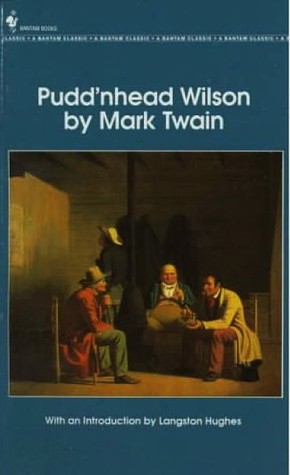
Pudd’nhead Wilson by Mark Twain

puddnheadwilson

Pudd’nhead Wilson

Mark Twain (Adult Fiction)

Thomas Paine once said, “Titles are but nicknames, and every nickname is a title.”  Whichever you choose to use—title or nickname—one thing is for certain and that is Mr. David Wilson has got himself a doozy.  David Wilson is a lawyer and a newcomer to Dawson’s Landing, a slaveholding town on the Missouri side of the Mississippi River.  Since irony is apparently lost on the good folks of Dawson’s Landing, Mr. Wilson’s first (and last) attempt at humor falls somewhat flat and results in the people thinking their newest citizen is a fool; therefore, it is only reasonable that they give him the equally fitting nickname of “Pudd’nhead”.  Fortunately, what Pudd’nhead lacks in comedy he more than makes up for with fads.  He has a penchant for palmistry and finger marks and is so enamored with the latter, he goes all around town collecting as many as he can from anyone he meets.  Little does he know how useful these marks will prove to be when a case of mistaken identity, a series of robberies, and a brutal murder will ultimately point to the fact that perhaps Pudd’nhead Wilson isn’t such a fool after all.

Pudd’nhead Wilson is part murder mystery, part social commentary, and part psychological study of nature versus nurture.  Combined, it’s a humorous and thought-provoking story of good intentions, broken promises, honor, love, and the ultimate price of sin.  Twain gives us a story of two babies—one free and one slave—who were switched at birth and grow up according to their station in life.  The slave is bound to his master while the other is bound by his uncle’s and society’s expectations.  Twain also delivers one of the most infuriating and insufferable characters ever to grace the written page (honestly, you just want to reach in and give him a good wallop).  Our young Tom, who has been given every privilege imaginable, is crass, spoiled, smug, selfish, ungrateful, untrustworthy, and cowardly.  If ever there was a character truly deserving of a comeuppance, it would be Tom.

Mark Twain was born in the slave state of Missouri and slavery was a central theme in his writings.  However, Pudd’nhead Wilson doesn’t focus so much on slavery as it does on two men and how their lives are ultimately determined by the cradle in which they sleep.  A simple switch and both lives are irrevocably changed forever.  One man is given everything only to squander it away while the other is given nothing, but makes the most of what little life has to offer.  Pudd’nhead Wilson is a commentary on grace versus greed, dignity versus disgrace, and affection versus apathy and Twain delivers it all masterfully.  But of course, Mark Twain would know a thing or two about fools.  After all, it was he who gave us the quote, “It is better to keep your mouth closed and let people think you are a fool than to open it and remove all doubt.”  Oh, if only Pudd’nhead had known.

Rating: 5/5

*Book cover image attributed to www.goodreads.com


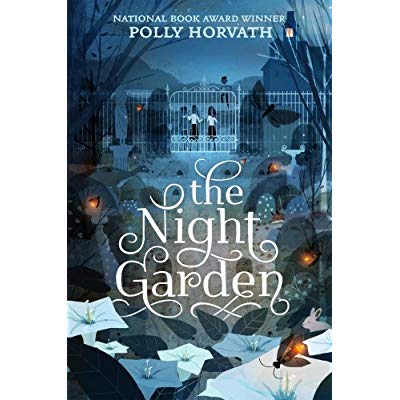
The Night Garden by Polly Horvath (J)

the night garden

The Night Garden

Polly Horvath (Juvenile Fiction)

Despite the war overseas, life was fairly predictable and peaceful in the spring of 1945 for the family at East Sooke Farm.  Twelve-year-old Franny Whitekraft had her writing; her mother, Thomasina (Sina for short), had her sculpting; and her father, Old Tom, had his gardens—his many, many gardens.  There was the English garden, herb garden, Japanese garden, Italian garden, kitchen garden, statuary garden…but perhaps the most mysterious and closely-guarded garden of all was the night garden.  That garden Old Tom kept locked up nice and tight.  So, days floated by with little fanfare until one day, Crying Alice (that’s Mrs. Alice Madden to you and me) showed up on the Whitekraft doorstep and dropped off her three children: Wilfred, Winifred, and Zebediah.  You see, her husband, Fixing Bob (who does maintenance on the Canadian Air Force’s special plane), is going to do something stupid and she simply has to go and talk some sense into him.  Now, if three new houseguests weren’t enough, just throw in a UFO, ghost, psychic, several mysterious letters, mermaids, and a missing plane and you’ve got a recipe for anything BUT a predictable and peaceful spring.

This is the second book by Polly Horvath that I’ve had the pleasure of reading (the first being The Canning Season) and she continues to amaze and please with her witty dialogue and amusing situations.  Horvath not only entertains her young readers, but she manages to educate them as well.  She’s an English teacher’s dream as she dishes out a veritable smorgasbord of delicious words to savor:  presaged, traversed, bereft, contiguous, compeers, and ilk.  Aren’t they scrumptious?  She also delights us with an assortment of quirky characters that we feel inexplicably drawn to—not in spite of their flaws and rough edges, but because of them.

The Night Garden is a non-stop, heart-thumping thrill ride that will excite and enthrall readers of all ages.  It is a story of family and a love that is blind, slightly deaf, and a little bit thick, but love amongst family is often like that.  The Night Garden also provides us with many valuable lessons—from Miss Macy’s advice on being prepared (“Always wear clean underwear.”) to Franny’s philosophy on self-sacrifice (“Well, we were all put on this earth to suffer.”).  But perhaps it is Old Tom himself who best sums up the greatest lesson of all, “Never, ever, ever have houseguests!”  Old Tom is seldom wrong.

Rating: 4/5

* Book cover image attributed to http://www.goodreads.com