
The Underneath by Kathi Appelt (J)

The Underneath

The Underneath  

Kathi Appelt (Juvenile Fiction)

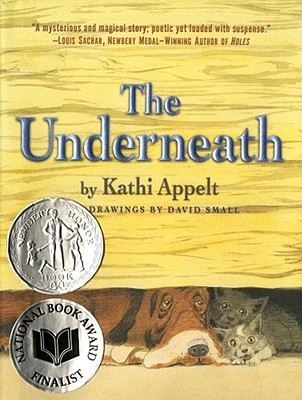
This is a tale of two love stories separated by one thousand years.  The first is of a possessive, jealous, and cruel love.  It is about an enchantress, a king, and a family of three.  The second tale tells of a selfless, devoted, and pure love.  It is about a brave mother, a set of twins, and a gifted but abused blues singer.  But like so many tales, these two worlds eventually collide and when they do, which love will prove to be the strongest?

Appelt offers up a modern-day fairytale that gives readers heroes, villains, magic, mystery, and danger.  Like most fairytales, we can count on the villain getting his comeuppance, the misguided antagonist having a change of heart, and the power of true love winning in the end.  The book has very short chapters and makes for an easy read for younger readers (or an ideal bedtime book to be shared and read aloud).  The story has some instances of animal cruelty, so parents of sensitive readers should be warned.  Also, although Appelt gives us a truly suspenseful tale, it does stall near the middle and needlessly prolongs the action.  At just over 300 pages, this may frustrate some readers, but perseverance has its rewards and a satisfying ending awaits the patient reader.

Time and time again our little protagonists are told to “Stay in the Underneath.  You’ll be safe in the Underneath.”  And true enough, safely tucked underneath this dust jacket is a wonderful tale of devotion, friendship, family, and the importance of a promise kept.

Rating: 4/5

* Book cover image attributed to www.goodreads.com


A Virtuous Woman by Kaye Gibbons

A Virtuous Woman

A Virtuous Woman  

Kaye Gibbons (Adult Fiction)

Blinking Jack Ernest Stokes is forty when he marries Ruby Pitt Woodrow.  Jack is twice Ruby’s age, skinny, and homely, but despite his drawbacks, he loves Ruby unconditionally and promises to take care of her.  After suffering a tormented marriage to a brutal drifter, Ruby longs for stability and security and accepts Jack’s proposal of marriage.  Such is the story of two very different people who transcend both economic worth and social status in order to make a marriage work.

Gibbons gives us a simple story about a man and a woman whose devotion for one another is uncomplicated, unwavering, and unbounded.  Jack and Ruby’s love is quiet and kind and both derive a satisfying and greatly needed comfort from their marriage.  A Virtuous Woman is a pleasant read and flows along at a relaxed pace—alternating narration between Jack and Ruby.  Sadly, this book barely breaks the surface and fails to give the reader an opportunity to emotionally bond with either the story or to its characters.  Gibbons succeeds in providing a big-picture view of a bittersweet relationship between two broken people, but the story could have been far richer had Gibbons further fleshed out the complicated feelings and effects associated with infertility, terminal illness, and bereavement.

Jack and Ruby’s unlikely relationship reminds us that love need not be complicated or blind.  Sometimes, just having someone there offering you acceptance, kindness, and peace is enough.

Rating: 3/5

* Book cover image attributed to http://www.amazon.com


Lost Horizon by James Hilton

It’s Throwback Thursday where we pick a random Thursday to review a Classic from literature.  We hope you enjoy this very dusty jacket.

Lost Horizon.jpg

Lost Horizon   

James Hilton (Adult Fiction)

It’s 1931 and the situation is dire in Baskul.  The country is in the midst of a revolution and all of the white residents are being evacuated to Peshawar.  Four passengers are loaded onto a plane lent by the Maharajah of Chandapore:  a British consul (Hugh Conway), his vice-consul (Captain Charles Mallinson), a missionary (Miss Roberta Brinklow), and an American (Henry Barnard).  After some time, all on board quickly realize that they have been kidnapped and being taken to an unknown destination.  Their plane soon crash lands in the harsh and unforgiving Tibetan mountains and, before he dies, their pilot instructs them to go to a place called Shangri-La.  With only the clothes on their backs, the small party begins their journey to a place thought only to exist in legend.

Hilton gives us a place that stands in stark contrast to the world Conway has experienced.  He has seen the ravages of war and its effects are still with him—even after a decade has passed.  During World War I, Conway has seen death, disease, and destruction.  At Shangri-La, he sees only tranquility, serenity, and beauty.  Because of his haunted past, he—more so than his fellow passengers—seems willing and anxious to embrace the charms and mystery of this newly discovered paradise.

Lost Horizon gives readers a wonderful and beautiful utopian lamasery where every care is met and every need satisfied.  It is truly paradise found and for those who stumble upon it, their lives will never be the same.  But this story also serves as a reminder that one man’s paradise may be another man’s prison and the only thing that may differentiate the two is freedom.  If you had to stay, would it really be paradise?  Conversely, if you could leave, would it really be prison?

I truly enjoyed this tale of a modern Garden of Eden and couldn’t help but ask myself this question as I turned the last page: “If I had ALL the time in the world, what would I do?”  What would you do?

Rating: 4/5

* Book cover image attributed to www.amazon.com


The Decoding of Lana Morris by Laura & Tom McNeal (YA)

It’s Tween and Teen Tuesday where we review either a juvenile (J) or young adult (YA) book.

The Decoding of Lana Morris.jpg

The Decoding of Lana Morris  

Laura & Tom McNeal (Young Adult Fiction)

If you had one wish…just one…what would it be?

Sixteen-year old Lana Morris lives in a two-storied foster home that she shares with four special needs kids (Snicks for short) and her foster parents, Whit and Veronica.  Lana wishes for a different foster mother; she wishes to fit in with the cool kids; she wishes she didn’t have to live in Snick House; and she wishes she understood her feelings for Whit better.  Lana wishes for a lot of things and soon, after she visits Miss Hekkity’s Oddments & Antiques, she’ll have not just one wish, but 13.

First, I want to focus on the positive aspects of this book, which is the attention the McNeals devote to young people with special needs.  They give us insight into their daily lives and allow us to understand their challenges and individuality.  Too often society judges these amazing people by their outward appearance or behavior alone.  It is also heartwarming to see Lana’s role evolve from disparager to defender as she connects with her housemates and appreciates their uniqueness.

Unfortunately, the negative aspects of this book vastly outweigh the positives.  The McNeals make Veronica excessively cruel and evil for no apparent reason.  Her treatment of Lana is childish, snippy, and incredibly mean-spirited.  The authors provide no insight as to why this kind of person possesses such disdain and disregard for the children in her care.  We find out late in the book that she is unable to have children of her own.  So, are we then to assume that these children are somehow meant to fill a personal void or is she putting her own feelings aside and doing it out of selfless love for Whit?  Surely, she can’t be putting herself and these children through such torment for just a monthly stipend.

Additionally, and more disturbingly, is how the authors portray Whit.  Before Lana gains access to her “wishes”, Whit is a beloved, meek, and kind foster father.  The children adore him and Lana views him as a father (although her affections often overlap between familial and hormonal).  After her visit to Miss Hekkity’s, Whit inexplicably becomes increasingly salacious and lecherous toward Lana.  As a lonely teenage girl in want of a father figure, Lana is naturally drawn to Whit, but Whit’s reciprocation, and even encouragement, of her interest cross a very distinct line which is both disturbing and unsettling.  If the authors merely did this to shock their teen readers with provocative and edgy content, they handedly hit their mark.  What is supposedly a book about a teenage girl desperately trying to find love and acceptance dives abruptly into a world filled with infidelity, child exploitation, abuse, and neglect.

If I had one wish…just one…it would be that the McNeals had stayed a little truer to their book’s proposed purpose.  Unfortunately, the strong and encouraging themes of love, acceptance, and friendship are overshadowed by hate, jealousy, and lust and no amount of wishes can overcome that.

Rating: 2/5

* Book cover image attributed to http://www.goodreads.com


Quite A Year For Plums by Bailey White

Quite A Year For Plums

Quite A Year For Plums

Bailey White (Adult Fiction)

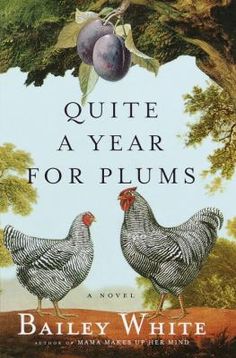
Roger is in love with a Yankee (although some of those people are just as nice as can be).  Louise arranges letters and numbers so that she can contact space aliens (who are really small by the way).  Della is having a devil of a time painting Dominique chickens (capturing their feet correctly is the hardest part) and has a penchant for labeling her garbage.  And then there’s Bruce who has nightmares about fonts (he’s a typographer and takes these things very seriously).  These and many more wonderfully odd characters live in a small southern town, and they laugh, love, and cry together…because that is what families do.

In the vein of Philip Gulley, Jan Karon, and Ann B. Ross, Bailey White gives us a humorous and heartfelt glimpse into rural America.  In White’s world, the boy doesn’t always get the girl and even the best intentions end in defeat, but she shows us that anything can be made just a little bit brighter and sweeter with just a jar of sweet pickles or a slice of homemade plum pie.

I adore Bailey White, but this novel came up a little short as I had a hard time sinking my teeth into it.  Rather than getting a rich and satisfying entrée, I was instead served several courses of appetizers.  White gives the reader many humorous and delightful vignettes, but when put together, they fail to form a complete and cohesive story.  Quite A Year For Plums is a quick read that doesn’t require a tremendous amount of emotional investment, but its quirky and lovable characters do make for an enjoyable book.  Almost as enjoyable as a jar of sweet pickles or a slice of homemade plum pie.  Almost.

Rating: 3/5

* Book cover image attributed to http://www.amazon.com


A Finder’s Magic by Philippa Pearce (J)

A Finders Magic

A Finder’s Magic  

Philippa Pearce (Juvenile Fantasy)

Till goes to bed in despair and wakes up desperate.  So deep is his desperation that you can see it in his dreams.  And one night, someone does see it.  That someone is a Finder.  A Finder that promises Till that he will help him find his beloved lost dog, Bess (for it is her absence that leads to all this unfortunate desperateness).  But finding Bess isn’t easy.  Clues need to be found, witnesses questioned, and leads followed.  Leads that point to a stranger, a thin line of light, and a nursery rhyme.

This book has a rather interesting backstory.  Pearce wrote this book for her two grandsons and it was illustrated by the children’s other grandmother, Helen Craig.  The main character’s name is an anagram of the two grandson’s names put together (Nat and Will) giving us Tillawn or Till for short.  Unfortunately, Pearce died before Craig began illustrating this book and was therefore deprived of seeing the beautiful book that their combined efforts produced.

Pearce gives young readers a wonderful tale of magic, mystery, and mischief.  The story deals with issues of loss and trust and tackles both with charm and humor.  After the book is finished, parents might want to remind their young reader that this is a fantasy book and, under ordinary circumstances, it is never appropriate to go running off with a stranger, especially one who offers to help you find your dog.

In the end, through all the questioning and searching and worrying, Finder gives Till something that replaces his desperation.  He gives him hope and although it’s not what Till wants, it’s what he needs and at that moment, hope is enough.

Rating: 4/5

* Book cover image attributed to www.goodreads.com


The Story of Land and Sea by Katy Simpson Smith

The Story of Land and Sea

The Story of Land and Sea  

Katy Simpson Smith (Adult Fiction)

Tabitha’s grandmother died in childbirth as did her own mother.  “Death only comes to mothers,” she thinks and a mother she’ll never be.  But when young Tabitha is suddenly struck with yellow fever, her now land-bound father, John, returns to the sea with Tab in an effort to save her life.  After all, it was the sea that once gave life to her mother, Helen, and John is convinced that the sea can cure Tab as well.  Land, he knows, only brings about death.

Smith breaks her story into three parts: the first part (set in 1793) introduces us to John and his daughter Tab and their life in Beaufort; the second part (1771-1782) gives us a young Helen and her servant Moll and shows us how Helen and John meet; and the final part (1793-1794) concentrates on Helen’s father, Asa, as well as an adult Moll and her son, Davy.  The story spans three generations and deals with issues of loss, loneliness, and grief.

This is probably, by far, one of the bleakest books I have ever read.  Although this book is beautifully written, it gives away the fates of several main characters much too early in the story, leaving readers with a lot of backstory and very little else to look forward to.  Smith also deals heavily in religion and so we expect some semblance of redemption or spiritual revelation.  Again, the reader is left empty-handed.  But what might be the most incomprehensible decision Smith makes is choosing to devote the last third of her novel to perhaps the most uninteresting and uninspiring character in the entire book.  I wish this book had finished as strongly as it started, but unfortunately The Story of Land and Sea is really just a story without point or purpose.

Rating: 3/5

* Book cover image attributed to www.amazon.com


The Seven Wonders of Sassafras Springs by Betty G. Birney (J)

The Seven Wonders of Sassafras Springs

The Seven Wonders of Sassafras Springs  

Betty G. Birney (Juvenile Fiction)

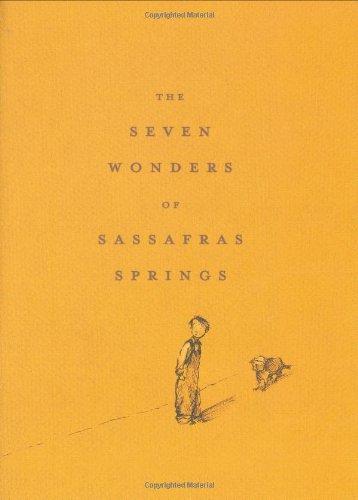
“Sometimes extraordinary things begin in ordinary places” and, according to 11-year old Eben McAllister, there is absolutely, positively NO place more ordinary than Sassafras Springs.  On this particularly hot July day, while Eben is buried in his book about the Seven Wonders of the World, his father offers him a deal:  find seven Wonders in seven days in Sassafras Springs and he will buy Eben a ticket to Colorado.  SEVEN?  Eben can’t imagine even finding ONE Wonder let alone seven.  But with a ticket out of town on the line, Eben is ready, willing, and able to look just about anywhere and everywhere to find them.

With folksy, down-home dialogue and quirky, lovable characters, Birney makes even an ordinary saw, a worn-down table, and a waterlogged bookcase true Wonders.  Her story is like a tall glass of cold lemonade and the best spot on the front porch:  refreshing, pleasing, and thoroughly enjoyable.  I found it bittersweet when I came to the last page of this book.  Having to say goodbye to Eben, his trusty dog, Sal, and the folks of Sassafras Springs was akin to leaving home for the first time.  But as Eben reminds us, when Columbus and Balboa set off to discover faraway lands, even they knew that it wasn’t “goodbye”, just “see you soon”.

I hope this little gem encourages readers to discover or rediscover the treasure that lies right outside their own doorstep, for sometimes the biggest Wonders are right in our own backyard.

Rating: 5/5

* Book cover image attributed to www.fab.lexile.com


A Little Princess by Frances Hodgson Burnett (J)

A Little Princess

A Little Princess  

Frances Hodgson Burnett (Juvenile Fiction)

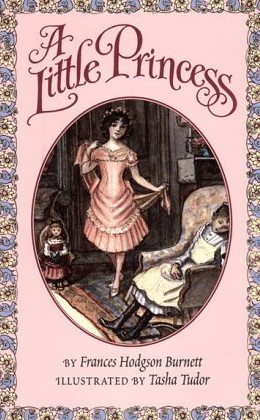
Sara Crewe is seven and always dreaming and thinking odd things.  But ever since arriving in London from India with her father, Captain Ralph Crewe, all she thinks about is “the place”—Miss Minchin’s Select Seminary for Young Ladies.  Her father’s affluence instantly propels Sara to star status within the school, but misfortune soon causes her to be penniless and at the mercy of jealous students, spiteful cooks, and a vindictive and cold-hearted headmistress.  Once an heiress and now a pauper, Sara relies on the friendship of a young servant, two foolish schoolgirls, and a rather amicable rat to help her cope with her new station in life.

Burnett delivers a charming and tender Cinderella-like story where our heroine is suddenly ripped from a life of comfort, joy, and love and thrown into a merciless world of coldness, hunger, and cruelty.  Unlike Cinderella, Sara is merely a child and the pain and suffering inflicted upon her is especially difficult to bear.  It also earns her tormentor, Miss Minchin, a dubious place amongst literature’s most despised and detested villains.

With A Little Princess, Burnett gives us a story about humility, grace, courage, hope, generosity, and kindness.  She also gives us a girl who is a beloved daughter, a show pupil, an adopted mother, a storyteller, a benefactor, a scullery maid, and a friend.  But most of all, Sara Crewe is, and always will be in the hearts of readers, a little princess.

Rating: 5/5

* Book cover image attributed to www.tvtropes.org


Hattie Big Sky by Kirby Larson (YA)

Hattie Big Sky

Hattie Big Sky  

Kirby Larson (Young Adult Fiction)

Hattie Inez Brooks refers to herself as Hattie Here-and-There.  Orphaned before she had lost her baby teeth, she spends her years being shuffled here and there amongst various relatives’ homes.  At 16, everything changes when she is left 320 acres and a house in Montana by her deceased mother’s brother, Uncle Chester.  With the only thing to look forward to in Arlington, Iowa is a job at a boardinghouse, Hattie writes back, “I’ll come.”  But to make her uncle’s claim her own, she has to cultivate 40 acres and lay 480 rods of fence…and she has less than a year to do it. With a strong faith and help from neighbors, can Hattie make her deepest wish a reality—to find a place to belong.

Hattie Big Sky is based on the life of Larson’s great-grandmother, Hattie Inez Brooks Wright, who herself had homesteaded as a young woman in eastern Montana.  Because most of the story takes place in 1918, we see more references to automobiles than covered wagons.  The United States was also embroiled in World War I and many German-born immigrants were subjected to a litany of anti-German persecution.  Larson weaves all of these facts, along with the countless struggles faced by homesteaders, into a beautifully-told story of hardship, bravery, and old-fashioned grit.

Hattie is pleasantly surprised to find that a paper in Iowa is willing to pay her a monthly fee for her homesteading stories.  In one such submission, she writes, “…the lesson this life has planted in my heart pertain more to caring than to crops, more to Golden Rule than gold, more to the proper choice than to popular choice.”  Hattie’s lesson is one we should all strive to implant upon our own heart.

Rating: 4/5

* Book cover image attributed to www.scholastic.com