
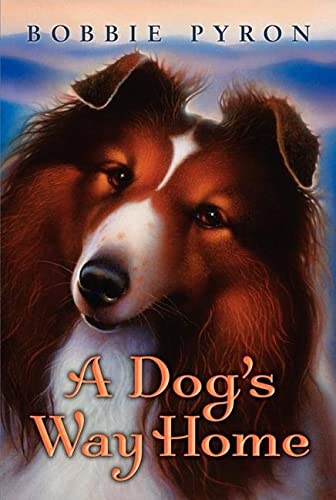
A Dog’s Way Home by Bobbie Pyron (J Fiction)

A Dog’s Way Home

Bobbie Pyron (J Fiction)

Eleven-year-old Abby Whistler and her Shetland sheepdog, Tam, are inseparable. Not only is Tam an agility champion, he is Abby’s world…and she is his. But an unexpected detour leads to a terrible accident that tears Tam from Abby. As the days turn into weeks and fall gives way to the harshness of winter, can Tam find his way from Virginia back to North Carolina where home and his girl is?

Pyron checks all the boxes with this book. A Dog’s Way Home is non-stop action and suspense with whole lot of heart. Short chapters and alternating points of views—between Abby and third-person POV for Tam—ensure that readers stay engaged and fully committed to these characters and their individual struggles as one fights to survive in the harsh wilderness while the other navigates foreign situations in a big city.

There are a couple of things that really made this an exceptional read for young readers. First is that Pyron chose NOT to write down to her audience by having Tam be the narrator of his own story. Having the scene described by an arbitrary third party lends a starkness and cold reality to Tam’s situation, which only heightens the drama and urgency of his predicament. Second is the cruel reality of Tam’s situation. He is an animal suddenly faced with either starvation or survival and as his natural instincts kick in, so does the necessity to eat, and in order to eat one must kill.

Anyone who has ever cared for a dog will feel their heart being twisted and squeezed within their chest as Tam battles everything from the weather to wild animals and ruthless humans. Side note: a lot of well-meaning men who are protecting their loved ones or just doing their jobs really get the short end of the stick in this book and ultimately come across as villains. I expect that by the end of this book, many young readers will despise just about every adult in this book…except Meemaw, Abby’s grandmother.

Part Lassie Come-Home and part The Incredible Journey, A Dog’s Way Home will engross readers from beginning to end with messages of hope, perseverance, acceptance, and love. Most of all, it will challenge readers to reassess what’s truly important since material trappings never hold their shimmer for very long. As Meemaw said to Abby, “Sometimes the thing you think is the most important isn’t that big a deal, once you have it.”    

Rating: 5/5

* Book cover image attributed to: www.abebooks.com

We’re now posting videos of some of our book reviews! Follow us on Facebook at www.facebook.com/thedustyjacket or on Instagram @tdjreviews and join in on the fun!
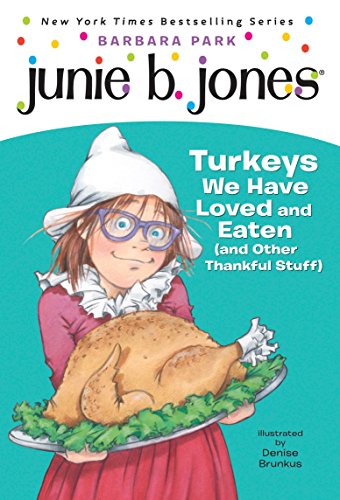
Junie B. Jones #28: Turkeys We Have Loved and Eaten (and Other Thankful Stuff) by Barbara Park

Junie B. Jones: Turkeys We Have Loved and Eaten (and Other Thankful Stuff)

Barbara Park (J Fiction)

Dear first-grade journal,

This week Room One is making a list of the stuff we are thankful for. And the room with the bestest thankful list will win. Also we are having a Thanksgiving feast on Wednesday. Thanksgiving is a lot of work.

Junie B., First Grader

Junie is thankful for a lot of things. May, the girl who sits next to her, is NOT one of them. While families are preparing their homes for families and feasts, Junie and her classmates are working hard to win the school’s coveted Best Thankful List…even if the prize IS a homemade pumpkin pie that makes almost half the class vomit. What happens next is a list that ranges from exploding biscuits and Nipsy Doodles to toilet paper and stuffed elephants and leads to a lesson in what Thanksgiving is really all about.

Barbara Park’s Junie B. Jones series consisted of 29 books that ran from 1992 to 2013. Young fans will delight in the authenticity of Junie and her classmates as they rank what is the bestest things they are thankful for—much to the chagrin of their teacher, Mr. Scary. From minor disagreements to elephant scuffles, Junie will learn that even when people are different, they can still have things in common.

This book (#28) is a short read with big lessons…especially for adults. Junie may not yet be six years old, but she is wise beyond her years and teaches us that names always sound funnier when you add the word pants at the end, that teachers are just like normal people…almost, and when a teacher smiles, everything feels better. Now that is something we can all be thankful for.

Rating: 4/5

* Book cover image attributed to: www.abebooks.com

We’re now posting videos of some of our book reviews! Follow us on Facebook at www.facebook.com/thedustyjacket or on Instagram @tdjreviews and join in on the fun!
Mallory Makes a Difference by Laurie Friedman (J Fiction)

Mallory Makes a Difference

Laurie Friedman (J Fiction)

Mallory McDonald, no relation to the restaurant, had a rotten Halloween. She had two places to be on Halloween and rather than choosing one, she tried to do both and quickly realized that instead of having it all, she ended up with nothing. That’s why Thanksgiving was going to be better…it had to be! Mallory decides that she would feel better if she could make others happy so with the help of her friend Joey, Mallory organizes a school-wide canned food drive to help the community food bank. Soon the entire student body at Fern Falls Elementary is on board…especially since the winning grade gets one homework-free week as a prize! But soon things start going wrong and as the thrill of competition overshadows the spirit of giving, can Mallory still make a difference when everyone around her seems to hate her?

Mallory Makes a Difference is the 28th and final book in the Mallory McDonald series, which ran from 2004-2017. In this last installment, author Laurie Friedman has Mallory facing a fracture in her relationship with Mary Ann where she discovers, as most girls her age do, that your friendships from childhood evolve and change. Even as our young heroine puts aside her own wants by doing something for others, she still craves approval from friends who don’t share her own views or desires. Readers are sure to empathize with Mallory as she navigates between doing the right thing while still wanting to please her peer group.

Friedman ends her series with a nice story that shows young people the benefits of giving back to your community and being a force for positive change. At the end of the book, Friedman provides readers with a 10-Step Guide to Planning a Great Community Service Project that anyone wanting to make a difference can use as a template. Through Mallory, readers are shown the value of planning and teamwork, as well as the rewards of getting different ideas and being open to new approaches. Something that all of us can appreciate and should take to heart.

All through the food drive, as Mallory watched the spirit of the event deteriorate as the prize became more important than the purpose, she kept reminding all involved (even herself) that helping other people was the true important thing. Maybe if more of us kept that in mind, we—like Mallory—could make a difference, too.

Rating: 4/5

* Book cover image attributed to: www.amazon.com

The Sign of the Beaver by Elizabeth George Speare (J Fiction)

The Sign of the Beaver  

Elizabeth George Speare (J Fiction)

“Dance,” Attean commanded. He seized Matt’s arm and pulled him into the moving line. The men near him cheered him on, laughing at Matt’s stumbling attempts. Once he caught his breath, Matt found it simple to follow the step. His confidence swelled as the rhythm throbbed through his body, loosening his tight muscles. He was suddenly filled with excitement and happiness. His own heels pounded against the hard ground. He was one of them.

It was the summer of 1769 when twelve-year-old Matt Hallowell’s father left him alone in Maine to protect the family’s cabin and corn field while he returned to Massachusetts to bring back his mother and two siblings. His father told him to make seven notches in a stick (a notch a day) and by the time that he was on the seventh, he’d be back and they’d once again be a family. Bad luck seemed to follow Matt soon after and when he found himself the target of some angry bees, a Penobscot chief and his grandson jumped in to save his life. Wanting his grandson to learn the language of the white man, the chief made a treaty with Matt: teach his grandson, Attean, to read in exchange for food. Eventually, the two boys formed an unlikely friendship and as more sticks began to pile up, Matt was faced with having to choose between joining the tribe and heading north or waiting for a family that may never come.  

A Newbery Honor Book recipient in 1984, The Sign of the Beaver is really a love letter to the Penobscot, an Indigenous people in North America and a federally recognized tribe in Maine. Speare gives her readers insights into tribal culture and customs and exposes their devotion and respect for nature, wildlife, and boundaries of the surrounding tribes. Time and again Matt questions Attean’s actions and every time his response centers on recognizing the value and worth of the land they walk, the animals they’ve killed, and  the life they’ve been given. By learning Attean’s ways, Matt begins to realize that he is just a very small part of a very big picture and as his confidence as a hunter grows, so does his world view and his new understanding of why the white man is so despised and mistrusted by these native peoples.

The Sign of the Beaver isn’t just a story about one boy’s resilience, bravery, and sense of duty, it’s also a lesson in how we should never take more than we are given, that we should appreciate differences and look for commonalities, and that empathy and kindness can do more for bridging a gap and forging a relationship than signed treaties and firm handshakes. This is a great story for young readers and a fascinating look into the Indian way of life. Although there are a few scenes of animal cruelty and suffering, Speare sticks to keeping this book authentic by not avoiding the uncomfortable thus making this book a valuable read. Although it has plenty of action and the characters are well developed, the story seems to lose a bit of steam near the end and tended to drag.

As a way of showing the chief his gratitude, Matt offered him his one prized possession—his beloved Robinson Crusoe. It was from this book that Matt read passages to Attean and where he discovered that Attean was just as passionate about storytelling as he was proving once again that a beautifully told story not only has the ability to draw us in, but it can also connect us as well.

Rating: 4/5

* Book cover image attributed to: www.goodreads.com

We’re now posting videos of some of our book reviews! Follow us on Facebook at www.facebook.com/thedustyjacket or on Instagram @tdjreviews and join in on the fun!
The Pushcart War by Jean Merrill (J Fiction)

The Pushcart War  

Jean Merrill (J Fiction)

Imagine if Morris the Florist hadn’t been blocking the curb and if Mack hadn’t been in such a hurry to deliver his load of piano stools and if Marvin Seely hadn’t taken a picture with a camera that he had just gotten for his birthday and if Emily Wisser hadn’t cut out that same picture from the newspaper for her scrapbook and if Emily Wisser hadn’t shown that same clipping to her husband, Buddy Wisser, a newspaper editor…well, we might not ever have had the Pushcart War. Now, imagine THAT!

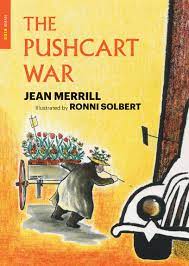
I read The Pushcart War in elementary school, so it had been out for a little over ten years by the time I laid my grubby little hands on it. I’m not sure what drew me to this particular book. Most likely it was the funny little drawing on the cover of a man in a black overcoat wearing a ridiculous flower hat who was right in the middle of shooting a pin at a big truck that caught my eye and imagination (ten-year-olds were much easier to amuse back then!). That book quickly became a long-lost memory until I came across it sitting innocently enough on a library shelf. I pulled it out and there he was! That same funny little man with his ridiculous hat STILL waging war against that massive truck some 40+ years later. After reading it with fresh eyes and a greater understanding of the world, I’m unclear why this book made such an impression on my ten-year-old self, but my much older self is chuckling while shaking my head after realizing that nothing much has changed since its publication.

The Pushcart War is packed with humor, hijinks, and heart. It is the quintessential David-versus-Goliath story of a pack of pushcart vendors who wage war against mighty mammoth trucks in hopes of maintaining their little slice of the free enterprise capitalist pie. Written in 1964, set in 2036, and taking place in 2026 (you got that?), Merrill’s story resonates just as true today as it did in the 60s: demonstrating the virtues and vices of speaking out for what is right; displaying the corruption of those in power who abuse their platform for personal gain by bowing to the desires of special interest groups; illustrating how the media can be a driving force behind shaping public opinion; and proving the unfortunate influence that money ultimately has on morality. Sound familiar? You might think that such weighty topics would never be able to hold the attention of a young reader, but Merrill’s Rube-Goldbergesque approach to storytelling—where one act sets off a series of complex events—keeps readers engaged and enthralled. I mean, who could have imagined that a simple tax on tacks could touch off a possible war with England? Jean Merrill, that’s who. It’s this kind of utterly improbable and highly outrageous scenario that keeps us entertained and cheering for the little guys…no matter how hopeless or hapless their situation may be.

Author Karen Traviss wrote, “I don’t know who the good guys are anymore. But I do know what the enemy is. It’s the compromise of principles. You lose the war when you lose your principles. And the first principle is to look out for your comrades.” Aside from their dried peas and little pea shooters, the people who sold hot dogs or flowers or knick-knacks from their little carts all shared a common purpose: a desire to be seen and to be counted and to be respected. They wanted a place in the world—free from bullying and intimidation and eradication. More than that, they didn’t want someone else to assign them value or worth. The pushcarts knew talking was better than fighting and believed in their cause so much that they were willing to sacrifice themselves for the greater good. They knew that their cause was bigger than just one or two carts and together, they were a force to be reckoned with. Together, they could elicit change. I imagine that the world might be a better place if we just had a few more pushcarts.

Rating: 5/5

* Book cover image attributed to: www.amazon.com

The Gypsy Game by Zilpha Keatley Snyder (J Fiction)

The Gypsy Game

Zilpha Keatley Snyder (J Fiction)

Melanie didn’t know much about Gypsies, but if her best friend April could make Egypt into a fun and exciting game, she knew that The Gypsy Game was sure to be a hit as well…even though Marshall might be harder to convince. But soon after the Professor’s backyard began transforming into The Gypsy Camp, things began taking an unexpected turn. Between a found bear, a missing friend, hit men, detectives, and kidnappers, maybe a game about Gypsies wasn’t such a good idea after all.

Thirty years after her Newbery Honor-winning novel The Egypt Game was published, Zilpha Keatley Snyder brings April, Melanie, Marshall, Elizabeth, Toby, and Ken back into a new game filled with adventure, suspense, and danger. Don’t expect Snyder to waste her opening pages rehashing events from her last book. Instead, she picks up right where she left off and instantly plunges readers into the action (so if you’re a little fuzzy about the Casa Rosada, who Security is, or why parents don’t want their kids wandering around outside alone, be sure to re-read The Egypt Game first). It’s clear that time has not weakened the strong and unique bond that her main characters have formed with one another and although they may occasionally bicker and disagree, theirs is a camaraderie that might be stretched thin, but will never be broken.  

Unlike her first book which presented the reader with plenty of interesting facts about Egyptian history, culture, and traditions, The Gypsy Game gives us just the scantest peek into Gypsy life while unintentionally giving readers the impression that Gypsies can boiled down to nothing more than headscarves, jewelry, and bright clothing. It seems a grave disservice, but Snyder eventually does delve into the more gritty and dark aspects of Gypsy life when she exposes their persecutions throughout history. Although I would have liked for Snyder to dig a little deeper into Gypsy culture, her sequel has enough twists and intrigue to keep fans of her first book engaged and satisfied.

Like her first book, Snyder’s sequel reminds us of the downsides of judging a book by its cover and how much we stand to lose when we jump to false conclusions. Just as the Gypsies were outcasts, Toby himself meets three outcasts and discovers just how far a simple act of kindness and generosity can go. American financier Bernard Baruch put it best when he said, “Be who you are and say what you feel, because those who mind don’t matter, and those who matter don’t mind.” Although April, Melanie and the others didn’t realize it at the time, perhaps The Gypsy Game wasn’t about the clothes or the jewelry or the brightly painted caravan, but rather it was about watching out for your friends, staying true to your word, and offering a little bit of humanity and dignity to the most vulnerable around you.

Rating: 4/5

* Book cover image attributed to: www.amazon.com

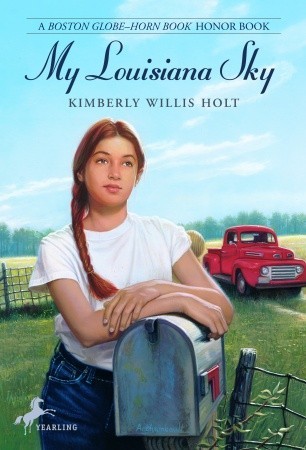
My Louisiana Sky by Kimberly Willis Holt (J Fiction)

My Louisiana Sky

Kimberly Willis Holt (J Fiction)

Tiger Ann Parker was six when she realized that her momma wasn’t like other mothers—acting more like a younger sibling than a parent—and her father was no better, often described as “slow” by the men he worked with at the nursery. Tiger hated to admit it, but she felt embarrassed by her parents and often wished that her mother was more like her stylish and independent Aunt Dorie Kay. If she was, then maybe Tiger could make friends with the girls in her class. Maybe Tiger could finally fit in. Tiger’s wish may be coming true when she’s given the chance to leave her small town of Saitter and begin a new life in Baton Rouge. But is starting over really the answer that Tiger is looking for?

This is the second book by Kimberly Willis Holt that I’ve read, the first being When Zachary Beaver Came to Town, and Holt again delighted me with a cast of unforgettable characters and an immersive story. My Louisiana Sky is another period book, but this one takes place during the 1950s when the country was divided by segregation and people with developmental disorders were often institutionalized. Mirroring Zachary, Holt’s down-home and folksy writing is front and center and instantly draws the reader to her characters and pulls you into their quaint and intimate world. The story is told from twelve-year-old Tiger’s point of view and what really compelled me—apart from its strong themes of acceptance and family—was how the script was flipped a bit. Most books that deal with the subject of developmental disabilities for this age often afflicts either a sibling or a friend of the main character. For Holt to strip Tiger’s familial stability by having not one but both of her parents dealing with varying degrees of mental challenges gives the story an entirely unique perspective and instills an overall sense of aloneness for Tiger. Combine that with her having to deal with the common adolescent fare of self-esteem, body issues, and self-confidence and you can’t really fault Tiger for wanting to leave everything she knows and loves behind for a chance to simply be a twelve-year old girl for a while.

There are so many positive lessons to be learned from this book, but the reader who is fighting against circumstances beyond their control and struggling to be accepted by their peers is going to feel the deep connection to Tiger Ann Parker. Most of us can remember wanting to be part of a clique and recalling the sting when confronted with rejection. We feel Tiger’s anguish when she cries out, “It’s not fair. I didn’t do anything to them,” and appreciate the wisdom of Granny’s words when she tells Tiger, “Perhaps those girls don’t deserve your friendship.” It’s true when they say that it’s not what we have in life, but who we have in our life that matters. For Tiger, all she needed was a best friend who loved baseball, a father who had a talent for listening to the earth, and a mother who loved to dance in between the sheets drying on the clothesline under a bright, blue Louisiana sky.

Rating: 5/5

* Book cover image attributed to: www.goodreads.com

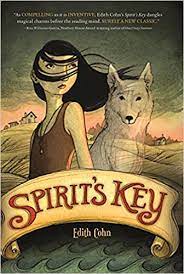
Spirit’s Key by Edith Cohn (J Mystery)

Spirit’s Key

Edith Cohn (J Mystery)

They get quiet. I’ve come outside, so they reward me with their silence. But it’s only because they want me to follow them. They lead me across the island to the edge of the woods, where they wait. Their eyes are filled with that intense urgency that says Follow me. It’s hard not to be taken in by it. There’s something in the woods they want to show me, but I don’t think it’s as harmless as a horse. I think it’s something actually dangerous.

Twelve. That’s the age where a Holderness receives their gift to be able to see into a person’s future. But Spirit hasn’t received her gift yet and her father’s gift has started to become more and more unreliable—causing business and the community’s confidence to wane. Her dad says that she must reconcile with her present before she can see the future, but her beloved baldie, Sky, is dead and she somehow can’t seem to get over her loss. Worse, other baldies—the wild dogs that roam Bald Island—are dying and a mysterious illness is starting to affect the townspeople…including her father. Could the baldies be the cause? When Spirit’s beloved Sky reappears, he keeps drawing her into the woods and toward the baldie cave. Could the answer to everything plaguing the island lie within that darkened entryway?

Cohn delivers an age-appropriate and suspenseful mystery whose underlying theme is the importance of protecting and respecting life. She communicates the necessity of preservation without being overly preachy and does so through the wonderful relationship between a girl and her dog. Any child who has ever loved and lost a pet will immediately be connected to Spirit and will understand the unique bond she shares with Sky, as well as the profound emptiness she feels upon his death. She also provides so many other valuable lessons: the value of friendship (Everyone needs a friend to watch their back.); the reluctance to accept things that are different (Why do people fear things they don’t understand?); and the importance of living in the now (The present isn’t something we can squander.).

Books for young readers that have a principled and strong female protagonist are my favorites. Spirit is loyal, kind, passionate, and is not afraid to stand up for her convictions. She’s the kind of girl that you would be proud to call daughter and lucky to have as a friend. Most of all, she says the two most courageous and powerful words that anyone can speak: I care. When others around her falter and surrender to fear, Spirit stands up for those unable to defend themselves. She gives a voice to those unfairly targeted and hunted and reminds everyone that outsiders have a place in the world, too. Spirit is not extraordinary because she can hold a key and see into the future or that she can communicate with animals. She’s exemplary because she cares, and the world could use a lot more people like Spirit in it.

Rating: 5/5

* Book cover image attributed to: www.amazon.com

Starfish by James Crowley (J Fiction)

Starfish

James Crowley (J Fiction)

Orphaned at a young age, nine-year-old Lionel and his older sister Beatrice have lived at the Chalk Bluff boarding school on the Blackfeet Indian reservation for six years. Beatrice defiantly holds on to the traditions of her people, which causes growing tensions between her, the priests, and the officers who live in the nearby military outpost. When Beatrice is finally pushed to the brink, she steals the captain’s prized horse and escapes with Lionel into the wilderness in search of their grandfather. Grandfather will know how to help them, but first they must survive the harshness of the Montana winter.

James Crowley’s Starfish is packed with action and adventure and provides readers with a powerful female protagonist who is fearless, principled, and wise beyond her twelve years. The writing is detailed and the chapters are short, which add to the tale’s rapid and charged pace. Readers share in Beatrice and Lionel’s struggle to survive the elements and hunger; cheer their ability to outrun and outwit bounty hunters (they are understandably considered horse thieves); and support their loyalty to their customs and beliefs. Crowley creates a suspenseful story through wonderful storytelling that is a love letter to nature and Native American culture. Although the novel is littered with mild profanity (it’s nothing that younger audiences wouldn’t hear in a standard Marvel movie) and contains a few instances of violence, these shouldn’t discourage the targeted age range of 8-12 from reading it.

I loved the insights into Blackfeet tradition and I’m a total pushover for stories that highlight strong sibling relationships; however, the only thing that held back a five-star rating was the ending. It felt abrupt and awkward and didn’t match the same feel and flow of the rest of the book. I am not one that demands a happy ending in order to fully enjoy a story, but I do need an ending that is thoughtful and provides adequate closure. Because Crowley spent so much time and care giving readers such a well-developed story, it felt as if he ran out of steam at the end.

I find that with nearly every book, the last few pages will either make or break a story for me and in this case, those last pages of Starfish just felt incomplete and hollow. Unlike the ravens and eagle that soared high in the Montana sky, this story doesn’t reach the heights that I hoped it would, but it still manages to lift the spirits and take us on an unforgettable journey.

Rating: 4/5

* Book cover image attributed to www.goodreads.com

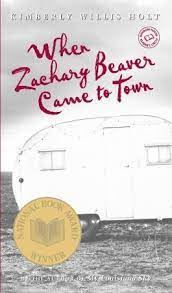
When Zachary Beaver Came to Town by Kimberly Willis Holt (J)

When Zachary Beaver Came to Town    

Kimberly Willis Holt

Nothing ever happens in Antler, Texas. Nothing much at all. Until this afternoon, when an old blue Thunderbird pulls a trailer decorated with Christmas lights into the Dairy Maid parking lot. The red words painted on the trailer cause quite a buzz around town, and before an hour is up, half of Antler is standing in line with two dollars clutched in hand to see the fattest boy in the world.

It’s the summer of ‘71 in Antler, Texas and the biggest news in town was Cal’s brother, Wayne, serving in Vietnam and Toby’s mom, Opalina, going to Nashville to compete in the National Amateurs’ Country Music Competition at the Grand Ole Opry. Those two things alone were enough to keep the town’s tongues wagging for a while, but then along came that white trailer carrying the world’s fattest boy. Just two dollars and you could gawk all you like. It doesn’t seem like anything could top this, but Toby Wilson and Cal McKnight are two teenagers in a small town so you can bet that adventure—and trouble—aren’t too far behind.

With her National Book Award winning novel, Kimberly Willis Holt takes us to small town America in the early 70s. A time when the country was embroiled in the Vietnam War, the local cafe was where you went to get updated on all the latest news, and there was nothing so bad that eating a snow cone with your best friend couldn’t make right. Holt’s downhome, folksy writing immediately sets a tone of comfort, familiarity, and inclusion for her readers and instantly makes you a part of this tight-knit town that boasts the Wag-a-Bag, Bowl-a-Rama, AND Wylie Womack’s snow cone cart. What more could a town need?

Holt explores so many important and relevant themes that often (and unfortunately) go unexplored in today’s stories for young readers. It’s the subtle niceties that bear no monetary value that seldom makes it to the written page: allowing a person to maintain their dignity, extending a stranger common courtesy and respect, and accepting loss and defeat with grace and valor. Kindness, decency, and friendship serve as the foundation for When Zachary Beaver Came to Town, but Holt also shines a light on the selfish side of human nature and how easy it is to put our own wants and desires ahead of what is right—regardless of the consequences. She also explores a number of relationships in her book with each one offering readers a valuable lesson in forgiveness, humility, and empathy.

Two teenage boys learned so much when Zachary Beaver came to town, but perhaps the most important were that friends don’t snitch on one another, you always stick up for those who can’t defend themselves, and you never, never turn down the chance to dance with the girl of your dreams…especially when a song by the Carpenters is playing.

Rating: 4/5

* Book cover image attributed to www.goodreads.com 

**Want more?  Visit our Facebook page at www.facebook.com/thedustyjacket