

The House on Mango Street by Sandra Cisneros (Adult Fiction)

The House on Mango Street   

Sandra Cisneros (Adult Fiction)

The house on Mango Street wasn’t what Papa had talked about when he held up a lottery ticket or what Mama had dreamed up for our bedtime stories. Instead, it was small and red with crumbling bricks and no front yard. Even a nun, who was passing by the house one day, couldn’t believe that it was actually the home of little Esperanza. It was at that moment that Esperanza knew that she had to have a house. One with stairs on the inside and a front yard with grass. One that was filled with quiet. Quiet like snow. A home all her own.

Published in 1984, Cisneros’s celebrated The House on Mango Street is a coming-of-age story about 12-year-old Esperanza Cordero, a Chicana girl growing up in the Hispanic quarter of Chicago. Comprising of 44 vignettes and being just a squeak above a novelette, Cisneros introduces us to several memorable characters who are the color, texture, and fabric that make up Mango Street. We meet the rotten Vargas kids, Alicia who studies to avoid a life in a factory or behind a rolling pin, Darius the philosopher, Sally with the Cleopatra eyes, and Geraldo who was so much more than a shiny shirt and green pants. But as is the nature of vignettes, our knowledge and connection with these and other characters are superficial and barely scratch the surface. Like a movie trailer, we get the highlights, but not the heart.

In her introduction—which I loved and wished that the rest of the book had been this immersive and rooted—Cisneros wrote that she wanted to write a book “that can be opened at any page and will still make sense to the reader who doesn’t know what came before or what comes after.” I think that was the biggest barrier for me to overcome. While accomplishing her goal, Cisneros sacrificed a connectedness that would have given readers more than just a superficial glance at characters who did have a before and, more importantly, an after. I wanted to know Sally’s after, who married to be free yet ultimately found herself in a different prison. I wanted to understand Geraldo’s before in hopes that someone would miss this charismatic young man who loved to dance.

Although I miss the richness of the novel that could have been, I can’t deny the beautiful and artful way Cisneros evokes raw emotion and vivid images with just a few well-placed words. She describes a family who enters a garden area between her building and a brick wall as “a family who speak like guitars”, equates the entry into womanhood by describing the sudden development of hips as “One day you wake up and they are there. Ready and waiting like a new Buick with the keys in the ignition. Ready to take you where?”, and recalls meeting her three aunts as “one with laughter like tin and one with eyes of a cat and one with hands like porcelain.”

Jørgen Vig Knudstorp, a Danish businessman and the former CEO of the Lego Group, said, “Any creative people are finding that creativity doesn’t grow in abundance, it grows from scarcity.” Now, he was talking about Legos and how having more doesn’t necessarily equate to more creativity, but it does show how a novella, not quite 18,000 words, is beautiful and creative because of its scarcity rather than in spite of it.

Rating: 4/5

* Book cover image attributed to: www.abebooks.com

We’re now posting videos of some of our book reviews! Follow us on Facebook at www.facebook.com/thedustyjacket or on Instagram @tdjreviews and join in on the fun!
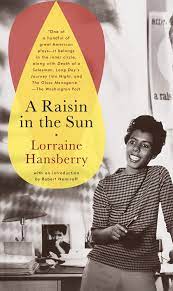
A Raisin in the Sun by Lorraine Hansberry (Play)

A Raisin in the Sun

Lorraine Hansberry (Play)

In his poem “Harlem”, Langston Hughes wrote: What happens to a dream deferred? / Does it dry up / like a raisin in the sun?

As far as dreams go, the Younger family has plenty: Walter Lee wants to leave his life as a chauffeur and become a businessman; his sister, Beneatha, has aspirations of becoming a doctor; Ruth, his wife, wants to escape their roach-infested apartment and give her son a bed of his own; and Mama dreams of having a bit of ground—just enough to plant some flowers. But dreams are for other people until Mama receives an insurance check in the mail. A check that might finally be the answer to everything the Younger family ever dared to dream.

This review is based on the play with a forward written by Robert Nemiroff. This edition is the most complete ever published—restoring two scenes that were before unknown to the public. I can’t imagine anything being removed from this classic work. Each scene is a masterpiece in storytelling—carefully developing each character to expose their vulnerabilities and insecurities and examining their struggle to break free from ties that bind them economically, socially, and culturally.

Hansberry’s opening words allow us to feel the weight and heaviness that this family shoulders. They epitomize the words “poor, but proud” and it’s clear that every-day life has taken a toll on them. Hansberry even makes the furniture tired as it too seems to realize the futility of hope: The Younger living room would be a comfortable and well-ordered room if it were not for a number of indestructible contradictions to this state of being. Its furnishings are typical and undistinguished and their primary feature now is that they have clearly had to accommodate the living of too many people for too many years—and they are tired. Still, we can see that at some time, a time probably no longer remembered by the family (except perhaps for Mama), the furnishings of this room were actually selected with care and love and even hope—and brought to this apartment and arranged with taste and pride.

A Raisin in the Sun is an homage to the African-American family struggling for something better and wanting nothing more than to be treated with respect and dignity. It tackles the women’s movement and civil rights head-on through a pair of siblings who are naïve, headstrong, likeable, and well-meaning: one trying to find her place in the world and the other attempting to find his place within the family. Although this play was first produced in 1959, it is still relevant today as millions of Americans live at or below the federal poverty line and minorities continue to struggle with social and economic inequities.

Throughout the play, Hansberry has Mama nurturing a small plant that she places outside the sole window of the family’s apartment. Like her own family, the plant struggles to thrive despite the constant care given it. The plant is dear to Mama as it represents the closest thing to a garden that she would likely ever have. Unlike her children, she doesn’t need a business or a career or a house to make her happy. All she wants is a small patch of dirt so that she could watch something grow. It seems that Minne Aumonier, an 18th century poet, had the same idea in mind when she wrote, “When the world wearies and society fails to satisfy, there is always the garden.” Like we always suspected, Mama really does know best.   

Rating: 5/5

* Book cover image attributed to: www.amazon.com