
Book Review: The Toothpaste Millionaire by Jean Merrill

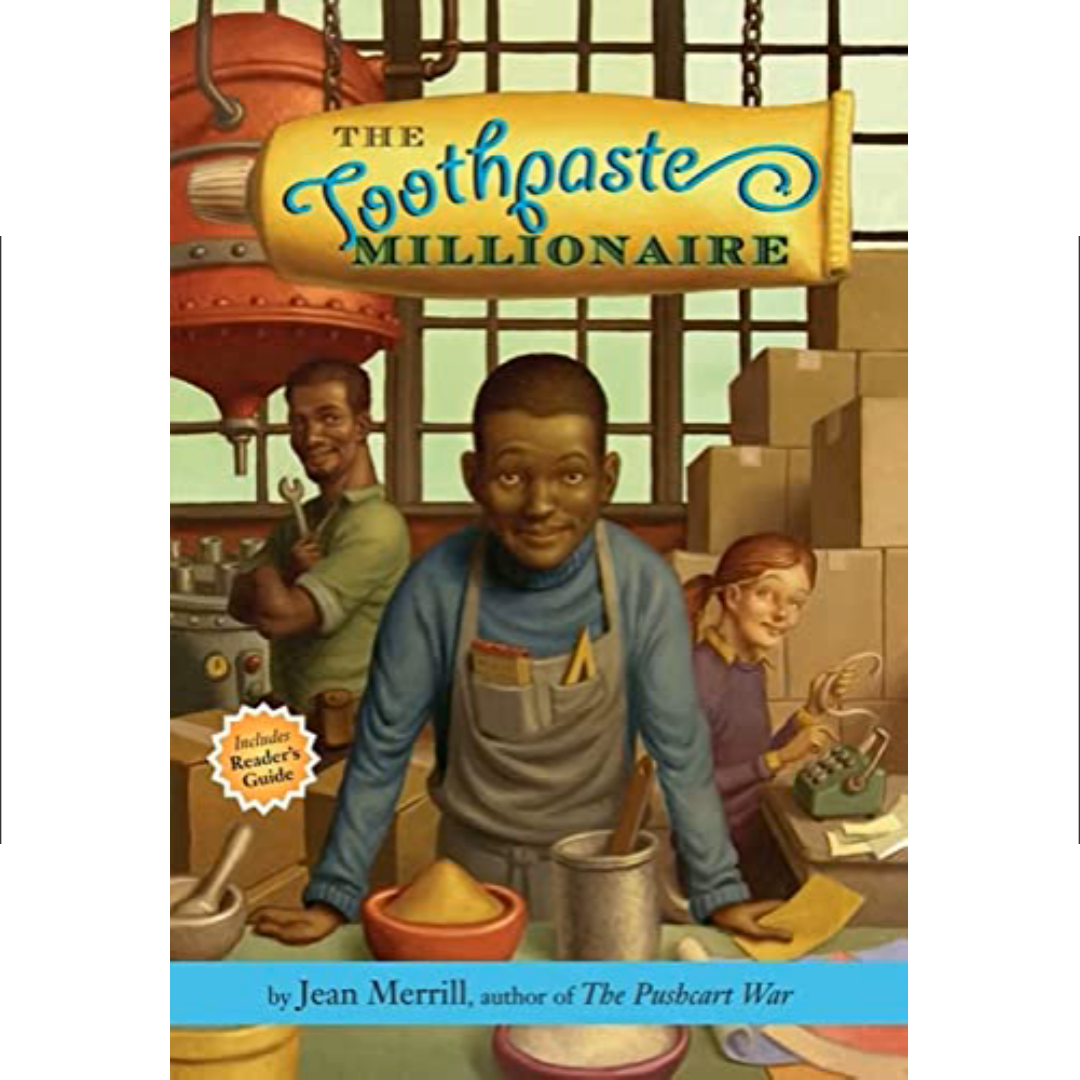
The Toothpaste Millionaire

Jean Merrill (J Fiction)

This is the story of my friend Rufus Mayflower and how he got to be a millionaire. With a little help from me. With a lot of help from me, as a matter of fact. But the idea was Rufus’s.

Who would pay $.79 for a tube of toothpaste? Why, it was so outrageous that 12-year-old Rufus Mayflower takes matters into his own hands and sets out to make his own toothpaste for less…much, MUCH less. Drawing from his days at his grandmother’s house, Rufus concocts a toothpaste recipe and proves that he can, in fact, make a whole gallon of toothpaste for the same cost as a single tube. Excited to pass on this cost savings to consumers, he partners with his friend Kate and soon earns the attention of a local TV personality. Rufus’s toothpaste not only gets noticed by the public, but also by some of toothpaste’s biggest manufacturers. However, what Rufus learns about business and competition is nothing to smile about.

Set in the 1960s, Jean Merrill’s The Toothpaste Millionaire is a testament to ingenuity, entrepreneurship, and integrity. Fans of her classic David-versus-Goliath book The Pushcart War will once again be cheering for the underdog who takes on the establishment and proves that when the good guys win, they win big!

The heart of the story is the interracial friendship between Rufus and our narrator Kate. This relationship may not bat any eyes today, but during the story’s setting, it was considered uncommon and unconventional. But as fate would have it, a single and simple act of kindness opened the door to a friendship built on mutual trust, respect, and admiration. Merrill gives the story a nice twist by making Kate—who is white—the outsider, having moved into a predominantly black, middle-class neighborhood. As she also serves as the story’s narrator, she describes first-hand what it feels like to be excluded and viewed suspiciously. However, racial lines are soon blurred as everyone comes together behind Rufus’s lucrative and ambitious venture.

The Toothpaste Millionaire is an ode to the self-starters who feel that something could be made cheaper, faster, better, or smaller. Merrill somehow makes learning economics, math, and marketing fun through a cast of likeable characters, a fast-paced story, and the idea that treating people with fairness, kindness, and respect bears its own riches and rewards.

Rating: 5/5
Book Review: Runaway Ralph by Beverly Cleary

Runaway Ralph

Beverly Cleary (J Fiction)

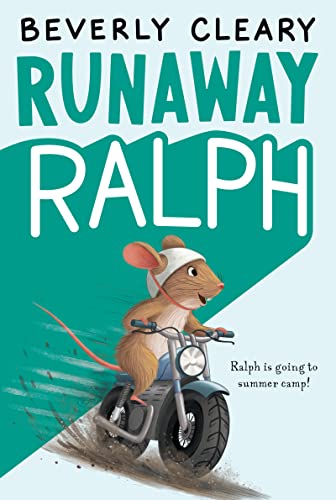
Ralph wants a life of speed, danger, and excitement. Ralph wants to be free from his cousins and the rules imposed by his mother and uncle. But most of all, Ralph just wants a peanut butter and jelly sandwich! Determined not to be just another crumb-scrounging rodent, he decides to run away from his home at the Mountain View Inn and heads to a place filled with the promise of those wonderful sandwiches…Happy Acres Camp. With a little effort, and some luck from a downhill journey, Ralph is on his way. It’s not long after that he gets more than he bargained for when he meets the camp guard dog, a sneaky tom cat, and a philosophical neighbor in the form of a hamster. Soon, Ralph realizes that perhaps home isn’t so bad after all.

Cleary delights audiences once again with this charming follow-up to her popular The Mouse and the Motorcycle. In the first book, Ralph meets an extroverted boy confined to his hotel room due to illness. This time around, he meets an introverted boy confined by his own self-doubts, shyness, and desire to be alone. It’s a nice twist for Ralph to meet such an opposite ally named Garf (short for Garfield). The reader also gets to watch Garf come out of his shell as he’s given the responsibility of caring for Ralph and begins to develop a friendship with the mouse. Ralph also begins a transformation of his own. Once feeling “trapped” by his mother’s silly rules, Ralph literally becomes trapped in a cage and begins to appreciate the freedom he once had at the inn. He also understands that the rules he once viewed as restrictive were actually imposed to keep him safe.

Readers shouldn’t be worried that this book will fall short of its predecessor! On the contrary, there’s plenty of action and nail-biting situations to keep young audiences engaged and ready for more. The book’s ending also introduces Ralph’s next adventure nicely and enticingly lures readers to complete their journey with Cleary’s third and final installment of her Ralph Mouse series: Ralph S. Mouse.

There’s a great quote that says, “Remember, being happy doesn’t mean you have it all. It simply means that you’re thankful for all you have.” After several near-catastrophic events, Ralph slowly began to appreciate the life he had and even started to value those pesky, nuisance rules. He missed home because he realized that home—rules, cousins, and all—was enough…even though a peanut butter and jelly sandwich every now and then would be good, too.

Rating: 4/5

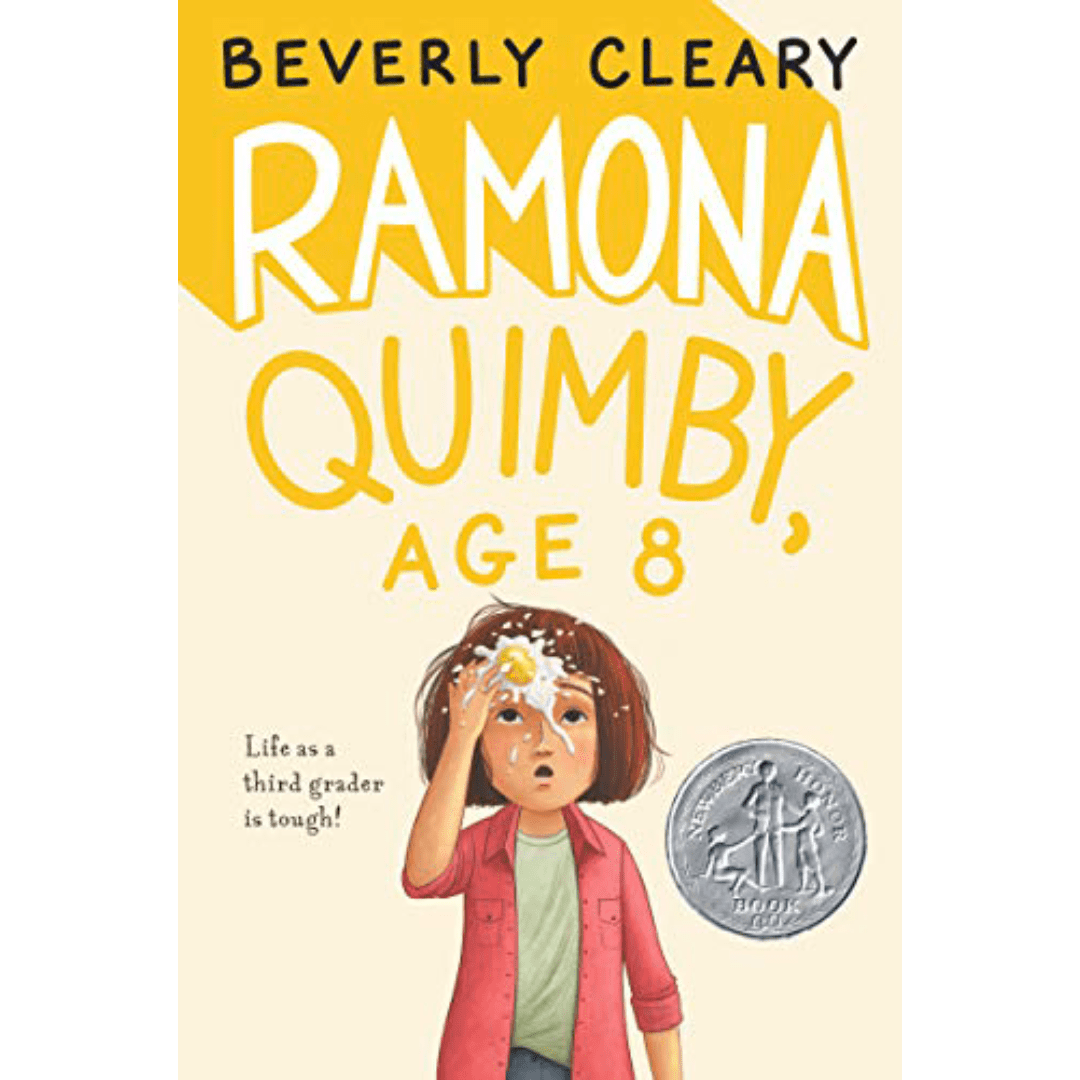
Ramona Quimby, Age 8 by Beverly Cleary

Ramona Quimby, Age 8

Beverly Cleary (J Fiction)

Ramona has a LOT going on! She’s starting the third grade at a school where NO ONE knows that she’s Beatrice Quimby’s little sister (yay!), she gets to ride the school bus ALL by herself, and she has THE most important responsibility of the family—be nice to Willa Jean at Howie’s grandmother’s house. Sound like a lot to handle? It might be for anybody, but this is Ramona Quimby and if anyone can tackle a challenge and new situations head on, it’s this girl…even though she’s just eight. But between a school bully, an ever-tightening family budget, an unfortunate egg incident at school, and a teacher who thinks she’s a show-off, even Ramona is starting to feel the pressure. Can she find a way to toughen up and pull it together? She has to because her family is depending on her!

Beverly Cleary’s endearing Ramona series continues as our feisty heroine returns and is as lovable, surprising, and formidable as ever. She’s opinionated, clever, resilient, and demands accuracy. She’s a girl who’s fair, loyal, and loves her family. Most importantly, she’s human and serves as an example of what to do (and what not to do) when things don’t go your way. With her unflappable charm, spunk, and candor, she turns an adversary into an unlikely ally, accepts a punishment as a challenge, tackles a boring school assignment with creative flair, and realizes that she’s part of a nice sticking-together family, although they might not be nice all of the time.

What makes Ramona Quimby, Age 8 such a great story is the relatability of its main character. Whether she’s dealing with the humiliation of getting sick at school in front of her classmates, standing up to playground injustice, dealing with the shame of falling out of favor with a teacher, or dealing with overly stressed parents who might be on the verge of falling out of love, Ramona deals with life’s ups and downs as best she can. She takes her responsibility within her family seriously, is hurt when treated unfairly by her parents, and is pragmatic in whose side she takes in a family squabble. She pouts, whines, and agitates, but she’s also curious, kind, and helpful. Ramona is allowed to be a lot of things because she knows that she has a family who loves and supports her unconditionally and this allows her the freedom to explore, challenge, and fail without suffering long-lasting repercussions. And through some tough lessons, our heroine vows to try harder, promises to be dependable, and strives to be more patient in the future. As for today, she’s just Ramona Quimby, age 8, and that’s good enough…for now anyway.

Rating: 5/5

Share Ramona with your class with our study guide: https://www.teacherspayteachers.com/Product/Study-Guide-Ramona-Quimby-Age-8-by-Beverly-Cleary-12745834

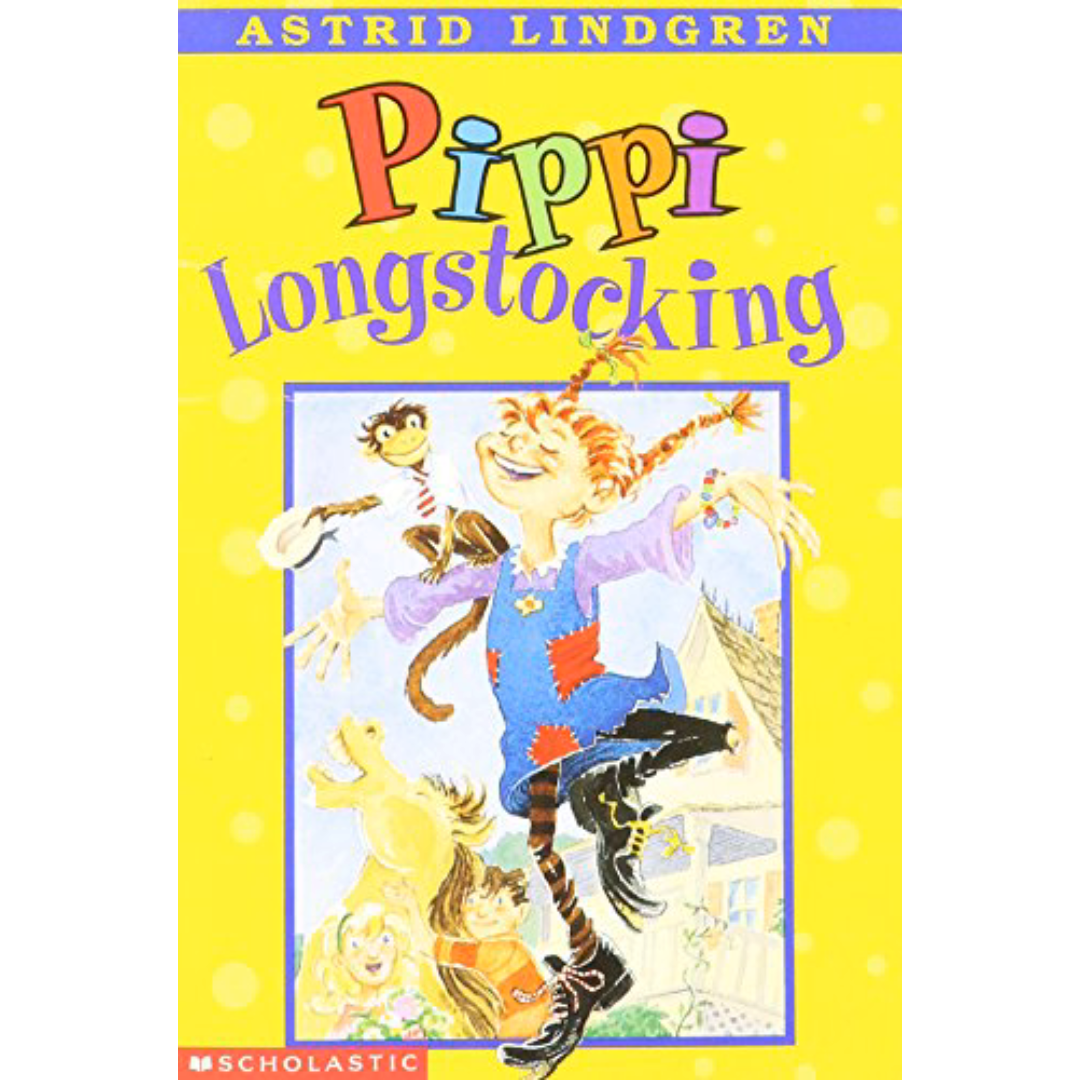
Pippi Longstocking by Astrid Lindgren (J Fiction)

Pippi Longstocking

Astrid Lindgren (J Fiction)

Way out at the end of a tiny little town was an old overgrown garden, and in the garden was an old house, and in the house lived Pippi Longstocking.

Whether she’s waving hello to her mother in heaven or waving goodbye to the sailors on her late father’s boat, Pippi Longstocking always says the same thing: “Don’t you worry about me. I’ll always come out on top.” And if you knew Pippi Longstocking the way her friends and the people of her little town did, you’d know that she does just that. From finding things in odd places and putting a bully in his place to engaging policemen in a friendly game of tag and teaching would-be burglars the schottische, you can count on the girl with the mismatched stockings, wild hair, and too-big shoes to turn any outing into an unforgettable adventure.

Move over Hermione Granger, Anne Shirley, and Jo March! When you talk about feisty, fearless, pragmatic, precocious, brave, boisterous, and benevolent female characters, there’s none that ranks higher than Astrid Lindgren’s red-headed heroine. Although her forthrightness is often mistaken for rudeness and her lack of respect for authority is merely an absence of parenting, our nine-year-old orphan is fair, just, and generous. Raised for the most part by sailors, Pippi says what she means and means what she says and looks beyond social, political, and economic status to treat all people equally. One would be hard pressed to find a more loyal friend whose sincere kindness and desire to behave make her penchant for exaggerating and interrupting forgivable.

Written in 1950, this classic hasn’t aged as well as most other children’s books of this era. With a mention of animal abuse (Pippi nonchalantly breaks off the horns of a bull), child endangerment (a nine-year-old left alone to fend for herself), a total lack of respect for rules or authority, and a small matter of Pippi firing two pistols into the air (need to make sure they’re not loaded!) before handing them over to her friends as gifts, it’s easy to understand how Pippi Longstocking might not be viewed as the spirited and light-hearted adventure story that Lindgren intended. Critics may view young Pippi as nothing more than a rude, troublemaking liar who holds no respect for herself or others, but fans know that beneath Pippi’s brash exterior is a heart of gold and a genuine desire to do right.   

One of my favorite quotes about celebrating differences is from author and speaker John Mason who said, “You were born an original. Don’t die a copy.” Hate, love, fear, or admire her, Pippi Longstocking is here to stay and her neverending optimism, graciousness, and fearless zest for life are things we should all aspire to.

Share Pippi with your class with our study guide: https://www.teacherspayteachers.com/Product/Study-Guide-Pippi-Longstocking-by-Astrid-Lindgren-12389118

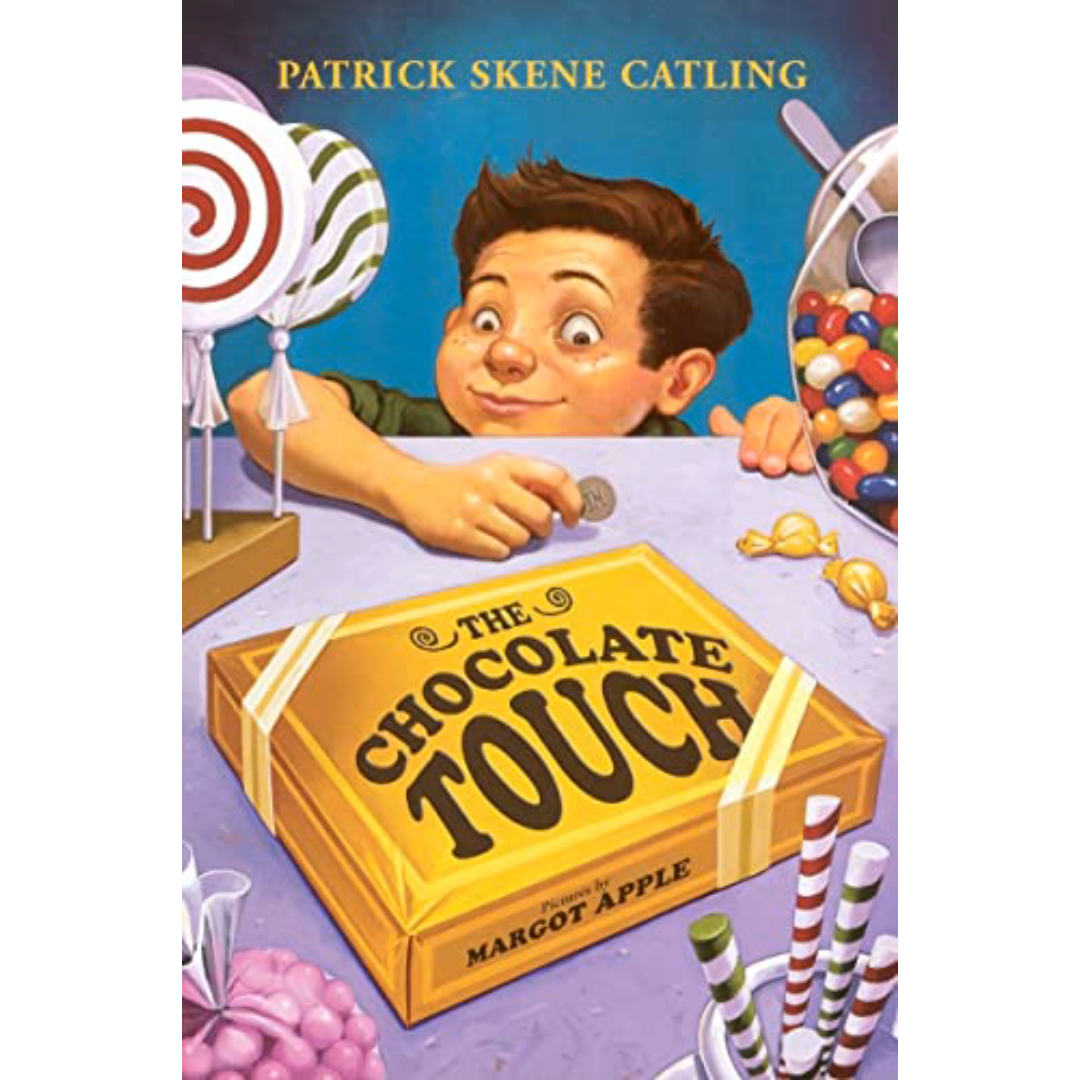
The Chocolate Touch by Patrick Skene Catling

Most of the time John Midas was a very nice boy. Every now and then, of course, he broke a rule…

The Chocolate Touch

Patrick Skene Catling (J Fiction)

Most of the time John Midas was a very nice boy. Every now and then, of course, he broke a rule…

John Midas loves candy. He especially loves chocolate. In fact, John is candy mad, but worse is that John doesn’t share. Not one little bit. Not with his parents or with his little sister or even with his best friend, Susan Buttercup. Yep. John was greedy and he’s about to learn a very bittersweet lesson when he finds a strange coin on the sidewalk. A coin that unlocks John’s secret wish of wanting to eat chocolate all day, every day. A coin that would have John questioning whether you CAN have too much of a good thing.

Patrick Skene Catling gives readers a cautionary twist of the classic tale of King Midas and his golden touch. In this story, a selfish and greedy boy is suddenly given the ability to turn anything that goes into his mouth to chocolate. Toothpaste, tonic, eggs, orange juice, and eggs are suddenly chocolatey treats that easily and willingly go down his throat—much to the delight of his overly concerned mother who thinks that John is finally making good food choices. But John soon realizes the downside of his powers when the things most precious to him fall victim to his chocolate touch.

The Chocolate Touch is an excellent read-aloud book ideal for either classroom discussion or a shared bedtime story. Valuable lessons such as being careful what you wish for and happiness is not always found through material gain will be recognized by readers who will most likely predict what will happen next as John continues his chocolate transformations. There are plenty of opportunities to talk about actions and consequences, accepting responsibility, and placing someone else’s needs above your own to make this a funny and effective learning tool.

Author Thomas Harris wrote, “Nothing makes us more vulnerable than loneliness except greed.” John realized this lesson as his greed began to isolate him and ultimately cost him his dignity, health, friends, and even his beloved mother. Lucky for him, a good dose of humility—which may have been more unappetizing to digest than his daily tonic—ultimately saves him from a life that even Willy Wonka may have declined.

Rating: 4/5

Bring The Chocolate Touch to your class with our study guide: https://www.teacherspayteachers.com/Product/Study-Guide-The-Chocolate-Touch-by-Patrick-Skene-Catling-12313062

Bluefish by Pat Schmatz (YA)

Bluefish

Bluefish

Pat Schmatz (Young Adult Fiction)

“One fish, two fish, red fish, blue fish.”  Might as well be, “One fish, two fish, Travis is a stupid fish.”  At least that’s what they all say…well, what one person says, but he is a VERY influential person.  Travis Roberts is the new kid in the eighth grade.  The only thing keeping him in school was his dog, Rosco, and now that he’s gone, what’s the point?  He’ll always be stupid.  He’ll always be a bluefish.  But then Travis meets Vida (her public calls her “Velveeta”) and Bradley Whistler (who is THE smartest kid EVER) and Mr. McQueen, his reading teacher.  Up until this point, everything that Travis cared about was gone.  Maybe now he has a reason to begin caring again…even if he is just a bluefish.

Pat Schmatz serves up an awkwardly accurate and often humorous portrayal of adolescence through three flawed and endearing misfits—all longing to fit in and wanting to be a part of something bigger than themselves.  Our three protagonists are no longer a child and not quite an adult, and Bluefish shows us the mask each wears to cover up their insecurities and shortcomings.  From the brainiac to the class clown to the strong, silent type, Schmatz successfully encapsulates the complicated world of teenagers and the tangled and convoluted roadmap that directs their everyday lives and dictates their emotions.

Bluefish is more than a story of friendship and middle school survival, it’s a story of how one person has the power to change the very course of our life:  a kid who finds and hands back your stolen shoe; a girl who invites you to sit with her at lunch; or a teacher who volunteers his or her time to tutor you before school.  Thank you, Ms. Schmatz, for reminding us of the importance of not giving up on our friends, and—more importantly—not giving up on ourselves.  You have shown us that being a bluefish really isn’t so bad and can actually be a rather remarkable thing after all.

Rating: 5/5

*Book cover image attributed to www.barnesandnoble.com

**Want more?  Visit our Facebook page at www.facebook.com/thedustyjacket

Astrid & Veronika by Linda Olsson

Astrid and Veronika

Astrid & Veronika

Linda Olsson (Adult Fiction)

“’And who will you dream of, Veronika?’ Astrid said, without taking her eyes off the water.  ‘With the flowers under your pillow.  Who?’  Veronika didn’t answer.  She sat with her legs pulled up and her arms clasped around them, her chin resting on her knees.  ‘I came here to escape my dreams,’ she said eventually.”

Author Veronika Bergman arrived in Stockholm, Sweden with just a few bags and her personal belongings.  Her rental home was next door to Astrid Mattson, the village witch—at least that’s what the people in town call her.  Astrid is nearly eighty years old and keeps to herself.  She doesn’t like people and has left the village only once in her life.  She likes her secrets and her solitude, but when she meets Veronika, something remarkable happens.  Something quite unexpected.  Astrid begins to care and slowly these two women discover that although loss and heartbreak connect them, friendship would forever bind them.

Astrid & Veronika is Linda Olsson’s first novel and was originally published in New Zealand under the title Let Me Sing You Gentle Songs.  Her writing is fluid and the storytelling is effortless and captivating.  Olsson gives readers Veronika and Astrid—two women tormented by their past, haunted by their memories, and brought together by fate.  These two restless souls form a committed bond that becomes instinctive—each aptly anticipating the other’s needs and providing comfort, support, and understanding.

I truly enjoyed this book, but found that there were too many unanswered questions that kept me from wholly appreciating Olsson’s extraordinary debut work.  In particular, Astrid’s story had one pivotal plot point that left me confused and frankly horrified at the choice she made.  Her backstory lacked sufficient detail that might have allowed me to be more sympathetic to her and the action she took.  Instead, Olsson put the burden on me to draw my own conclusions, which is seldom a sufficient or satisfying solution.

Olsson’s original book title came from a poem by Karin Boye called “Min stackars unge, My poor little child”, which she includes in her book.  It accurately describes our heroines and reads in part,

“My poor child, so afraid of the dark,

who have met ghosts and another kind,

who always among those clad in white

glimpses those with evil faces,

now let me sing you gentle songs,

from fright they free, from force and cramp.”

Astrid and Veronika are two women separated by age and circumstance but connected through the ghosts of their pasts.  Both lost mothers and loves, but through patience and understanding, they formed their own gentle song and found the strength and courage to live and to love again.

Rating: 4/5

*Book cover image attributed to www.amazon.com


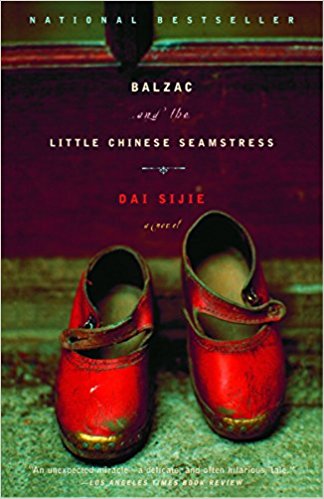
Balzac and the Little Chinese Seamstress by Dai Sijie

Balzac and the Little Chinese Seamstress

Balzac and the Little Chinese Seamstress

Dai Sijie (Adult Fiction)

It was in early 1971 when two “city youths”—ages 17 and 18—were banished to the mountain known as the Phoenix of the Sky.  Boyhood friends, they were to be re-educated as part of Chairman Mao’s Cultural Revolution in China.  If they were fortunate, they would be reunited with their families after two years.  But they were not the offspring of average parents.  Instead, their parents—professional, respected, educated—were classed as enemies of the people, and their chances of release currently stood at three in a thousand.  So, the two spent their days laboring in the paddy fields, working in the mines, or carrying human and animal waste on their backs.  But one fateful day, their village headman sent them to the district of Yong Jing.  That journey would culminate with the princess of Phoenix Mountain, a miller, and an author named Honoré de Balzac.

Dai Sijie himself was re-educated and spent between 1971 to 1974 in the mountains of Sichuan Province.  His experiences undoubtedly gave this novel its authenticity, depth, and richness.  I knew very little of Mao Zedong’s 10-year movement to preserve Chinese Communism through the cultural eradication of capitalism and tradition.  Needless to say, the results were disastrous: economically, politically, and societally.  Sijie gives us a glimpse of the isolation, fear, and hysteria suffered by those who were sent away through the eyes of our 17-year old narrator (unnamed) and his 18-year friend, Luo.  When the two come across a hidden collection of translated Western classics, their worlds expand as they are introduced to the foreign feelings of lust, jealousy, revenge, and honor.  Matters are further complicated when they share these novels with the local tailor’s daughter, the Little Seamstress.

I truly enjoyed this book and found it as light and airy as a basting stitch.  It read like a well-crafted fable and the scenes were sewn together seamlessly.  It was a delightful read that reinforces the idea that the written word is often just as powerful suppressed as it is unleashed.  Albert Einstein said, “A little knowledge is a dangerous thing.  So is a lot.”  Balzac and the Little Chinese Seamstress reminds us that once a book is opened, so is the mind and when the mind is opened, the heart takes flight.  Perhaps for this reason alone, there are still those in the world who wish books to remain closed.

Rating: 4/5

* Book cover image attributed to www.amazon.com 


Top 10 Picks for 2018

The Dusty Jacket’s Top 10 Picks for 2018*

Adult Fiction/Biography

  1. The Kitchen House by Kathleen Grissom (reviewed March 2018)
  2. Little Bee by Chris Cleave (reviewed May 2018)
  3. Whistling Past the Graveyard by Susan Crandall (reviewed June 2018)
  4. The Invisible Wall (Biography) by Harry Bernstein (reviewed June 2018)
  5. A Long Way Gone: Memoirs of a Boy Soldier (Biography) by Ishmael Beah (reviewed July 2018)
  6. The Dressmaker by Kate Alcott (reviewed July 2018)
  7. Snow Flower and the Secret Fan by Lisa See (reviewed August 2018)
  8. The Beggar King and the Secret of Happiness (Biography) by Joel ben Izzy (reviewed September 2018)
  9. The Miracle Life of Edgar Mint by Brady Udall (reviewed November 2018)
  10. The Reader by Bernhard Schlink (reviewed November 2018)

Juvenile/Young Adult

  1. My Side of the Mountain (J) by Jean Craighead George (reviewed March 2018)
  2. The Devil’s Arithmetic (YA) by Jane Yolen (reviewed April 2018)
  3. Sadako and the Thousand Paper Cranes (J Biography) by Eleanor Coerr (reviewed April 2018)
  4. Island of the Blue Dolphins (J) by Scott O’Dell (reviewed April 2018)
  5. Homeless Bird (YA) by Gloria Whelan (reviewed May 2018)
  6. Fever 1793 (YA) by Laurie Halse Anderson (reviewed June 2018)
  7. The Seven Wonders of Sassafras Springs (J) by Betty G. Birney (reviewed August 2018)
  8. The Miraculous Journey of Edward Tulane (J) by Kate DiCamillo (reviewed August 2018)
  9. The Incredible Journey (J) by Sheila Burnford (reviewed November 2018)
  10. The Terrible Thing That Happened to Barnaby Brocket (J) by John Boyne (reviewed November 2018)


*List contains selections reviewed in 2018


The Little Paris Bookshop by Nina George

The Little Paris Bookshop

The Little Paris Bookshop  

Nina George (Adult Fiction)

“As the grandmother, mother and girl said their good-byes and went on their way, Perdu reflected that it was a common misconception that booksellers looked after books.  They look after people.”

From a single conversation, Monsieur Perdu can tell you what you need and what your soul lacks.  His father calls it transperception, the ability to see and hear through most people’s camouflage and detect all the things they worry and dream about.  He can transperceive just about anybody…except himself.  He spends his days operating a moored book barge called Literary Apothecary, where he prescribes books like medication to those who lack or seek confidence, hope, faith, or love.  His seemingly tranquil life is suddenly made turbulent when an unopened, twenty-year old letter, written by his ex-lover, is discovered.   Perdu suddenly finds himself on a journey to discover an author’s real identity, to seek forgiveness, and to find peace.

Like a rusty barge moored in port for a little too long, this book had a promising start, but then just sputtered and gasped along until the end of the book.  The details and descriptions that George provides of the ports along Paris and of the French countryside are vivid and meticulous; however, the story stalls mid-way through and just never seems to regain steam.  Reading this book was more like a job to finish rather than a journey to be enjoyed.  The Little Paris Bookshop was marketed as “a love letter to books”, but to readers, it feels more like a Dear John letter as we are left feeling forlorn and rather disappointed.

Rating: 3/5

* Book cover image attributed to www.penguinrandomhouse.com