
The Borrowers Afloat (The Borrowers #3) by Mary Norton

The Borrowers Afloat (The Borrowers #3)

Mary Norton (J Fantasy)

It all began when Mrs. May told Kate the story of the Borrowers: Pod, Homily, and Arrietty Clock. The story of how these little people lived happily under the kitchen floorboards at Firbank until being smoked out; how they survived hunger, weather, and a sinister gypsy with the help of a human being and a loner Borrower; and how all of this ended with an unexpected reunion with Uncle Hendreary and Aunt Lupy. But, as we’ve learned, things with the Borrowers are never easy and with bad news from the human boy Tom, our three friends are off on yet another adventure, except this time they’re aided by a most resourceful and trustworthy ally, Spiller.

The Borrowers Afloat is the third installment in The Borrowers series and it’s just as thrilling and enchanting as its predecessors. Norton continues to use each book to give readers a greater insight into the world of these resourceful and brave beings. In this book, we see how Uncle Hendreary and Aunt Lupy live and understand the partnership they’ve formed with Spiller. Also, Spiller has been promoted from a supporting role to a main character as he plays an instrumental part in saving the Clocks (quite a few times by now), as well as assisting them in securing permanent housing.

Of all the characters so far, Spiller is perhaps the most underrated and gracious as he gives up his home, time, and resources to assist the Clocks on more than one occasion. Although he works through barter, the kindnesses extended Pod and Homily seem to go largely unreciprocated and unappreciated except for Arrietty who holds a genuine like and concern for this ragamuffin drifter. Lastly, Norton continues to develop our soft, pampered, and opinionated matriarch, Homily, and allows her to slowly let go of her prejudices to begin appreciating and valuing Spiller and his contributions to her family.

So far, the series continues to delight with an exciting and fun ride while this book leaves readers with the most suspenseful cliffhanger yet as Mild Eye the gypsy is hot on their heels and the return of the nasty Mrs. Driver and Crampfurl reminds us that our friends’ journey is far from over. But, as Pod was reassuring Homily after another near escape by saying, “As I see it, in life as we live it—come this thing or that thing—there’s always some way to manage. Always has been and, like as not, always will be,” andI have no doubt that Pod, Homily, and Arrietty will continue to find some way to manage as long as they’re together.

Rating: 5/5

* Book cover image attributed to: www.abebooks.com

We’re now posting videos of some of our book reviews! Follow us on Facebook at www.facebook.com/thedustyjacket or on Instagram @tdjreviews and join in on the fun!
Howards End by E. M. Forster

Howards End

E. M. Forster (Adult Classic Fiction)

Considered by many to be Forster’s masterpiece, Howards End is the story of three families in early 20th century England: the Wilcoxes—wealthy, classist, and materialistic capitalists who bear no responsibility for their wrongful actions; the Schlegels—well-intentioned, learned, middle-class siblings who believe in personal accountability and are willing to defy societal protocols to do what is right; and the Basts—lower-class and poor, they seek a better way of life that always seems to be just out of reach.

Just shy of 250 pages, this book took me an inordinate amount of time to finish. The reason is probably best summed up by American economist Herbert A. Simon when he said, “…a wealth of information creates a poverty of attention.”

For me, one of the trickiest things about writing book reviews is that I try to take into account when the book was written, as well as its audience and intent. I refuse to be THAT reviewer who reads a children’s book and then writes that a talking dog is utterly unrealistic. However, I take into equal account how the book made ME feel. Did I connect with the story and characters? Did it leave an impression? Most importantly, is it a story that I would read again?

There is no doubt that Forster accurately depicts the political, social, and philosophical landscape of post-Victorian England and that his elaborate descriptions and attention to detail were the ultimate, exotic passport for his readers when it was published in 1910; however, the deluge of details are simply overwhelming and drowned out, what I felt, was the overall message of the story. Near the very end of the book, when asked about the health of her husband, eldest sibling Margaret Schlegel said to her sister Helen, “Not ill. Eternally tired. He has worked very hard all his life, and noticed nothing.” Both the Wilcoxes and the Basts were so blinded by trying to be better versions of themselves, that they failed to see the bigger picture—Henry Wilcox denying a dying wish to maintain control or Leonard Bast refusing an act of benevolence to maintain an ideology.

The one saving grace of this book is Margaret Schlegel—the matriarch of her little family. Her resistance to yield to patriarchal and societal rules and demands is her greatest virtue and an ever-present point of contention in her marriage. She is loyal, direct, tactful, and resolute and although she longs for equality, she understands well enough why some women “prefer influence to rights”.

Howards End is indeed a beautiful book and worthy of critical praise. Unfortunately, I agree with Aesop in that It is possible to have too much of a good thing. Less is more sometimes.

Rating: 3/5

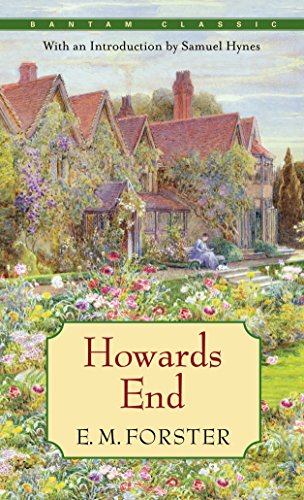
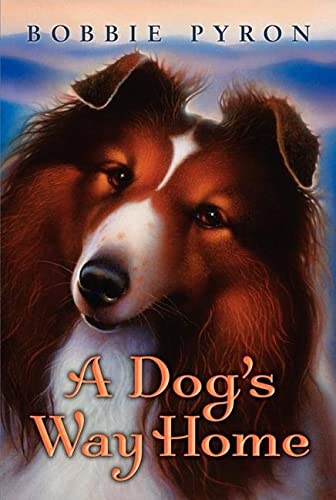
* Book cover image attributed to: www.abebooks.com

We’re now posting videos of some of our book reviews! Follow us on Facebook at www.facebook.com/thedustyjacket or on Instagram @tdjreviews and join in on the fun!
A Dog’s Way Home by Bobbie Pyron (J Fiction)

A Dog’s Way Home

Bobbie Pyron (J Fiction)

Eleven-year-old Abby Whistler and her Shetland sheepdog, Tam, are inseparable. Not only is Tam an agility champion, he is Abby’s world…and she is his. But an unexpected detour leads to a terrible accident that tears Tam from Abby. As the days turn into weeks and fall gives way to the harshness of winter, can Tam find his way from Virginia back to North Carolina where home and his girl is?

Pyron checks all the boxes with this book. A Dog’s Way Home is non-stop action and suspense with whole lot of heart. Short chapters and alternating points of views—between Abby and third-person POV for Tam—ensure that readers stay engaged and fully committed to these characters and their individual struggles as one fights to survive in the harsh wilderness while the other navigates foreign situations in a big city.

There are a couple of things that really made this an exceptional read for young readers. First is that Pyron chose NOT to write down to her audience by having Tam be the narrator of his own story. Having the scene described by an arbitrary third party lends a starkness and cold reality to Tam’s situation, which only heightens the drama and urgency of his predicament. Second is the cruel reality of Tam’s situation. He is an animal suddenly faced with either starvation or survival and as his natural instincts kick in, so does the necessity to eat, and in order to eat one must kill.

Anyone who has ever cared for a dog will feel their heart being twisted and squeezed within their chest as Tam battles everything from the weather to wild animals and ruthless humans. Side note: a lot of well-meaning men who are protecting their loved ones or just doing their jobs really get the short end of the stick in this book and ultimately come across as villains. I expect that by the end of this book, many young readers will despise just about every adult in this book…except Meemaw, Abby’s grandmother.

Part Lassie Come-Home and part The Incredible Journey, A Dog’s Way Home will engross readers from beginning to end with messages of hope, perseverance, acceptance, and love. Most of all, it will challenge readers to reassess what’s truly important since material trappings never hold their shimmer for very long. As Meemaw said to Abby, “Sometimes the thing you think is the most important isn’t that big a deal, once you have it.”    

Rating: 5/5

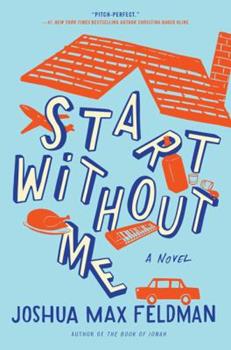
* Book cover image attributed to: www.abebooks.com

We’re now posting videos of some of our book reviews! Follow us on Facebook at www.facebook.com/thedustyjacket or on Instagram @tdjreviews and join in on the fun!
Start Without Me by Joshua Max Feldman (Adult Fiction)

Start Without Me

Joshua Max Feldman (Adult Fiction)

Adam Warshaw is an ex-keyboardist and recovering alcoholic who is muddling along at his job at a bank. Marissa Cavano is a flight attendant who fled an alcoholic mother, married into a wealthy—albeit classist and racist—family, and is currently struggling to save her marriage. Both are heading home for Thanksgiving and their paths are about to intersect in what would be the start of a highly unpredictable and tumultuous day that would send each of their lives in unexpected directions.

They say you can’t judge a book by its cover. Well, you can’t judge it by its BACK cover either. Joshua Max Feldman’s Start Without Me is described as A darkly comic novel. Nope. …the quintessential Thanksgiving novel. Let’s hope not. …a unique solidarity between two strangers as they help each other… More like one constantly saves the other one’s bacon. …Feldman’s novel excels in his crafting of extraordinary dialogue. OK. Nailed that one.

This was an extremely difficult book to get through as Adam’s character is insufferable, unrepentant, oblivious, ungracious, selfish, self-absorbed… The list is long and would take me until Thanksgiving to get through them all. I think the difference between Adam and some other awful main characters that have completely destroyed a book for me (I’m looking at you Kathy Nicolo) is that Adam KNOWS he’s a dumpster fire, the author knows he’s a dumpster fire, and everyone around Adam knows…well, you get the idea.

A friend once told me of a co-worker who said that she HATED a certain restaurant (both shall remain nameless) because she got food poisoning there four times. Four. Times. So, at that point, do you blame the restaurant or do you blame the patron? Who’s the knucklehead? The same with this book. Is it Feldman’s fault that I was totally frustrated by his book or is it mine? I mean, just like the knucklehead co-worker, I kept going back expecting a different outcome only to be confronted with the same mess over and over again. Was I thinking that if I JUST ordered the dessert, I’d be safe?!

The good news is that there are a few bright spots. Feldman really is a master at writing dialogue. It was one of the few things that saved this story and if he had done more of this and less of Adam waxing poetic about his past days in his rock band, I could’ve saved myself a lot of time from having to pet the neighbor’s dog in order to get back into my happy place. The only other glimmer was Marissa, whose backstory is an absolute trainwreck. She is the only character worthy of our sympathy and the only true adult in the room. She extends Adam more grace than he deserves and although she’s been the victim of many bad choices, she’s determined to learn from them and move forward stronger and wiser.

Before this book, Feldman wrote The Book of Jonah. After all of the negative emotions still coursing through my veins after dealing with Adam, it might take me some time before I’m strong enough to tackle this book. In the meantime, you better start without me.

Rating: 3/5

* Book cover image attributed to: http://www.thriftbooks.com

We’re now posting videos of some of our book reviews! Follow us on Facebook at www.facebook.com/thedustyjacket or on Instagram @tdjreviews and join in on the fun!

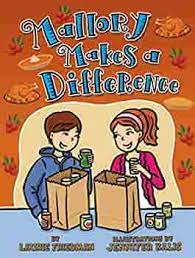
Mallory Makes a Difference by Laurie Friedman (J Fiction)

Mallory Makes a Difference

Laurie Friedman (J Fiction)

Mallory McDonald, no relation to the restaurant, had a rotten Halloween. She had two places to be on Halloween and rather than choosing one, she tried to do both and quickly realized that instead of having it all, she ended up with nothing. That’s why Thanksgiving was going to be better…it had to be! Mallory decides that she would feel better if she could make others happy so with the help of her friend Joey, Mallory organizes a school-wide canned food drive to help the community food bank. Soon the entire student body at Fern Falls Elementary is on board…especially since the winning grade gets one homework-free week as a prize! But soon things start going wrong and as the thrill of competition overshadows the spirit of giving, can Mallory still make a difference when everyone around her seems to hate her?

Mallory Makes a Difference is the 28th and final book in the Mallory McDonald series, which ran from 2004-2017. In this last installment, author Laurie Friedman has Mallory facing a fracture in her relationship with Mary Ann where she discovers, as most girls her age do, that your friendships from childhood evolve and change. Even as our young heroine puts aside her own wants by doing something for others, she still craves approval from friends who don’t share her own views or desires. Readers are sure to empathize with Mallory as she navigates between doing the right thing while still wanting to please her peer group.

Friedman ends her series with a nice story that shows young people the benefits of giving back to your community and being a force for positive change. At the end of the book, Friedman provides readers with a 10-Step Guide to Planning a Great Community Service Project that anyone wanting to make a difference can use as a template. Through Mallory, readers are shown the value of planning and teamwork, as well as the rewards of getting different ideas and being open to new approaches. Something that all of us can appreciate and should take to heart.

All through the food drive, as Mallory watched the spirit of the event deteriorate as the prize became more important than the purpose, she kept reminding all involved (even herself) that helping other people was the true important thing. Maybe if more of us kept that in mind, we—like Mallory—could make a difference, too.

Rating: 4/5

* Book cover image attributed to: www.amazon.com

The Autobiography of Santa Claus by Jeff Guinn (Adult Historical Fiction)

The Autobiography of Santa Claus

Jeff Guinn (Adult Historical Fiction)

Think you know everything there is to know about Santa? Well think again. Now, for the first time—in his OWN words—is the true story of Saint Nicholas, Kris Kringle, Father Christmas, or whatever name you call the man in red who travels around the world delivering presents to good girls and boys on Christmas Eve night. We get to know the REAL man—from humble beginnings to worldwide notoriety—whose simple philosophy of it being better to give than to receive has touched the world all over.

Jeff Guinn, the ONLY person (that he knows of) to have ever written a book WITH Santa Claus himself, has finally provided answers to the questions that have been asked for centuries: how did Santa attain his garments of red trimmed with white; why did Santa start giving toys and why were they put in stockings; why does he live at the North Pole; how can reindeer fly; and how can he travel the entire world in just one night? Those and so many other questions are answered, along with some interesting facts that you didn’t realize were even related to Santa such as his historically famous “helpers”, how he helped Charles Dickens restore Christmas in England, and how he inadvertently brought about the end of the American Revolution. Guinn packs a LOT of information into 280 pages, not including Santa’s favorite recipe found at the end of the book.

Guinn takes us from 280 A.D. (the year of Santa’s recorded birth) to present day. Because he’s covering over seventeen centuries of information, the story often gets deep in the weeds with geographical, theological, historical, and social anthropological references; however, Guinn is clever in connecting Santa to everyone from Attila the Hun to Amelia Earhart so we’re quickly drawn back into the story again. What is not mentioned on the cover of the book but is certainly worth mentioning is the beautiful artwork of Dorit Rabinovitch. She beautifully captures the old-world and magical appeal of the jolly old man and gives Guinn’s work an instant classic feel full of warmth and charm.

Through Guinn, Santa reminds us of the simple power kindness and that the real magic of Christmas involves love and a little baby born in a manger on what became the most holy of nights. Upon reading this book, I do feel a sense of obligation to bring to everyone’s attention that Santa is NOT an elf, he does NOT like to be reminded of his weight, and—on Christmas Eve night—if you were to set out some homemade chocolate chip cookies and perhaps some goat cheese, he would be most appreciative.

Rating: 4/5

* Book cover image attributed to: www.thriftbooks.com

We’re now posting videos of some of our book reviews! Follow us on Facebook at www.facebook.com/thedustyjacket or on Instagram @tdjreviews and join in on the fun!
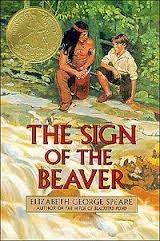
The Sign of the Beaver by Elizabeth George Speare (J Fiction)

The Sign of the Beaver  

Elizabeth George Speare (J Fiction)

“Dance,” Attean commanded. He seized Matt’s arm and pulled him into the moving line. The men near him cheered him on, laughing at Matt’s stumbling attempts. Once he caught his breath, Matt found it simple to follow the step. His confidence swelled as the rhythm throbbed through his body, loosening his tight muscles. He was suddenly filled with excitement and happiness. His own heels pounded against the hard ground. He was one of them.

It was the summer of 1769 when twelve-year-old Matt Hallowell’s father left him alone in Maine to protect the family’s cabin and corn field while he returned to Massachusetts to bring back his mother and two siblings. His father told him to make seven notches in a stick (a notch a day) and by the time that he was on the seventh, he’d be back and they’d once again be a family. Bad luck seemed to follow Matt soon after and when he found himself the target of some angry bees, a Penobscot chief and his grandson jumped in to save his life. Wanting his grandson to learn the language of the white man, the chief made a treaty with Matt: teach his grandson, Attean, to read in exchange for food. Eventually, the two boys formed an unlikely friendship and as more sticks began to pile up, Matt was faced with having to choose between joining the tribe and heading north or waiting for a family that may never come.  

A Newbery Honor Book recipient in 1984, The Sign of the Beaver is really a love letter to the Penobscot, an Indigenous people in North America and a federally recognized tribe in Maine. Speare gives her readers insights into tribal culture and customs and exposes their devotion and respect for nature, wildlife, and boundaries of the surrounding tribes. Time and again Matt questions Attean’s actions and every time his response centers on recognizing the value and worth of the land they walk, the animals they’ve killed, and  the life they’ve been given. By learning Attean’s ways, Matt begins to realize that he is just a very small part of a very big picture and as his confidence as a hunter grows, so does his world view and his new understanding of why the white man is so despised and mistrusted by these native peoples.

The Sign of the Beaver isn’t just a story about one boy’s resilience, bravery, and sense of duty, it’s also a lesson in how we should never take more than we are given, that we should appreciate differences and look for commonalities, and that empathy and kindness can do more for bridging a gap and forging a relationship than signed treaties and firm handshakes. This is a great story for young readers and a fascinating look into the Indian way of life. Although there are a few scenes of animal cruelty and suffering, Speare sticks to keeping this book authentic by not avoiding the uncomfortable thus making this book a valuable read. Although it has plenty of action and the characters are well developed, the story seems to lose a bit of steam near the end and tended to drag.

As a way of showing the chief his gratitude, Matt offered him his one prized possession—his beloved Robinson Crusoe. It was from this book that Matt read passages to Attean and where he discovered that Attean was just as passionate about storytelling as he was proving once again that a beautifully told story not only has the ability to draw us in, but it can also connect us as well.

Rating: 4/5

* Book cover image attributed to: www.goodreads.com

We’re now posting videos of some of our book reviews! Follow us on Facebook at www.facebook.com/thedustyjacket or on Instagram @tdjreviews and join in on the fun!

Yesterday’s Sun by Amanda Brooke (Adult Fiction)

Yesterday’s Sun

Amanda Brooke (Adult Fiction)

Tom and Holly Corrigan had only been married for two years when they moved into the gatehouse that sat at the entrance of the once majestic Hardmonton Hall. Holly—an artist—instantly fell in love with the residence despite its many years of abandonment and neglect and finds that she has plenty of free time to make it a home since Tom’s job requires a lot of travel. Their lives, like the gatehouse, is full of possibility and promise. One day while renovating, Holly uncovers a wooden box that contains a beautiful glass ball and soon discovers that it is the missing top of the moondial that sits in their garden. When Holly places the orb on the pedestal on a full-moon night, she realizes that she has unwittingly activated a timepiece that shows her a future full of life and loss…a daughter and a death. When she shares her vision with Jocelyn, her new friend and the previous owner of the gatehouse, Holly soon learns the extensive truth behind the moondial’s power and realizes the terrible decision that she must now make that will not only affect her, but everyone she loves.

Give me a book that begins with a partial peek at the ending and I’m instantly invested in the characters and story. That is what Amanda Brooke does in her Prologue as we see Holly in bed, gently stroking her swollen belly, as she looks at her sleeping husband and whispers, “You’ll be angry with me for leaving you both, but eventually you’ll understand. One day, you’ll look at our daughter and you’ll know what I know. You’ll know that she was worth the sacrifice.” It’s a deeply emotional, intimate, and heartbreaking moment that immediately connects you with Holly and her story that’s just beginning to unfold for us. We know the journey with Holly won’t be easy given the fact that we most-likely know how her story will end, but we’re fully committed now and determined to see this through with her to the end…no matter how painful.

Holly is a fractured and imperfect protagonist. Yes, her waffling between questions of “Should I” or “Shouldn’t I” become a little tedious, but given her sudden and callous abandonment by her mother…HER MOTHER…you can understand the doubts and reservations she has about her own maternal abilities. If you lead by example, then Holly is doomed. Because Brooke takes her time in unpackaging Holly’s history, we clearly give her a pass when it comes to her indecisiveness and it’s why we stay loyal to her as she painfully struggles between self-preservation and self-sacrifice.

Without spoiling any of the story, I do want to comment on the verbiage written on the cover of the book: How can she choose between her child and herself? Oh, gentle reader. If only it were that easy, because as you start to discover and understand the power of the moondial, this goes so much deeper than “well…I just won’t do that and everything will be fine. Right?” When Jocelyn tells Holly that the moondial can be cruel, she isn’t  joking.

Yesterday’s Sun is a suspenseful, thoughtful, and poignant read that will keep you engrossed, guessing, and second guessing until the end. It’s a satisfying story that reminds us how we shouldn’t take anything for granted and how important it is to live in the now. American actor James Dean, who was only 24-years old when he died suddenly and tragically, said, “Dream as if you’ll live forever, live as if you’ll die today.” Holly eventually understood this and hopefully all of us won’t need a moondial to realize this as well.

Rating: 5/5

* Book cover image attributed to: www.amazon.com

A Monster Calls by Patrick Ness (YA Fantasy)

A Monster Calls  

Patrick Ness (YA Fantasy)

The monster showed up just after midnight. As they do.

At thirteen, Conor was too old for monsters. Monsters were for babies and bedwetters and Conor was neither; however, here he was—night after night reliving the same images that made him wake up screaming into the darkness. But one night, another monster came to visit. Not the one from his nightmare, but a different one. One that would tell him three stories and would then require Conor to tell him the fourth. But the fourth wouldn’t be a story. The fourth would be the truth…Conor’s truth. A truth that he’s been avoiding for a very, very long time.

Do NOT judge this book by either its cover or its title! A Monster Calls is not a horror story, but rather an intensely moving and intellectually provocative read that examines death, bullying, and growing isolation. Patrick Ness’s story (inspired by an idea by the late Siobhan Dowd) and Jim Kay’s beautiful and macabre illustrations allow A Monster Calls to leap off the page, reach inside your chest, and put a death grip on your heart. The action and emotions intensify as the story unfolds and reaches the ultimate crescendo when the reader realizes the truth behind the monster and the meaning of Conor’s nightmare. It’s a painful and agonizing revelation and you can’t help but cry out as our young protagonist finally comes to terms with the grim reality he’s been desperately avoiding and denying. It’s a master class in storytelling and a final work that Siobhan Dowd surely would have been immensely proud of.

On one of their encounters, the monster told Conor about the importance of stories: “They can be more important than anything. If they carry the truth.” There are countless stories about how children deal with trauma—especially when it involves a loved one—but Ness’s approach cuts to the very heart of the loneliness, fear, and helplessness they feel and how these feelings manifest themselves into monsters and darkness and voids that suck the very air from your lungs. It’s a dark and empty feeling that’s scary and cold, but Ness reminds us that truth can cut through the darkest of places; that acceptance can be a way out of the deepest abyss; and that forgiveness can open the way to healing and peace.      

Rating: 5/5

* Book cover image attributed to: www.amazon.com

The Pushcart War by Jean Merrill (J Fiction)

The Pushcart War  

Jean Merrill (J Fiction)

Imagine if Morris the Florist hadn’t been blocking the curb and if Mack hadn’t been in such a hurry to deliver his load of piano stools and if Marvin Seely hadn’t taken a picture with a camera that he had just gotten for his birthday and if Emily Wisser hadn’t cut out that same picture from the newspaper for her scrapbook and if Emily Wisser hadn’t shown that same clipping to her husband, Buddy Wisser, a newspaper editor…well, we might not ever have had the Pushcart War. Now, imagine THAT!

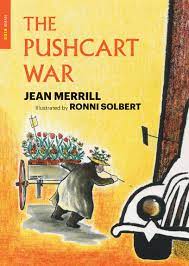
I read The Pushcart War in elementary school, so it had been out for a little over ten years by the time I laid my grubby little hands on it. I’m not sure what drew me to this particular book. Most likely it was the funny little drawing on the cover of a man in a black overcoat wearing a ridiculous flower hat who was right in the middle of shooting a pin at a big truck that caught my eye and imagination (ten-year-olds were much easier to amuse back then!). That book quickly became a long-lost memory until I came across it sitting innocently enough on a library shelf. I pulled it out and there he was! That same funny little man with his ridiculous hat STILL waging war against that massive truck some 40+ years later. After reading it with fresh eyes and a greater understanding of the world, I’m unclear why this book made such an impression on my ten-year-old self, but my much older self is chuckling while shaking my head after realizing that nothing much has changed since its publication.

The Pushcart War is packed with humor, hijinks, and heart. It is the quintessential David-versus-Goliath story of a pack of pushcart vendors who wage war against mighty mammoth trucks in hopes of maintaining their little slice of the free enterprise capitalist pie. Written in 1964, set in 2036, and taking place in 2026 (you got that?), Merrill’s story resonates just as true today as it did in the 60s: demonstrating the virtues and vices of speaking out for what is right; displaying the corruption of those in power who abuse their platform for personal gain by bowing to the desires of special interest groups; illustrating how the media can be a driving force behind shaping public opinion; and proving the unfortunate influence that money ultimately has on morality. Sound familiar? You might think that such weighty topics would never be able to hold the attention of a young reader, but Merrill’s Rube-Goldbergesque approach to storytelling—where one act sets off a series of complex events—keeps readers engaged and enthralled. I mean, who could have imagined that a simple tax on tacks could touch off a possible war with England? Jean Merrill, that’s who. It’s this kind of utterly improbable and highly outrageous scenario that keeps us entertained and cheering for the little guys…no matter how hopeless or hapless their situation may be.

Author Karen Traviss wrote, “I don’t know who the good guys are anymore. But I do know what the enemy is. It’s the compromise of principles. You lose the war when you lose your principles. And the first principle is to look out for your comrades.” Aside from their dried peas and little pea shooters, the people who sold hot dogs or flowers or knick-knacks from their little carts all shared a common purpose: a desire to be seen and to be counted and to be respected. They wanted a place in the world—free from bullying and intimidation and eradication. More than that, they didn’t want someone else to assign them value or worth. The pushcarts knew talking was better than fighting and believed in their cause so much that they were willing to sacrifice themselves for the greater good. They knew that their cause was bigger than just one or two carts and together, they were a force to be reckoned with. Together, they could elicit change. I imagine that the world might be a better place if we just had a few more pushcarts.

Rating: 5/5

* Book cover image attributed to: www.amazon.com