
Book Review: The Toothpaste Millionaire by Jean Merrill

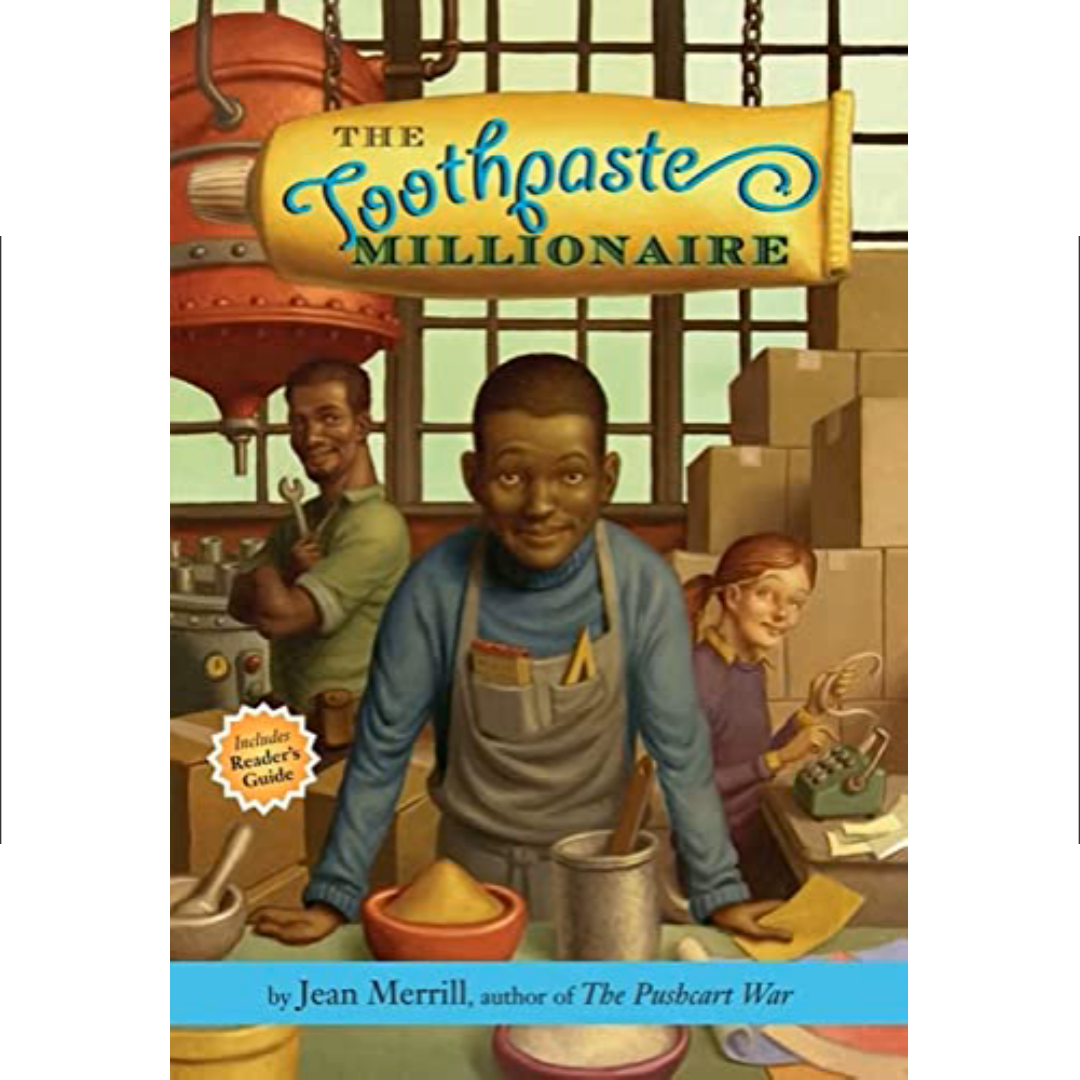
The Toothpaste Millionaire

Jean Merrill (J Fiction)

This is the story of my friend Rufus Mayflower and how he got to be a millionaire. With a little help from me. With a lot of help from me, as a matter of fact. But the idea was Rufus’s.

Who would pay $.79 for a tube of toothpaste? Why, it was so outrageous that 12-year-old Rufus Mayflower takes matters into his own hands and sets out to make his own toothpaste for less…much, MUCH less. Drawing from his days at his grandmother’s house, Rufus concocts a toothpaste recipe and proves that he can, in fact, make a whole gallon of toothpaste for the same cost as a single tube. Excited to pass on this cost savings to consumers, he partners with his friend Kate and soon earns the attention of a local TV personality. Rufus’s toothpaste not only gets noticed by the public, but also by some of toothpaste’s biggest manufacturers. However, what Rufus learns about business and competition is nothing to smile about.

Set in the 1960s, Jean Merrill’s The Toothpaste Millionaire is a testament to ingenuity, entrepreneurship, and integrity. Fans of her classic David-versus-Goliath book The Pushcart War will once again be cheering for the underdog who takes on the establishment and proves that when the good guys win, they win big!

The heart of the story is the interracial friendship between Rufus and our narrator Kate. This relationship may not bat any eyes today, but during the story’s setting, it was considered uncommon and unconventional. But as fate would have it, a single and simple act of kindness opened the door to a friendship built on mutual trust, respect, and admiration. Merrill gives the story a nice twist by making Kate—who is white—the outsider, having moved into a predominantly black, middle-class neighborhood. As she also serves as the story’s narrator, she describes first-hand what it feels like to be excluded and viewed suspiciously. However, racial lines are soon blurred as everyone comes together behind Rufus’s lucrative and ambitious venture.

The Toothpaste Millionaire is an ode to the self-starters who feel that something could be made cheaper, faster, better, or smaller. Merrill somehow makes learning economics, math, and marketing fun through a cast of likeable characters, a fast-paced story, and the idea that treating people with fairness, kindness, and respect bears its own riches and rewards.

Rating: 5/5
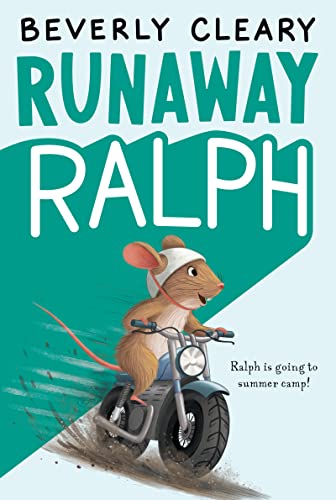
Book Review: Runaway Ralph by Beverly Cleary

Runaway Ralph

Beverly Cleary (J Fiction)

Ralph wants a life of speed, danger, and excitement. Ralph wants to be free from his cousins and the rules imposed by his mother and uncle. But most of all, Ralph just wants a peanut butter and jelly sandwich! Determined not to be just another crumb-scrounging rodent, he decides to run away from his home at the Mountain View Inn and heads to a place filled with the promise of those wonderful sandwiches…Happy Acres Camp. With a little effort, and some luck from a downhill journey, Ralph is on his way. It’s not long after that he gets more than he bargained for when he meets the camp guard dog, a sneaky tom cat, and a philosophical neighbor in the form of a hamster. Soon, Ralph realizes that perhaps home isn’t so bad after all.

Cleary delights audiences once again with this charming follow-up to her popular The Mouse and the Motorcycle. In the first book, Ralph meets an extroverted boy confined to his hotel room due to illness. This time around, he meets an introverted boy confined by his own self-doubts, shyness, and desire to be alone. It’s a nice twist for Ralph to meet such an opposite ally named Garf (short for Garfield). The reader also gets to watch Garf come out of his shell as he’s given the responsibility of caring for Ralph and begins to develop a friendship with the mouse. Ralph also begins a transformation of his own. Once feeling “trapped” by his mother’s silly rules, Ralph literally becomes trapped in a cage and begins to appreciate the freedom he once had at the inn. He also understands that the rules he once viewed as restrictive were actually imposed to keep him safe.

Readers shouldn’t be worried that this book will fall short of its predecessor! On the contrary, there’s plenty of action and nail-biting situations to keep young audiences engaged and ready for more. The book’s ending also introduces Ralph’s next adventure nicely and enticingly lures readers to complete their journey with Cleary’s third and final installment of her Ralph Mouse series: Ralph S. Mouse.

There’s a great quote that says, “Remember, being happy doesn’t mean you have it all. It simply means that you’re thankful for all you have.” After several near-catastrophic events, Ralph slowly began to appreciate the life he had and even started to value those pesky, nuisance rules. He missed home because he realized that home—rules, cousins, and all—was enough…even though a peanut butter and jelly sandwich every now and then would be good, too.

Rating: 4/5

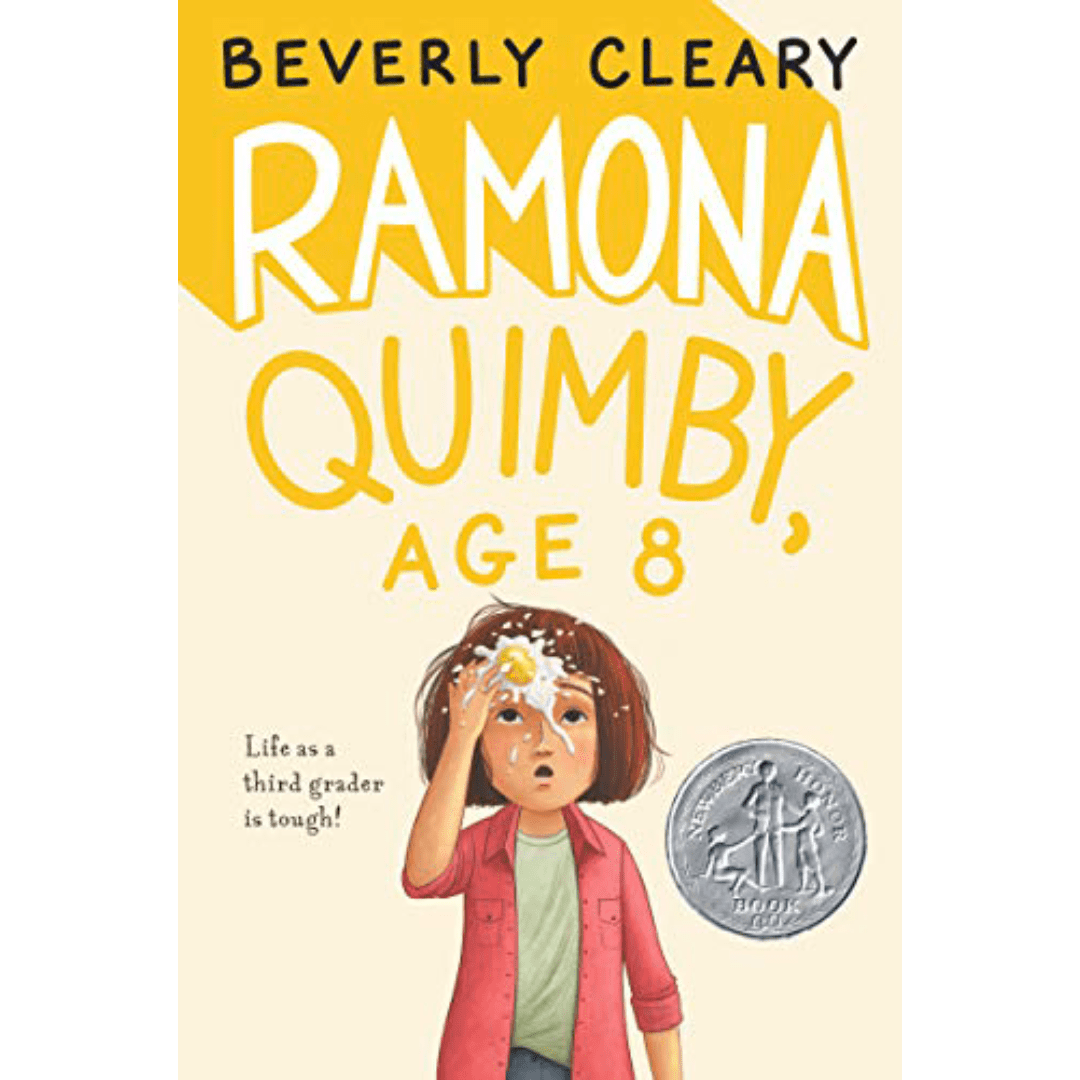
Ramona Quimby, Age 8 by Beverly Cleary

Ramona Quimby, Age 8

Beverly Cleary (J Fiction)

Ramona has a LOT going on! She’s starting the third grade at a school where NO ONE knows that she’s Beatrice Quimby’s little sister (yay!), she gets to ride the school bus ALL by herself, and she has THE most important responsibility of the family—be nice to Willa Jean at Howie’s grandmother’s house. Sound like a lot to handle? It might be for anybody, but this is Ramona Quimby and if anyone can tackle a challenge and new situations head on, it’s this girl…even though she’s just eight. But between a school bully, an ever-tightening family budget, an unfortunate egg incident at school, and a teacher who thinks she’s a show-off, even Ramona is starting to feel the pressure. Can she find a way to toughen up and pull it together? She has to because her family is depending on her!

Beverly Cleary’s endearing Ramona series continues as our feisty heroine returns and is as lovable, surprising, and formidable as ever. She’s opinionated, clever, resilient, and demands accuracy. She’s a girl who’s fair, loyal, and loves her family. Most importantly, she’s human and serves as an example of what to do (and what not to do) when things don’t go your way. With her unflappable charm, spunk, and candor, she turns an adversary into an unlikely ally, accepts a punishment as a challenge, tackles a boring school assignment with creative flair, and realizes that she’s part of a nice sticking-together family, although they might not be nice all of the time.

What makes Ramona Quimby, Age 8 such a great story is the relatability of its main character. Whether she’s dealing with the humiliation of getting sick at school in front of her classmates, standing up to playground injustice, dealing with the shame of falling out of favor with a teacher, or dealing with overly stressed parents who might be on the verge of falling out of love, Ramona deals with life’s ups and downs as best she can. She takes her responsibility within her family seriously, is hurt when treated unfairly by her parents, and is pragmatic in whose side she takes in a family squabble. She pouts, whines, and agitates, but she’s also curious, kind, and helpful. Ramona is allowed to be a lot of things because she knows that she has a family who loves and supports her unconditionally and this allows her the freedom to explore, challenge, and fail without suffering long-lasting repercussions. And through some tough lessons, our heroine vows to try harder, promises to be dependable, and strives to be more patient in the future. As for today, she’s just Ramona Quimby, age 8, and that’s good enough…for now anyway.

Rating: 5/5

Share Ramona with your class with our study guide: https://www.teacherspayteachers.com/Product/Study-Guide-Ramona-Quimby-Age-8-by-Beverly-Cleary-12745834

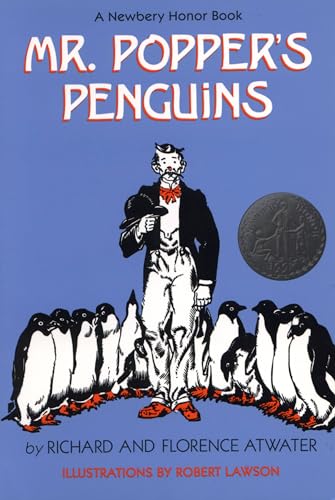
Mr. Popper’s Penguins by Richard and Florence Atwater (J Fiction)

Mr. Popper’s Penguins

Richard and Florence Atwater (J Fiction)

Mr. Popper is a painter who’s never left his little town of Stillwater. He loves his wife, has two wonderful children, and a nice little house that has been painted and papered more times than Mrs. Popper can count. But Mr. Popper dreams of being an explorer and traveling to see those cute penguins that he’s read so much about. His dream of adventure comes one step closer to reality when the famous Admiral Drake sends him a penguin straight from the South Pole. Little did Mr. Popper realize how one little penguin would begin an unforgettable journey that even Admiral Drake would envy.

Winner of the 1939 Newbery Honor Book award, Mr. Popper’s Penguins was devotedly finished by Florence Atwater after her husband Richard was too ill to finish his enchanting story about love, loyalty, selflessness, and family. A funny and quirky story about a man filled with regret who suddenly finds himself the caretaker of a colony of penguins. Even the fastidious Mrs. Popper can’t help but fall in love with this goofy and curious lot who quickly capture the imagination and adoration of their little town and the country.

It’s quite extraordinary to see how much life imitates art when you realize how, like Florence, Mrs. Popper steps up to see her husband’s dream realized. Although Florence Atwater might not have had to deal with the financial burden of a rookery of penguins, she did finish what her husband started and did so in spectacular fashion as the Atwater’s book continues to be a beloved children’s classic over eight decades after it was published.

Mr. Popper’s Penguins is more than just a story about penguins. It’s a beautiful ode to anyone who’s experienced true love. Mrs. Popper sacrifices her home, her life, and the family’s financial stability to support a husband she loves. In turn, Mr. Popper has to make a very difficult decision regarding his beloved penguins—keep them by accepting a lucrative Hollywood contract or release them back to the arctic and never see them again. Author Bob Goff wrote, “Selfless love is always costly; fear can’t afford it, pride doesn’t understand it and friends never forget it.” You can be sure that twelve little penguins won’t soon forget it either.

Rating: 5/5

Want to share Mr. Popper with your homeschooler or classroom? Download our study guide: https://www.teacherspayteachers.com/Product/Study-Guide-Mr-Poppers-Penguins-by-Richard-and-Florence-Atwater-12118927

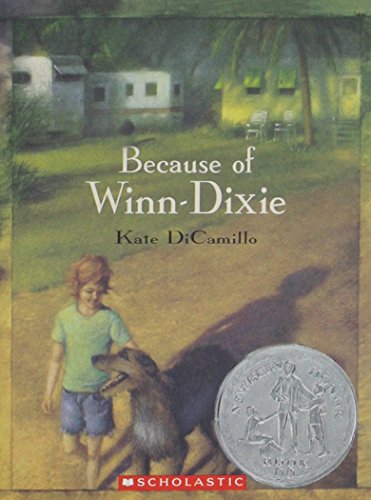
Because of Winn-Dixie by Kate DiCamillo (J Fiction)

Because of Winn-Dixie

Kate DiCamillo (J Fiction)

Opal knows ten things about her mother, but the one that sticks out most is that she hated being a preacher’s wife. Perhaps that’s why she left and never came back. When Opal’s father is given the chance to minister at a converted Pick-It-Quick store, the two leave the bad memories of Watley and move to a fresh start in Naomi, Florida. However, Opal’s lonely life changes when a stray dog she names Winn-Dixie enters her life. Because of Winn-Dixie, she meets the town’s librarian who once loaned a book to a bear, a reclusive witch with a ghost tree in her backyard, an animal-serenading ex-convict, a bald-headed baby, and a pinch-faced know-it-all. Soon, these strange individuals begin to fill the empty spot in Opal’s life and because of Winn-Dixie, maybe life in Naomi won’t be so lonely after all.

Recipient of the 2001 Newbery Honor Book award, Kate DiCamillo’s Because of Winn-Dixie is a warm and tender book about misjudging people, dealing with loneliness and loss, and the power that a simple act of kindness can have. Through a goofy dog with a penchant for smiling and a possessing a remarkably good judge of character, Winn-Dixie shows Opal that looks can be deceiving, labels are best left on soup cans, and anyone who offers you a peanut butter sandwich can’t be all that bad. With a “surrogate” mother in the form of Gloria Dump (who deals with her own demons in a unique and beautiful way), Opal begins to understand the importance of courtesy and the value of giving everyone a second chance. Although this story dabbles into some complex issues involving parental abandonment and alcohol abuse, its sweet and tender message of belonging and being true to yourself makes it a delightful and enjoyable book for readers of all ages.

Walt Whitman once wrote, “Be curious, not judgmental.” Because of Winn-Dixie, Opal learned to look beyond a person’s past actions, ugly words, or sour disposition and instead began to ask questions and listen to their stories. By using her ears rather than her eyes, she discovered what Winn-Dixie knew all along…that anyone who shows kindness, warmth, and compassion to a scraggly dog with a toothy smile can’t really be all that bad. How can they be?

Rating: 5/5

NEW!! Want to share this book with your homeschooler or classroom? Download our affordable study guide: https://www.teacherspayteachers.com/Product/Study-Guide-Because-of-Winn-Dixie-by-Kate-DiCamillo-11472615?st=76e1919aea895123a78e657eb644391f

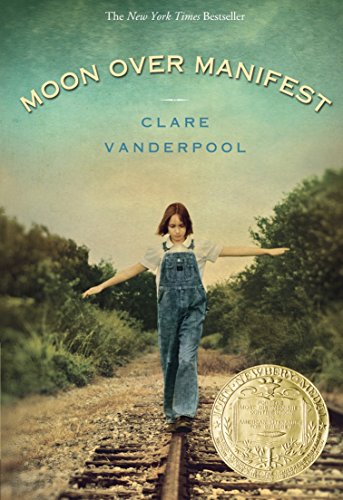
Moon Over Manifest by Clare Vanderpool (J Historical Fiction)

“To write a good story, one must watch and listen.”

Moon Over Manifest

Clare Vanderpool (J Historical Fiction)

Every story has a beginning, middle, and an end, but Abilene Tucker’s story seemed to be nothing but middle. It’s 1936 and while her father, Gideon, works a railroad job in Iowa, she is sent to the town where he grew up…Manifest, Kansas. She’s to spend the summer with her father’s old friend, Pastor Shady Howard, whose home is a combination saloon, church, and carpenter’s shop. While upstairs in her father’s old room, Abilene discovers an old cigar box with various trinkets, as well as some handwritten letters addressed to a boy named Jinx. Could these items—a cork, fishhook, silver dollar, key, and a little wooden doll—help Abilene uncover the mystery of her father’s past? With the help of two new friends, Abilene embarks on a hunt for a possible spy and meets a diviner who helps her uncover a few things about her father and herself.

This book covers two periods of time: 1936 (present day narrated by Abilene) and 1918 (told in third person). Although this book makes multiple time jumps involving several characters, Vanderpool does a terrific job at making sure young readers stay engaged by keeping the two storylines separate and straightforward. Our diviner, Sadie, eases readers into the past as she reveals Manifest’s history that involves several actual events including World War I, orphan trains, and the Spanish influenza. Moon Over Manifest does deal with some disturbing content such as racism, murder, alcohol use, and the ugliness of war, but in doing so gives readers an honest and rare opportunity to learn about important periods in American history through the unique lenses of a twelve-year-old hardworking and fearless girl and a thirteen-year-old runaway conman. Together, these two protagonists teach us that everyone deserves a do-over, things are not always what they seem, and perhaps there’s nothing more dangerous than hope.

Vanderpool packs so many wonderful takeaways and lessons into this book but overall, Moon Over Manifest is a celebration of immigrants and the richness and vibrancy they add to the American fabric. Manifest is a community represented by Scotland, Poland, Greece, Norway, Italy, Germany, Hungary, and Russia. These people—from very different countries and cultures—all unite behind a young con artist and collectively take a leap of faith to not only save their town, but to save their way of life and themselves. U.S. President Lyndon B. Johnson said on October 3, 1965 at the Statue of Liberty, “The land flourished because it was fed from so many sources—because it was nourished by so many cultures and traditions and peoples.” Although Manifest was a town torn apart by racism and stricken with war and an epidemic, its community flourished because of the strength and uniqueness of its people…people who were all lucky enough to call Manifest home.

Rating: 5/5

* Book cover image attributed to: www.abebooks.com

We’re now posting videos of some of our book reviews! Follow us on Facebook at www.facebook.com/thedustyjacket or on Instagram @tdjreviews and join in on the fun!

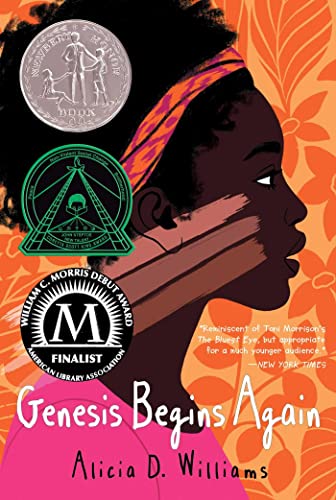
Genesis Begins Again by Alicia D. Williams (YA Fiction)

Genesis Begins Again

Alicia D. Williams (YA Fiction)

Thirteen-year-old Genesis Anderson hates moving (her family is on number four), broken promises (too many to count), her father’s hateful words when he’s had too much to drink (too painful to count), her hair, and staying with her grandmother. She also hates the darkness of her skin, which she’s tried to lighten using a variety of household products. But mostly, Genesis hates the list that was started back in sixth grade by two classmates who listed one hundred things (the stupid girls only listed sixty) they hated about her. The joke’s on them because Genesis has been adding to that list on her own and will probably make it to 100 in no time. There’s a lot of things Genesis hates, but a new school with new friends and new opportunities finally show Genesis that there are a lot of things to like. With things finally beginning to look up, you can bet that it won’t be long before something comes along to mess it all up. Genesis hates that.

Very few young adult books have grabbed me the way Genesis Begins Again has. Williams’s opening paragraph leads us into a false sense of security that is quickly and horribly stripped away in a matter of paragraphs. Williams snuffs out our girl’s light in one raw and shameful event that immediately shows us the obstacles that Genesis faces, the character of the “friends” she has, and the girl that she ultimately is. Behind all that self-loathing is a strong, loyal, fierce, and intelligent girl who is wise beyond her years and determined to make her fractured world whole again…no matter the cost. She is instantly a character that we root for and we find ourselves either wanting to take her by the shoulders to remind her that she’s better than she thinks or wrap our arms around her to reassure her that everything will be alright.

It’s hard to believe that this is Williams’s debut novel. It received the Newbery Honor award in 2020, as well as the John Steptoe Award for New Talent. Her book began as an autobiography but was soon revised to better reflect the present rather than the past. The themes of bullying and colorism play predominantly throughout the story and often emanate from surprising and unexpected sources. The characters are wonderfully developed, the prose is engaging and allows us to fully immerse ourselves within Genesis’s world, the conflicts and outcomes are realistic, and there’s enough drama and tension to keep the story moving at a wonderful pace.

Highlighting the important and influential role that teachers have on our children, Genesis is highly influenced by her music teacher, Mrs. Hill. It is she who introduces Genesis to Billie Holiday, Ella Fitzgerald, and Etta James who showed her that there is beauty in brokenness and joy beyond the pain. Music healed Genesis…it freed her…and proved to be a lifeline to those around her who needed it the most. Billie Holiday once said, “If I’m going to sing like someone else, then I don’t need to sing at all.” All through the story, Genesis was always trying to be someone else: lighter, braver, smarter, hipper, or more popular. It was only after she discovered and began to sing her own song, that she was truly able to begin again.

Rating: 5/5

* Book cover image attributed to: www.abebooks.com

We’re now posting videos of some of our book reviews! Follow us on Facebook at www.facebook.com/thedustyjacket or on Instagram @tdjreviews and join in on the fun!

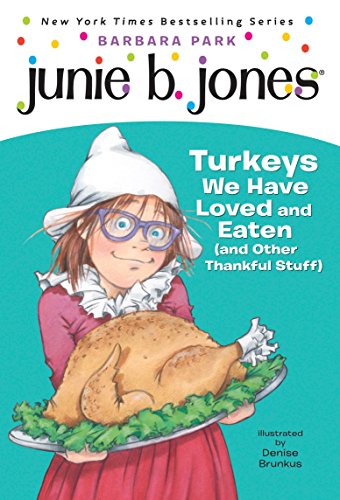
Junie B. Jones #28: Turkeys We Have Loved and Eaten (and Other Thankful Stuff) by Barbara Park

Junie B. Jones: Turkeys We Have Loved and Eaten (and Other Thankful Stuff)

Barbara Park (J Fiction)

Dear first-grade journal,

This week Room One is making a list of the stuff we are thankful for. And the room with the bestest thankful list will win. Also we are having a Thanksgiving feast on Wednesday. Thanksgiving is a lot of work.

Junie B., First Grader

Junie is thankful for a lot of things. May, the girl who sits next to her, is NOT one of them. While families are preparing their homes for families and feasts, Junie and her classmates are working hard to win the school’s coveted Best Thankful List…even if the prize IS a homemade pumpkin pie that makes almost half the class vomit. What happens next is a list that ranges from exploding biscuits and Nipsy Doodles to toilet paper and stuffed elephants and leads to a lesson in what Thanksgiving is really all about.

Barbara Park’s Junie B. Jones series consisted of 29 books that ran from 1992 to 2013. Young fans will delight in the authenticity of Junie and her classmates as they rank what is the bestest things they are thankful for—much to the chagrin of their teacher, Mr. Scary. From minor disagreements to elephant scuffles, Junie will learn that even when people are different, they can still have things in common.

This book (#28) is a short read with big lessons…especially for adults. Junie may not yet be six years old, but she is wise beyond her years and teaches us that names always sound funnier when you add the word pants at the end, that teachers are just like normal people…almost, and when a teacher smiles, everything feels better. Now that is something we can all be thankful for.

Rating: 4/5

* Book cover image attributed to: www.abebooks.com

We’re now posting videos of some of our book reviews! Follow us on Facebook at www.facebook.com/thedustyjacket or on Instagram @tdjreviews and join in on the fun!

The Borrowers Afield by Mary Norton (J Fantasy)

The Borrowers Afield

Mary Norton (J Fantasy)

It had been a year since Mrs. May told young Kate the story of the borrowers. Since that time, Kate had completely pushed their memory to the farthest corner of her mind until one early spring day when Mrs. May slipped her a letter and said, “This will interest you, Kate, I think.” And indeed it had since that letter had to do with Leighton Buzzard. Leighton Buzzard, as you might recall, was the country town where Great Aunt Sophy’s house was and it was in that house, as you might remember, where underneath the kitchen floorboards lived the Clocks: Pod, Homily, and Arrietty. But whatever happened to those poor Clocks? Last time we saw them, they had been smoked out of their comfortable home and left fleeing for their lives—never to be seen or heard from again. But worry not for there is one soul who knows exactly what happened to our dear friends and it is that very same person that Mrs. May and Kate—quite by chance—are about to meet.

Three years after writing The Borrowers in 1952, Mary Norton picks right up where she left off with The Borrowers Afield where our favorite trio are tirelessly trekking from Firbank to Perkin’s Beck in search of the badger’s set, home to the Hendrearies. In this book, Arrietty finally realizes her dream of living outdoors and becoming a true borrower; Homily begins to toughen up a bit, although required to become a vegetarian; and Pod continues to hold his family together while keeping an even temper and maintaining loving order. Their journey has them finding an unexpected abode, meeting several troublesome insects, and encountering a very helpful yet mysterious stranger.

Norton does not fail to live up to the expectations she established for her readers with her first book in the beloved Borrowers’ series. This next chapter is filled with adventure and ample amounts of danger, disappointment, and discovery. Through their ups and downs, the Clock family begin to not only learn more about themselves and their own capabilities, but they also learn more about one another, which results in a deeper appreciation for one another.

This book stresses family much more than the first as it truly is the Clocks vs the World. In doing so, our little troupe form a tighter bond and realize that if you’re with family, you’re already home. The Borrowers Afield is truly a fun frolic with plenty of action and suspense and every bit worthy of its predecessor.

Rating: 5/5

* Book cover image attributed to: www.amazon.com

We’re now posting videos of some of our book reviews! Follow us on Facebook at www.facebook.com/thedustyjacket or on Instagram @tdjreviews and join in on the fun!

Top 10 Picks for 2019

Top

Below is our annual Top 10 Picks for 2019.  This year, we’ve added an Honorable Mention list since there were SO many great books for younger readers, we simply couldn’t leave these little gems out.  We hope you find this list is helpful in choosing some books to read in 2020 and look forward to sharing more great dusty jackets in the upcoming year.  Happy reading!

The Dusty Jacket’s Top 10 Picks for 2019*

Adult Fiction/Biography

  1. Anne of Green Gables, My Daughter & Me (Memoir) by Lorilee Craker (reviewed January 2019)
  2. The Bell Jar by Sylvia Plath (reviewed January 2019)
  3. The Kitchen Boy: A Novel of the Last Tsar by Robert Alexander (reviewed January 2019)
  4. Memoirs of an Invisible Friend by Matthew Dicks (reviewed February 2019)
  5. Chosen By a Horse (Memoir) by Susan Richards (reviewed March 2019)
  6. The Dogs of Babel by Carolyn Parkhurst (reviewed April 2019)
  7. The Human Comedy by William Saroyan (reviewed May 2019)
  8. The Art of Racing in the Rain by Garth Stein (reviewed June 2019)
  9. Mr. Timothy by Louis Bayard (reviewed October 2019)
  10. Saints at the River by Ron Rash (reviewed December 2019)

Juvenile/Young Adult

  1. I Don’t Know How the Story Ends (YA Historical Fiction) by J. B. Cheaney (reviewed January 2019)
  2. Alchemy and Meggy Swann (YA Historical Fiction) by Karen Cushman (reviewed January 2019)
  3. Bud, Not Buddy (J) by Christopher Paul Curtis (reviewed March 2019)
  4. An Elephant in the Garden (YA Historical Fiction) by Michael Morpurgo (reviewed March 2019)
  5. The Wheel on the School (J) by Meindert DeJong (reviewed April 2019)
  6. The Lightning Dreamer (YA Historical Fiction) by Margarita Engle (reviewed April 2019)
  7. King of the Wind (J Historical Fiction) by Marguerite Henry (reviewed May 2019)
  8. Return to the Willows (J) by Jacqueline Kelly (reviewed June 2019)
  9. The Hundred Dresses (J) by Eleanor Estes (reviewed August 2019)
  10. The Boy Who Harnessed the Wind (J Biography) by William Kamkwamba (reviewed September 2019)

Honorable Mention

Silent to the Bone (YA) by E. L. Konigsburg (reviewed February 2019)

The Birchbark House (J) by Louise Eldrich (reviewed February 2019)

Abel’s Island (J) by William Steig (reviewed March 2019)

Bed-Knob and Broomstick (J) by Mary Norton (reviewed April 2019)

Bluefish (YA) by Pat Schmatz (reviewed July 2019)

Adam of the Road (J) by Elizabeth Janet Gray (reviewed August 2019)


*List contains selections reviewed in 2019