
Current Book Review

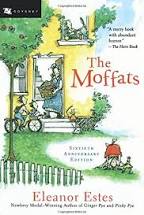
The Moffats by Eleanor Estes (J)

The Moffats  

Eleanor Estes (Juvenile Fiction)

The yellow house on New Dollar Street was the best house on the whole block. Because it stood exactly half-way down the street, you could see all the way to both corners: all the way down to Elm Street where the trolley ran and all the way down Wood Street where the railroad tracks ran. Perhaps what made it even more special was the fact that it was home to the Moffats: Mama, Sylvie, Joe, Jane, Rufus, and Catherine-the-cat. Yes, everything was as perfect as perfect can be on that fine late summer day until Mr. Baxter, Cranbury’s off-jobs man, nailed that horrible “For Sale” sign on their wonderful yellow house. But times were hard and there seemed to be little interest in the yellow house. Perhaps Jane and her family still had loads of time to do what Moffats do best—turn an ordinary day into an adventure!

In 1941, Eleanor Estes introduced readers to the Moffat family. Over a span of forty-two years and four books, the Moffats have captured the hearts and imaginations of multiple generations with their charm, humor, and abiding optimism. Rather than a seamless story, The Moffats is presented in delightful vignettes that see our four siblings encounter an attic ghost, a dancing dog, a trolley stand-off, a box of kittens, mean ole Peter Frost, and those nosey Murdocks. Each story touches upon some memorable life lesson centered around such topics as pride, indulgence, selfishness, generosity, courage, and honesty and is long enough to fully immerse the reader in a well-developed escapade while short enough to keep even the smallest attention span fully engaged. Although the family is fatherless, Estes doesn’t belabor the point and avoids portraying the family as victims or outsiders.  Instead, they are a strong and tight family unit with their own unique set of quirks and talents.

So much is said about the Moffat’s yellow house, that I looked upon it as the seventh family member. It served as the stabilizing foundation for this wonderful brood and gave them a tangible link to a father taken from them too soon. But as author M. K. Soni once wrote, “A house is made of brick and mortar, but home is made by the people who live there.” It’s those people, the Moffats, who remind us that no matter what life throws your way or where life might take you, you’re never far from home as long as you’re with family.

Rating: 4/5

*Book cover image attributed to www.amazon.com

**Want more?  Visit our Facebook page at www.facebook.com/thedustyjacket

Interred with Their Bones by Jennifer Lee Carrell

Interred with Their Bones

Jennifer Lee Carrell (Adult Suspense)

There are many who regard William Shakespeare, often called the “Bard of Avon” or simply “the Bard”, as the greatest writer in the English language. There are others, however, who believe that Shakespeare’s works are not his, but were written by another writer—or perhaps a group of writers. These two schools of thought belonged to Stratfordians who recognized Shakespeare as the true author of his works and Oxfordians who believed the rightful author to be Edward de Vere. While history may look upon this as mere conspiracy theory, others loyal to Shakespeare are willing to die—even kill—to keep the truth from ever surfacing. No one knows this better than Kate Stanley, Shakespeare scholar and theater director who finds herself thrown into a complex and dangerous mystery after her mentor leaves her with a box and a warning: “If you open it, you must follow where it leads.” Where it leads is a journey tangled with secrets, lies, danger, and death, but Kate must rely on her wits and her knowledge of the Bard to help her navigate the clues and to stay alive.

Like most, I am aware of William Shakespeare and I’ve read many of the Bard’s works—sadly, all while I was in either high school or college. Although I appreciate his work, I never fully reached “fan” status and so it was difficult to totally immerse myself in this book. However, I was unaware of the controversy surrounding Shakespeare’s credibility and so I found this topic to be extremely compelling and thought provoking (I may never look at the man born in Stratford-upon-Avon in the same way again). Shakespeare and Hamlet devotees will appreciate the numerous references made to the tragic play about power and revenge while those of us on the respectful fringe might find that parts of the story seem to languish at times under the burden of historical facts and literary details. Also, readers are taken on an exhaustive trek from Europe to America and back again with many stops in between. It’s a lot to take in, but the story’s momentum quickly gains steam and reaches a heart-racing pace near the end. That and several twists and turns will ensure that your tenacity is well rewarded.  

As the story’s protagonist, I liked Kate Stanley and will probably read Carrell’s sequel Haunt Me Still which focuses on Shakespeare’s Macbeth. However, I did find it somewhat irritating that whenever Kate found herself in a potentially dangerous and unfamiliar situation, her first instinct was to let anyone and everyone know her exact location by saying, “Is anyone there?” Several times I found myself shushing her from the safety and security of my living room couch. Aside from this and a few other questionable choices, I gave Kate props for her intellect, loyalty, and all-around mettle. She’d make a fine Shakespearean heroine. Her mistakes and miscalculations only reinforce her humanness and vulnerability and make her a believable, relatable, and likeable character.

I think the one thing that Carrell points out in the book that is worthy of highlighting—and perhaps remembering—is that you should never judge a book by its cover. This may seem an oversimplification of what Carrell is conveying with her novel, but this is the main crux behind Shakespeare’s detractors: how can a simple man who came from nowhere and had nothing author some of the world’s greatest plays and sonnets? But it was the story’s Sir Henry Lee, a legend of the British stage, who reminded Kate of the unpredictable and serendipitous nature of greatness: “Like your Abraham Lincoln in his log cabin, the Stratford boy’s story illustrates a point that matters a great deal: Genius can strike anywhere. Anyone can be great.” So, whether you’re a Stratfordian, an Oxfordian, or just a lover of suspense novels, I think we can all come together and agree on that.

Rating: 4/5

*Book cover image attributed to www.amazon.com

**Want more?  Visit our Facebook page at www.facebook.com/thedustyjacket
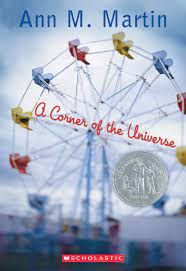
A Corner of the Universe by Ann M. Martin (YA)

A Corner of the Universe

Ann M. Martin (YA Fiction)

Hattie Owen lives in the third largest house in the small town of Millerton. Her grandparents live in the second largest. But unlike her Nana and Papa’s house, Hattie’s house isn’t filled with fancy furniture. It’s filled with boarders. Hattie doesn’t mind living with people who aren’t her family. What she does mind is living with secrets—one big secret especially. Hattie is about to find out that her mother has a younger brother, which means that she has another uncle. An uncle who, until recently, had been attending a “school” for the mentally disabled, but will now be moving back to Millerton to live with Nana and Papa.  Even though Hattie’s Uncle Adam is family, she realizes that she knows more about her parents’ boarders than her own flesh and blood, which begs the question, “If a person is kept a secret, is he real?” Hattie Owen is about to find out.

A 2003 Newbery Honor book, A Corner of the Universe covers so many complex and complicated topics, it’s really difficult to choose where to begin. Based on events in her own life, Ann M. Martin explores mental illness and the effects it has on both the individual and those around them. Twenty-year-old Adam Mercer, displaying symptoms of autism and schizophrenia, is seen as quirky, unpredictable, temperamental, and largely high-spirited by his twelve-year-old niece. However, as is the case with diseases of the brain, it only takes a minor deviation from a structured routine or an ill-delivered repudiation or rejection to set off a downward spiral of uncontrollable outbursts and dangerous reactions. Through Hattie’s lens, Adam is a person being denied fun and freedom by her controlling and rigid grandmother. Through Nana’s eyes, Adam is a child who requires constant supervision and well-defined boundaries. In reality, Adam is a little of both.

A Corner of the Universe is recommended for grades 5-8, and I certainly would not recommend this book to any reader younger than this. With topics of mental illness and suicide, as well as a few sexually implicit situations and some mild profanity, this is clearly meant for young adult readers—although the themes of acceptance, tolerance, inclusion, and kindness transcend all age groups. Martin gives us a perfect look into an imperfect world and shows us the devastation of living with guilt and regret, as well as the unintended consequences that follow seemingly good yet naïve intentions.

Hattie often said that she and her Uncle Adam had a lot in common. That they both felt like outsiders—always on the outside looking in. Hattie once told her uncle that she felt like she was a visiting alien to which Adam replied, “And aliens don’t belong anywhere except in their own little corners of the universe.” Sadly, it’s so easy to misjudge people who don’t fit into a preconceived category or check a certain box. What’s even sadder is the ease with which we tend to discount these same people—forgetting that they too have thoughts, feelings, hopes, and dreams. Although both Hattie and Adam often felt unwanted and out of place, both were able to find an unexpected friend in one another and for a brief moment, they were able to turn their corner of the universe into a very accepting, forgiving, and happy place.

Rating: 5/5

*Book cover image attributed to www.amazon.com

**Want more?  Visit our Facebook page at www.facebook.com/thedustyjacket
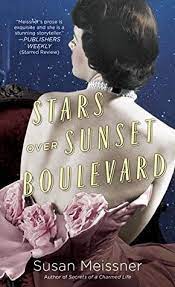
Stars Over Sunset Boulevard by Susan Meissner

Stars Over Sunset Boulevard

Susan Meissner (Adult Historical Fiction)

Unlike most women, Violet Mayfield didn’t move to Hollywood in hopes of being a star. At twenty-two, she made the trip from her home in Alabama because of the promise of a steady job in a studio secretarial pool. She also came to escape the expectations of her mother and father, as well as the sad memories of a life that would never be. Conversely, thirty-year old Audrey Duvall was looking for stardom. It was 1938 and the biggest news around Hollywood was the filming of Selznick International Studios’ blockbuster production of Gone with the Wind. Audrey, who was once on the cusp of stardom, is looking for her breakout chance. At the moment, all she’s looking for is a suitable roommate and this young woman from Alabama seems to be the right fit. Violet and Audrey’s friendship is set against the backdrop of the Golden Age of Hollywood—where dreams are made, stars are born, and all the world’s a stage. But as each of these two very different women search for their own sense of fulfillment and happiness, their friendship is constantly put at odds. Can their relationship endure their individual pursuits of happily ever after?

Historical fiction is my favorite genre and so I really enjoyed this behind-the-scenes look into the making of Margaret Mitchell’s Civil War-era epic Gone with the Wind. Meissner goes into detail about the film’s myriad obstacles and noteworthy events: the firing of the production’s first director, George Cukor; the clever solution of acquiring additional “extras” for the Confederate Wounded scene; the preparation for the burning of Atlanta sequence; and the excitement when the identity of the film’s leading lady was finally revealed. It’s a wonderful look into cinematic history and I thoroughly reveled in these references.

One of the major plot lines of the book was the tie-in between the past and the present through a prop from the Gone with the Wind movie: Scarlett’s over-the-top green velvet hat that went with her infamous drapery dress. Although an interesting premise, I felt that this connection didn’t really add anything to the storyline. For all the build-up behind this famed costume piece, I eventually viewed the emerald chapeau as more of a red herring. Admittedly, Meissner did use this device to directly draw a comparison between Scarlett O’Hara and Violet Mayfield who both are Southern women willing to do anything to anyone as long as it benefits their own self-interests. However, this correlation did not translate to an immediate “check” in the win box for me. The very reasons I didn’t like Gone with the Wind are the exact same reasons that I wasn’t able to fully connect with Stars Over Sunset Boulevard: a story based around a female protagonist that’s selfish, petty, ungrateful, and petulant and constantly plays the woe-is-me-card in order to rationalize her self-serving choices. By doing so, she manages to hurt those closest to her while depriving them the dignity and decency of making their own informed decisions. While Scarlett seems to pay the ultimate price for her arrogance, Violet seems to have gotten off pretty much scot free. To that, all I have to say is, “Fiddle-dee-dee”.

Rating: 3/5

*Book cover image attributed to www.goodreads.com

**Want more?  Visit our Facebook page at www.facebook.com/thedustyjacket

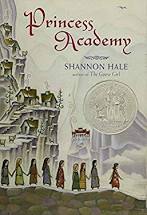
Princess Academy by Shannon Hale (J Fantasy)

Princess Academy

Shannon Hale (J Fantasy)

It was the last trading of the season and Miri was ready. At fourteen, she was very small for her age and not allowed to do the one thing she wished to do—work in the quarry. But one way or another, she would make her father proud and would get that stingy lowlander to give up more than he wanted. That would bring a smile to her father’s face and being useful would bring a smile to hers. But along with the traders came a painted blue carriage that carried word from the king—a prophecy that the future princess of Danland resided in Miri’s own Mount Eskel. All girls aged twelve to seventeen would go to an academy for one year’s training before the prince would select his bride and young Miri was to be among them. Could little Miri, too useless to even work in the quarry alongside her fellow mountain folk, EVER be considered worthy of a prince? She’ll have a year to find out.

Hale delivers a masterful and brilliant story of class and privilege and explores the problems associated with stereotypes and prejudices. Set against the backdrop of a chiseled mountainscape and a secret language stored deep inside the mountain’s linder stone, Princess Academy is the story of a young girl’s desire for acceptance while remaining true to herself and all that she holds dear. Recipient of the 2006 Newbery Honor Book award, Princess Academy shows us courage and the consequences that come with standing up to unfairness and protecting the most vulnerable among us.

There are so many valuable lessons in this book, especially for young girls who feel unnecessarily driven to be wittier or prettier or smarter than their peers. Miri understood the toxicity behind this kind of competition when she said, “I don’t like the feeling in competition with everybody to be seen and liked by Prince Steffan.” And it was Miri’s friend, Esa, who so wisely suggested, “We should make a pact. We’ll be happy for whomever he chooses, no jealousy or meanness.” Although written in 2005, these lessons still hold true today. There are so many empowering quotes about lifting each other up without tearing one another down or how a candle loses nothing by lighting another candle. Hale, through a “useless” girl who had very modest dreams, shows us the power for standing up for what is right and never turning your back on a friend.

I love Miri Larendaughter and have added her to my growing list of favorite fictional heroines. Besides her tenacity and courage and goodness, I believe it is her ability to lighten even the darkest places or the direst of circumstances that stands out the most to me. Prince Steffan said it best during his conversation with Miri when he said, “I would pay a deal of gold to have your talent of making other people smile.” In this age of competing for likes and followers, attention and approval, I hope we all remember how much value a simple act of kindness—especially a smile—is worth.

Rating: 5/5

*Book cover image attributed to www.betterworldbooks.com

**Want more?  Visit our Facebook page at www.facebook.com/thedustyjacket

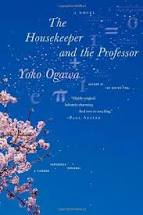
The Housekeeper and the Professor by Yoko Ogawa

The Housekeeper and the Professor

Yoko Ogawa

I was used to absurd demands from my employers—that I wear a different color ribbon in my hair every day; that the water for tea be precisely 165 degrees; that I recite a little prayer every evening when Venus rose in the night sky—so the old woman’s request struck me as relatively straightforward. “Could I meet your brother-in-law?” I asked. “That won’t be necessary.” She refused so flatly that I thought I had offended her. “If you met him today, he wouldn’t remember you tomorrow.”

By the time that Akebono Housekeeping Agency had sent her to work for the Professor, his card had already amassed nine blue stars—one for each time a housekeeper had to be replaced. If she failed, she would be the tenth. The job seemed easy enough: care for a man in his early 60s, work Monday to Friday from 11 am to 7 pm, prepare lunch and dinner, perform basic housekeeping, and do the shopping. The only caveat? The man—a former math professor—had a memory that only lasted eighty minutes. So began a unique friendship that would start over every hour and twenty minutes. A relationship as mysterious, complex, and intricate as the numbers that filled the Professor’s life.

Ogawa gives us a hauntingly beautiful story about kindness, loyalty, and friendship. Despite giving her characters no names (with the exception of the Housekeeper’s son who is nicknamed Root), these individuals still manage to leap off the page and burrow their way deep into your heart. Both the Professor and the Housekeeper are sympathetic and deep characters who justly deserve our compassion. The Professor remains largely unaffected by the new memories and friendships he’s made; however, when he becomes aware (either vocally or visually) of his loss, you can feel the torment, anguish, and misery literally slicing through his soul. Likewise, the Housekeeper bears an equally heavy emotional burden as she lives each day with the realization that after eighty minutes has passed, the Professor will neither remember nor miss her. This book will tug on every single heart string you possess, yet Ogawa still manages to give us a story filled with joy and hope.

The only minor downside is that The Housekeeper and the Professor does go deep into the mathematical weeds on several occasions with lengthy explanations of various theorems, laws, and formulas. Fans of Pierre de Fermat, Leonard Euler, and Pythagoras will appreciate their numerous references (with Euler’s Formula being specifically highlighted). While the majority of us will tend to glaze over these facts (while reliving some uncomfortable high school math memories), math is the singular means with which the Professor has to communicate and connect with those around him and so these enthusiastic explanations are easily forgiven as they provide valuable insight into a complicated and troubled individual.

Galileo Galilei wrote, “Mathematics is the language with which God has written the universe.” No matter how much had been taken away from him, the Professor realized that math connects us all. It is indeed a universal language without barriers or limits. Understanding this now makes me wish that I had spent just a little bit more time appreciating my high school math teachers and everything they patiently tried to teach me.

Rating: 5/5

*Book cover image attributed to www.amazon.com

**Want more?  Visit our Facebook page at www.facebook.com/thedustyjacket
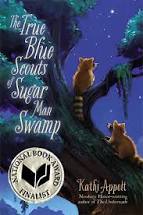
The True Blue Scouts of Sugar Man Swamp (J)

The True Blue Scouts of Sugar Man Swamp

Kathi Appelt (Juvenile Fiction)

Raccoons have been the official scouts of Sugar Man Swamp for eons (and that’s a really long time). Brothers Bingo and J’miah aren’t just ordinary swamp scouts. No, no, no! They’re Information Officers, a highly specialized branch of the Scout system. On the rooftop of Information Headquarters (which happens to look an awful lot like a 1949 DeSoto Sportsman) on the banks of the Bayou Tourterelle, our brave scouts keep vigil over their beloved swamp and try their very best to make their parents proud and to respectfully serve the Sugar Man. Not far from Information Headquarters is twelve-year-old Chap Brayburn. Mourning the recent loss of his beloved grandfather, Chap is now the man of the house and uncomfortably in the crosshairs of one Sonny Boy Beaucoup, owner of Sugar Man Swamp. Sonny Boy wants to build a wrestling arena and theme park right smack dab in the middle of the swamp! No, no, no! Before long, the scouts and Chap find themselves in a race against time to save the swamp and everything they hold dear.

I loved Kathi Appelt’s Newbery Honor book The Underneath and was delighted that this book had the same warmth, charm, and appeal. Packed with plenty of action and adventure, young readers will relish this story filled with pirates, feral hogs, a giant rattlesnake, and a hairy giant as tall as a tree with hands as wide as palmettos. The short chapters, numerous say-out-loud sounds (how fun is it to pretend to be a snake by mimicking its rattle with a “chichichichichi” or to sssssssspeak like a ssssssssnake), and humorous side comments make this a ready-made bedtime story. Readers will thrill in the antics of Bingo and J’miah while parents will appreciate the valuable moral lessons repeated throughout the book. Although there is a bit of thievery in our story, can you really blame two hungry scouts when such delicious sugar pies are involved? No, no, no!

The True Blue Scouts of Sugar Man Swamp is about family, loyalty, and bravery. But at its core, this book is a love letter to Mother Nature and reminds us that no matter how slimy, scary, slippery, scaly, scummy, or scratchy some creatures, objects, or places might be, they each play an invaluable role in an ecosystem that is extremely complex, amazingly fragile, and so very precious and irreplaceable. As Chap’s grandfather, Audie, always told him, “Nosotros somos paisanos. We are fellow countrymen. We come from the same soil.” We could all benefit by following the Official Sugar Man Swamp Scout Orders: Keep your eyes open; Keep your ears to the ground; Keep your nose in the air; Be true and faithful to each other; In short, be good.

Rating: 4/5

*Book cover image attributed to www.amazon.com

**Want more?  Visit our Facebook page at www.facebook.com/thedustyjacket
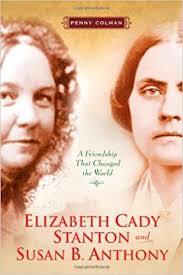
Elizabeth Cady Stanton and Susan B. Anthony: A Friendship That Changed the World by Penny Colman (J Biography)

Elizabeth Cady Stanton and Susan B. Anthony: A Friendship That Changed the World

Penny Colman (Juvenile Biography)

On a spring day in May of 1851—following an antislavery meeting in Seneca Falls, New York—Amelia Bloomer made a simple introduction that would alter the way that women were viewed, treated, and legally recognized. It was on a street corner where Susan B. Anthony and Elizabeth Cady Stanton met and would begin a 51-year friendship that would survive religious differences, geographical distances, legislative setbacks, societal obstacles, and personal obligations. Elizabeth, a gifted writer, and Susan, an adept organizer, were on the forefront of the women’s reform movement and would not only travel throughout the nation to end slavery, but would lead the charge in fighting for the rights of women to receive a higher education, to divorce, to own property, to earn equal pay, and to vote. Together, these women amassed ardent supporters, as well as bitter detractors. They suffered financially, physically, and emotionally but they remained as committed to their friendship as to their cause.

Colman’s research is exhaustive and extensive. Rather than begin her book with Susan and Elizabeth’s initial meeting, she explores each of their childhoods and upbringing, allowing readers to get a more complete picture as to how these two very different women would eventually be drawn together through a common cause. What I enjoyed was being able to go beyond the history in order to understand each woman’s unique motivation that set them on their shared trajectory. In Elizabeth’s case, it was her desire to offer consolation to her father after the death of his son. Her desire to bring him comfort by being “all my brother was” made her realize just how limited and exclusive her options were. Also, since her father was a judge and his office adjoined their home, Elizabeth was privy to numerous conversations dealing with the law and its negative impact on women, especially married women. In Susan’s case, it was her family’s plummet into bankruptcy and watching her personal items being auctioned off that left an indelible mark on her. Her need to earn money and help pay off family debts thrust her into the world of teaching, where she immersed herself in the issues of the day: temperance, slavery, and the fate of the country. With so many personal details taken from diary entries, letters, journals, biographies, and autobiographies, Colman enables readers to not only value these women as historical figures, but to also connect with them on a personal level. Their struggle was extraordinary and their impact immeasurable.

Before Elizabeth’s 87th birthday (which she would never get to celebrate), she received a letter from her dearest Susan. The letter read, “If is fifty-one years since we first met and we have been busy through every one of them, stirring up the world to recognize the right of women. . . . We little dreamed when we began this contest . . .that half a century later we would be compelled to leave the finish of the battle to another generation of women. But our hearts are filled with joy to know that they enter upon this task equipped with a college education, with business experience, with the freely admitted right to speak in public—all of which were denied to women fifty years ago. . . . These strong, courageous, capable, young women will take our place and complete our work. There is an army of them where we were but a handful.”

In an age where social media influencers, fashion and beauty bloggers, and reality stars fight for the attention and devotion of our young girls, it is important to remind them that it wasn’t that long ago when women were considered “members of the state” and not recognized as citizens of the United States. Women were denied rights, choices, and privileges that were eventually given to freed male slaves. Susan and Elizabeth were trailblazers and pioneers who made it possible for women to have a seat at the table…to have a voice in the discussion. They weren’t just reformers, activists, and suffragists, they were crusaders, soldiers, and warriors. Before our young girls and women put on a soccer jersey, sit down to choose their college, or review a ballot before an upcoming election, they need to remember that these choices are possible because of an introduction between two women who were outside enjoying a pretty spring day in New York.

Rating: 5/5

*Book cover image attributed to www.amazon.com

**Want more?  Visit our Facebook page at www.facebook.com/thedustyjacket
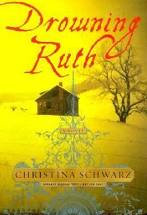
Drowning Ruth by Christina Schwarz

Drowning Ruth

Christina Schwarz

Ruth remembered drowning. “That’s impossible,” Aunt Amanda said. “It must have been a dream.” But Ruth maintained that she drowned, insisted on it for years, even after she should have known better.

Amanda Starkey is a nurse—a brilliant one in fact. She’s known for having “the touch”, but recent events have brought her mental stability into question and has forced her to leave her work at the hospital. Seeking a change of venue, she travels to her family farm at Nagawaukee. Perhaps there she’ll get the rest and clarity she needs while allowing her to reconnect with her younger sister, Mathilda, and Ruth, her niece. Soon, tragedy strikes and mystery surrounds the shocking drowning of Mathilda and as the years pass, dark secrets begin to crowd the deepest corners of both Amanda’s and Ruth’s memories. What happened that winter night in 1919 that led to a young mother’s watery death? How much does Ruth remember? What are those horrible scars on Amanda’s hand?  Are they a clue to the past? But like ice, secrets eventually thaw and allow the truth to rise to the surface. What will happen to Amanda and Ruth once these secrets are finally discovered?

Christina Schwarz’s Drowning Ruth is an Oprah Book Club pick and I can see why. Oprah’s selections often involve dark, broody themes with complex characters and intricate plots. This book is wonderfully no exception. Schwarz packs her book with flawed and fractured characters who carry their own unique burdens and baggage. Schwarz is able to flesh out each of her pivotal characters amply (from Amanda’s old love interest to Ruth’s beautiful and vivacious new friend) and doesn’t waste precious words with throw-away details or pointless subplots. The story switches from past to present and from third-person narrative to first-person points of view of both Amanda and Ruth. It is perhaps these personal perspectives that give readers the most honest and raw insights into these women, the motivations behind their actions, and how each are dealing with loss, adversity, betrayal, and heartache. Drowning Ruth moves along at a vigorous pace with plenty of plot twists to keep the reader engaged and guessing. The farther you get into this story, the more you realize how all of Schwarz’s character’s lives are deeply intertwined and entangled. The result is a satisfyingly suspenseful and captivating read.

One of my favorite authors, Carlos Ruiz Zafón, wrote in his book The Shadow of the Wind, “A secret’s worth depends on the people from whom it must be kept.” Like Mathilda and Ruth, Amanda Starkey was drowning as well, but her water was the weight of the secrets she wrapped around herself. Despite her need to keep them submerged, Amanda’s dark secrets eventually found their way to the bright surface and as they emerged, they brought Amanda up as well and introduced her to the fresh air that only life and living can provide.    

Rating: 4/5

*Book cover image attributed to www.thriftbooks.com

**Want more?  Visit our Facebook page at www.facebook.com/thedustyjacket
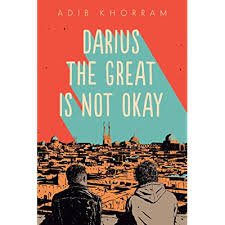
Darius the Great is Not Okay by Adib Khorram (YA)

Darius the Great is Not Okay

Adib Khorram (Young Adult Fiction)

Darius Kellner has some very big shoes to fill. After all, he was named after Darius the Great, one of the greatest rulers of the Achaemenid dynasty. Darius the Great was strong, smart, and brave, conquered lands and expanded the Persian Empire.  Darius Kellner is none of these things and has never really accomplished anything…although he can brew a mean pot of tea. For one thing, he’s only half Persian or a “Fractional Persian” as he refers to himself.  Also, he never stands up for himself. The school bullies (the Soulless Minions of Orthodoxy) keep him in his place, which makes life at Chapel Hill High School (Go Chargers!) a living nightmare. On top of all of that, the medication he takes for his depression causes weight gain, which only makes the target on his back that much easier to spot. But life is about to get a little more complicated as the family boards a plane to Iran to visit his sickly maternal grandfather. How can a shy, non-confrontational Fractional Persian with a penchant for The Hobbit and Star Trek: The Next Generation be able to live up to his namesake in his mother’s homeland? Darius doesn’t need to be great. What Darius needs is a miracle.

Author Adib Khorram, who himself suffers from depression, delivers a warm and realistic take on teenage life and the struggle with balancing family expectations with personal aspirations. What is refreshing about Darius the Great is Not Okay is that Khorram fills his book with characters who are not caricatures. It could have been easy to paint Darius as the hapless victim. The “typical” bullied teenager who is sullen and solitary. Instead, Khorram takes great care to give our main character heart and who experiences deep feelings of jealousy, resentment, humiliation, and gratitude without the need for a fall guy or martyr. When Darius is around his little sister, Laleh (an adorable and precocious second grader), we see his kindness, compassion, and various bits of exasperation peek through. As his friendship with Sohrab begins to evolve, we witness a more confident and joyful Darius emerging. Also, Khorram avoids depicting Darius’s intelligent, and charismatic father, Stephen, as the elitist, cold-hearted, and controlling patriarch. Through various situations, we understand that Stephen’s repeated criticisms of Darius are not cruel, but rather a father’s desire for his child to be accepted, appreciated, and happy. All of Khorram’s characters are perfectly imperfect and are so well developed, that we find ourselves laughing, crying, and cursing right alongside them.

Khorram’s story also gave me the opportunity to learn more about Iran and her people, culture, and history. Iran is truly a separate character in this book and although Khorram was born in Kansas City, Missouri, his father is Iranian and the love he has for his father’s birthplace is evident in every single page. As Darius experiences Iran for the first time, we too get to feel the dust on our skin, smell the savory teas brewing in their pots, taste the confectioners sugar on top of the qottab, and marvel at the magnificence of the Zoroastrian Towers of Silence and Persepolis. Darius the Great is Not Okay is not only an expertly told story about family, friendship and acceptance, but it is also a lavish feast for the senses and truly a trip worth taking.

Rating: 5/5

*Book cover image attributed to www.goodreads.com

**Want more?  Visit our Facebook page at www.facebook.com/thedustyjacket