
Current Book Review

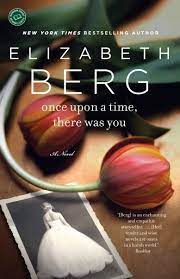
Once Upon a Time, There Was You by Elizabeth Berg

Once Upon a Time, There Was You

Elizabeth Berg (Adult Fiction)

DISCLAIMER: This is going to deviate a lot from my normal review format because I just can’t bring myself to devote any more time to this book, so here goes…

Synopsis: Two people (John and Irene) who never wanted to get married to each other get married to each other, have a kid (Sadie), get divorced, and are brought together again because their now eighteen-year-old daughter did something ridiculously and mind-numbingly stupid.

Why I read this: I read Berg’s Open House and rated it 3/5. It was okay enough that I decided to take another chance and read The Story of Arthur Truluv, which I rated 4/5. I was feeling pretty good and dived into Once Upon a Time, There Was You. I now find myself in a hate-love-hate relationship with Elizabeth Berg. I blame Arthur for this false sense of security.

Questions: First, What was the actual point of this book?!; Second, What in the world was Berg thinking when she wrote the event involving Sadie that sets the stage for her parents’ reunion? It felt forced and came absolutely out of left field. I don’t mind a shocking event if it’s going to add some depth to the story, but this one felt wildly out of place and came and went faster than promises made on election day; Third and Fourth, Who wrote the synopsis for this book and Did they even read the book? When tragedy strikes, Irene and John come together… Tragedy? That’s REALLY overstating what happened. What takes them longer is to remember how they really feel about each other. That might be the case if it wasn’t for the fact that Irene’s mouth has been estranged from her brain for quite a while so that any relationship involving her is doomed as soon as her lips part. There are more examples, but my brain is beginning to hurt a little bit now.

My rating: Every book I read automatically begins with a star. I mean, the author actually published a book and I haven’t so there’s that. I gave it another star because the relationship between Sade and her father was nice and the ending between John and Irene—unlike other parts of the book—actually made sense and was appropriate.

Moral of the story: Always go with your gut instincts, no matter how terrifying or humiliating the consequences may seem to be. Just suck it up, buy yourself an iced white chocolate mocha, hide under the covers, and wait for common sense to kick in…or the sugar and caffeine, whichever comes first.  

Rating: 2/5

* Book cover image attributed to www.amazon.com
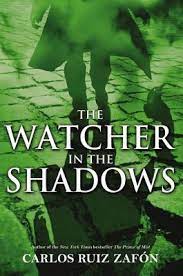
The Watcher in the Shadows by Carlos Ruiz Zafon (YA Horror)

The Watcher in the Shadows

Carlos Ruiz Zafón (YA Horror)

Fourteen-year-old Irene Sauvelle and her family are left desperate and destitute when Irene’s father dies and leaves them buried in debt. They happen upon some good luck when a family friend offers Irene’s mother, Simone, a job working for Lazarus Jann, a reclusive toymaker and inventor who lives in a mansion called Cravenmoore. Their new life in the seaside village seems idyllic until a young girl is brutally murdered. As events surrounding Cravenmoore become more disturbing, Irene begins to reconsider the veracity behind the local ghost stories and becomes curious about the secrets being closely guarded by the brilliant yet mysterious Lazarus Jann.

Carlos Ruiz Zafón, who was taken from us MUCH too soon, gives us a spine-tingling, hair-raising, and heart-pumping story that is begging to be brought to the screen (hint, hint Netflix, Disney+, and Amazon Prime Video). The Watcher in the Shadows—which is book three in the Niebla series, but can be read as a standalone—is a suspenseful, young adult horror that wastes no time in bringing the story’s action to full steam. Each chapter brings an escalation in the danger, as well as several eye-opening revelations that keep the reader guessing until the end.   

Given the current horror offerings inundating cable and movie screens lately, I was hesitant to pick up anything in this genre, but I knew Zafón would hand me a winner…and he did. Rather than going for the instant and predictable shock value by filling pages with copious amounts of guts and gore, he instead delves into your deepest fears by setting his scenes in darkness and using various light sources to allow walls, ceilings, and floors to become the playground for shadows that slither, slink, and stalk. Zafón exploits our primal fears by writing about situations involving drowning, delirium, confinement, abandonment, and isolation and he does so with calculated effectiveness.

This book is written for grades seven and up, but its underlying theme of technology vs humanity is one that any age could benefit from. Zafón wrote The Watcher in the Shadows in 1995, which coincided with the widespread adoption of the World Wide Web as a global medium for information access. Fast forward almost thirty years later and we’re now a society where gadgets and gizmos control almost every aspect of our life. And while The Watcher in the Shadows is not an overtly cautionary tale of automation overtaking humanity, it does serve as a subtle warning of the dangers that can occur when we depend on technology to fill the void left by loneliness and grief…an emptiness that once was filled by humans.   

Rating: 5/5

* Book cover image attributed to www.goodreads.com

The Mighty Miss Malone by Christopher Paul Curtis (J Historical Fiction)

The Mighty Miss Malone

Christopher Paul Curtis (Juvenile Historical Fiction)

The best-laid schemes o’ mice an’ men/Gang aft a-gley

And leave us nought but grief and pain/For promised joy.

Her teacher told her that it was from a poem by Robert Burns called “To a Mouse”. Deza didn’t quite understand what those words meant—especially the “gang aft a-gley” part—but Mrs. Needham said that it just meant that even the most carefully planned out things could go wrong. Deza knew about this since a lot of the Malone family plans haven’t been quite working out lately. But if there’s one thing that the Malones do well it’s sticking together. After all, their motto was “We are a family on a journey to a place called Wonderful”. Before the Malones could get to Wonderful however, Deza and her family would have to travel through a whole lot of awful first.

Set against the backdrop of the Great Depression, homeless camps, speakeasies, and the much-hyped 1936 boxing match between Joe Louis and Max Schmeling, Curtis gives us yet another story centered around a tough-as-nails, plucky, and absolutely endearing main character. At twelve, Deza Malone is the smartest in her class and destined for something special. With a dictionary in one hand and a thesaurus in the other, she’s more than ready to take on the world one adjective and adverb at a time. Deza is charming, loyal, fiercely protective of her family—especially of her older brother, Jimmie—and principled to a fault. Deza is not a girl who’s afraid to take matters into her own hands in order to set things right…even if it means a little forgery or rule breaking now and then. Struggling to make something of herself while fighting racial prejudice, financial hardship, and social injustice may prove to be formidable challenges for some, but not for the mighty Miss Malone.

The Mighty Miss Malone is the second book by Curtis that I’ve read (the first being Bud, Not Buddy). In both stories, he gives us a main character who rises above their circumstances with grace, dignity, and integrity. His stories are built around the strength of family, the importance of hope, and the resilience of the human spirit. Through Deza Malone, Curtis reminds us that even though plans “gang aft a-gley”, tomorrow is always a brand-new day that brings with it another opportunity to get a little bit closer to a place called Wonderful.

Rating: 5/5

* Book cover image attributed to www.amazon.com
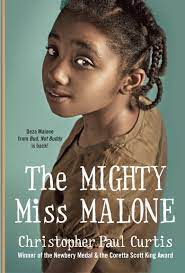
The Snow Globe by Judith Kinghorn (Adult Historical Fiction)

The Snow Globe

Judith Kinghorn (Adult Historical Fiction)

Inside her room, Daisy paced in circles. She’d been kissed. She’d been kissed at last, but not by the one she had wanted to kiss her. The one she wanted to kiss her said he loved her but seemed reluctant to kiss her. The one she didn’t want to kiss said he might love her and that he wanted to marry her. And the one she had kissed considered it a mistake.

It was Christmas 1926 and the residents of Eden Hall are preparing for another festive holiday. But this year, war still hangs heavy over everyone’s lives, the disappearance of famed mystery author Agatha Christie has the world gripped in intrigue, and eighteen-year-old Daisy Forbes’ heart is being torn apart by her feelings for her childhood friend, a few potential suitors, and a newly discovered secret about her adored father. As Christmas gives way to spring, the women of Eden Hall struggle to find their own voice, their own way, and their own sense of happiness and they’ll do all of these…even if it means leaving their beloved home behind.

I am a huge fan of the series Downton Abbey and so it’s no surprise that Kinghorn’s novel hit just the right chord with me. Full of conflicts without being overly dramatic and providing plenty of romance without being too schmaltzy, The Snow Globe shows us that the wealthy and well-to-do are not immune to such problems as betrayal, jealousy, pettiness, and all the other sins and shortcomings that make us human and fallible.

Although I always enjoy a good story showcasing the resilience of the human spirit and the power of overcoming impossible odds, there is also something to be said for a story that simply takes us back to a time and place where you could enjoy elevenses in front of a roaring fire in the family study or dance until dawn in the family garden while friends sip champagne under the moonlight. These little “reading retreats” of mine serve as an important reminder that there IS no place like home, that absence does indeed make the heart grow fonder, and that you shouldn’t stop making wishes on your snow globe because you never, ever know when one just might come true.   

Rating: 5/5

* Book cover image attributed to www.amazon.com
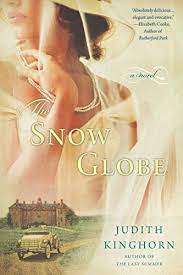
Starfish by James Crowley (J Fiction)

Starfish

James Crowley (J Fiction)

Orphaned at a young age, nine-year-old Lionel and his older sister Beatrice have lived at the Chalk Bluff boarding school on the Blackfeet Indian reservation for six years. Beatrice defiantly holds on to the traditions of her people, which causes growing tensions between her, the priests, and the officers who live in the nearby military outpost. When Beatrice is finally pushed to the brink, she steals the captain’s prized horse and escapes with Lionel into the wilderness in search of their grandfather. Grandfather will know how to help them, but first they must survive the harshness of the Montana winter.

James Crowley’s Starfish is packed with action and adventure and provides readers with a powerful female protagonist who is fearless, principled, and wise beyond her twelve years. The writing is detailed and the chapters are short, which add to the tale’s rapid and charged pace. Readers share in Beatrice and Lionel’s struggle to survive the elements and hunger; cheer their ability to outrun and outwit bounty hunters (they are understandably considered horse thieves); and support their loyalty to their customs and beliefs. Crowley creates a suspenseful story through wonderful storytelling that is a love letter to nature and Native American culture. Although the novel is littered with mild profanity (it’s nothing that younger audiences wouldn’t hear in a standard Marvel movie) and contains a few instances of violence, these shouldn’t discourage the targeted age range of 8-12 from reading it.

I loved the insights into Blackfeet tradition and I’m a total pushover for stories that highlight strong sibling relationships; however, the only thing that held back a five-star rating was the ending. It felt abrupt and awkward and didn’t match the same feel and flow of the rest of the book. I am not one that demands a happy ending in order to fully enjoy a story, but I do need an ending that is thoughtful and provides adequate closure. Because Crowley spent so much time and care giving readers such a well-developed story, it felt as if he ran out of steam at the end.

I find that with nearly every book, the last few pages will either make or break a story for me and in this case, those last pages of Starfish just felt incomplete and hollow. Unlike the ravens and eagle that soared high in the Montana sky, this story doesn’t reach the heights that I hoped it would, but it still manages to lift the spirits and take us on an unforgettable journey.

Rating: 4/5

* Book cover image attributed to www.goodreads.com

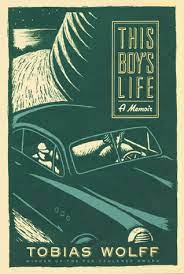
This Boy’s Life: A Memoir by Tobias Wolff

This Boy’s Life: A Memoir

Tobias Wolff (Adult Memoir)

It was 1955 and we were driving from Florida to Utah, to get away from a man my mother was afraid of and to get rich on uranium. We were going to change our luck.

Ten-year-old Toby “Jack” Wolff dreams of escape and freedom. He dreams of transformation. Traveling with his mother from Florida to Utah in their Nash Rambler, their prospects finally seem bright and expansive. The future was theirs for the taking…that is if their luck changed which, in Toby’s case, seems highly unlikely.

Tobias Wolff’s memoir is not one of those redemptive stories where everyone links arms and watches the sunset over the mountain or one where friends and family cheer as our young hero makes his way across the stage, grabs his diploma, and raises it high into the air signaling triumph. This is another kind of story where the reader bangs their head against the wall as our young protagonist continues to make one horribly bad decision after another. Where the hero doesn’t learn from his mistakes and continually seems to disappoint everyone around him except himself. This horribly flawed and painfully real boy is the reason why I fell in love with this book.

Former UCLA basketball coach John Wooden once said that the true test of a man’s character is what he does when no one’s watching. A lot of what Wolff includes in his memoir could certainly have been softened or even omitted in order to allow the reader to have just a small bit of sympathy for him and his circumstances. Instead, he goes full bore and gives us all the ugly, raw, and sordid details of his early years. He deprives us of feeling any sense of pity although we understand that he is but a product of a mother who continues to be drawn to poisonous men and friends that are a whisper away from juvenile detention.

Throughout this book, Wolff explains that he craved distinction, that he only wanted what he couldn’t have, and that he was merely living off of an idea that he had of himself. Although we understand and accept this, we still ache when he tries to please a parent who neither deserves or earns it and hold our breath and silently curse as we realize yet again that another opportunity has been squandered away. Through all of his pain and suffering, Wolff reminds us that life is messy. It’s gnarled. It’s complicated. Life sometimes is just like that…especially this boy’s life.

Rating: 4/5

* Book cover image attributed to www.amazon.com
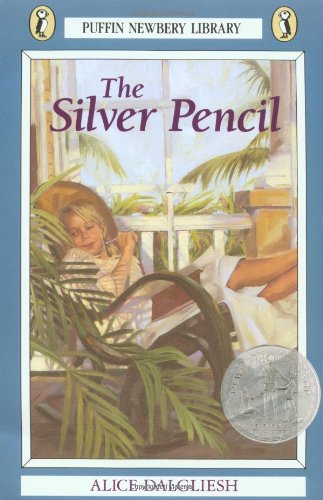
The Silver Pencil by Alice Dalgliesh (YA Fiction)

The Silver Pencil

Alice Dalgliesh (YA Fiction Newbery Honor)

The silver pencil was a miracle. It was handsome to look at, delightful to use because it never needed sharpening. One had only to change the lead. Janet was sure that she could write almost anything with it. Confidently she sat down at her small table, with clean sheets of paper in front of her and the shining pencil in her hand. To her surprise, exactly nothing happened.

Nine-year-old Janet Laidlaw was a British citizen living on the tropical island of Trinidad. She loved her life in the House on the Hill, but things quickly changed following the sudden death of her beloved father. At thirteen—when most Colonials went off to school—Janet traveled to her mother’s birthplace of England where her world suddenly got a lot bigger. With the promise of new friends and adventures, perhaps her silver pencil wouldn’t be silent for much longer.

Newbery books have always been my “go to” reads. Whether I’m looking for an excellent story for myself or I need a solid recommendation for a young reader, that silver- or gold-foiled sticker always let me know that I had picked out a winner. Unfortunately for me, The Silver Pencil fell short of this assumption. Awarded the Newbery Honor Book distinction in 1945, Alice Dalgliesh’s coming-of-age (and semi-autobiographical) book is about a young girl who travels from Trinidad to England and then to New York while pursuing a career in teaching before ultimately stumbling upon success as a children’s author. This book is meant to mirror Louisa May Alcott’s Little Women, which was Janet’s first introduction to America. Unfortunately, Dalgliesh’s tale didn’t quite rise to the level of its literary inspiration and probably won’t have the same appeal with a young adult audience.

Published in 1944, the beginning of The Silver Pencil is full of racially insensitive and inappropriate cultural references. These obviously didn’t cause a ripple back then, but would clearly result in a tsunami today. Also, Janet’s favorite book is The Story of Little Black Sambo, which she shares repeatedly with youngsters that are in need of fast and effective entertainment. Although the story’s text and illustrations have undergone numerous revisions over the decades, its very title still conjures up negative feelings and emotions. With that being said, the remainder of the book is pretty safe although I felt no attachment to the story and had zero connection to its characters. Despite it being a beautifully written book, the words just hung there and felt lifeless—lacking any sense of warmth or feeling. Even when Janet was dealing with the death of her father, I didn’t feel her pain and loss although she was obviously experiencing it. Her experiences felt more like a list to be checked rather than a life that was lived.

Despite the low rating, I loved how Dalgliesh used stories and storytelling to bridge the gap between cultures and class, to calm the rowdy and connect the displaced, and to bring people together to make the world seem a little bit smaller. They say that the pen is mightier than the sword, but Janet Laidlaw and Alice Dalgliesh showed us that a silver pencil could be just as mighty…if not more.

Rating: 3/5

* Book cover image attributed to www.amazon.com
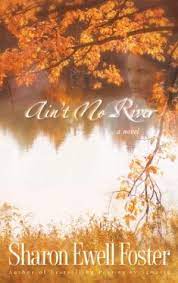
Ain’t No River by Sharon Ewell Foster

Ain’t No River  

Sharon Ewell Foster

Everyone and everything in Garvin Daniels’ life seem to be going wrong: her 70-something Meemaw is hanging out with a young and handsome fitness instructor named GoGo, her friend Ramona is embarking on a bicycling fundraiser with a pastor that she just met, and her high-powered law firm has given her a case that will surely mean the end of her career. Has the world gone crazy? After an involuntary leave of absence, Garvin decides to leave Washington, D.C. and head back to her hometown of Jacks Creek where she is determined to set things right…no matter what it takes.

If you were to search Google and look for ideal character traits of lawyers, you’d get things like compassion, willingness to listen, good judgement, and great emotional balance. GARVIN DANIELS HAS NONE OF THESE! Instead, Sharon Ewell Foster gives us a whiny, insensitive, self-absorbed, inconsiderate, spoiled, selfish, petulant…well, the list goes on and on. I understand why an author would make their main character absolutely insufferable because their end goal is for that character to finally realize the error of their ways and be redeemed. They clearly realize the hell they are putting their readers through by having to deal with this horror of an individual, but we remain loyal because we know—we just know—that all of this emotional turmoil will be worth it because the character’s ultimate salvation will be our reward, too. Not so with Garvin Daniels. Nope. Even when she begins to understand that maybe she isn’t her best possible self, it doesn’t take long before she’s back to slinging insults, scorn, and contempt. And by the way, complaining about life in your tailored suit while standing in a gleaming marble restroom of a prestigious law firm to a woman who is currently busy cleaning the toilets is NOT a good look.  

I would have enjoyed this book so much more had Foster instead focused on the complex, quirky, and beautifully damaged residents of Jacks Creek: Monique, the teenager forced to give up her child and then has live with the shame and stigma afterwards; Big Esther who runs her own salon and dispenses truth and wisdom in never ending supplies; Smitty, the seller of snowballs who basks in the glow from the attention of the women at the hair salon but is looking for something more; GoGo, retired pro-football player who can’t seem to outrun his past; and Meemaw, the town matriarch who always seems to know just what a heart and stomach needs and is ready to graciously fill both. I wanted to know more about these people and spend a few more nights on the front porch with them to understand their pain and share in their journey towards healing. But those opportunities didn’t come often enough and instead I was sent back to Garvin where I counted the pages until I might be rewarded with Meemaw’s words of wisdom or one of Smitty’s deluxe snowballs with marshmallow on top.

At the end of one of her poor-me pity parties, Garvin wondered to herself why everybody around her expected her to fix everything for them. If only she had searched Google and used one of those ideal lawyer character traits. If she had, she would have quickly discovered that nobody does.

Rating: 2/5

* Book cover image attributed to www.goodreads.com 

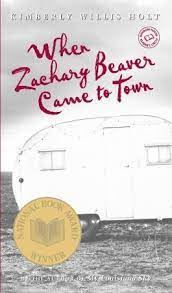
When Zachary Beaver Came to Town by Kimberly Willis Holt (J)

When Zachary Beaver Came to Town    

Kimberly Willis Holt

Nothing ever happens in Antler, Texas. Nothing much at all. Until this afternoon, when an old blue Thunderbird pulls a trailer decorated with Christmas lights into the Dairy Maid parking lot. The red words painted on the trailer cause quite a buzz around town, and before an hour is up, half of Antler is standing in line with two dollars clutched in hand to see the fattest boy in the world.

It’s the summer of ‘71 in Antler, Texas and the biggest news in town was Cal’s brother, Wayne, serving in Vietnam and Toby’s mom, Opalina, going to Nashville to compete in the National Amateurs’ Country Music Competition at the Grand Ole Opry. Those two things alone were enough to keep the town’s tongues wagging for a while, but then along came that white trailer carrying the world’s fattest boy. Just two dollars and you could gawk all you like. It doesn’t seem like anything could top this, but Toby Wilson and Cal McKnight are two teenagers in a small town so you can bet that adventure—and trouble—aren’t too far behind.

With her National Book Award winning novel, Kimberly Willis Holt takes us to small town America in the early 70s. A time when the country was embroiled in the Vietnam War, the local cafe was where you went to get updated on all the latest news, and there was nothing so bad that eating a snow cone with your best friend couldn’t make right. Holt’s downhome, folksy writing immediately sets a tone of comfort, familiarity, and inclusion for her readers and instantly makes you a part of this tight-knit town that boasts the Wag-a-Bag, Bowl-a-Rama, AND Wylie Womack’s snow cone cart. What more could a town need?

Holt explores so many important and relevant themes that often (and unfortunately) go unexplored in today’s stories for young readers. It’s the subtle niceties that bear no monetary value that seldom makes it to the written page: allowing a person to maintain their dignity, extending a stranger common courtesy and respect, and accepting loss and defeat with grace and valor. Kindness, decency, and friendship serve as the foundation for When Zachary Beaver Came to Town, but Holt also shines a light on the selfish side of human nature and how easy it is to put our own wants and desires ahead of what is right—regardless of the consequences. She also explores a number of relationships in her book with each one offering readers a valuable lesson in forgiveness, humility, and empathy.

Two teenage boys learned so much when Zachary Beaver came to town, but perhaps the most important were that friends don’t snitch on one another, you always stick up for those who can’t defend themselves, and you never, never turn down the chance to dance with the girl of your dreams…especially when a song by the Carpenters is playing.

Rating: 4/5

* Book cover image attributed to www.goodreads.com 

**Want more?  Visit our Facebook page at www.facebook.com/thedustyjacket

Life with Bingo by Jim Black & Jim Lewis

Life with Bingo    

Jim Black and Jim Lewis

(Reviewer’s Note: I normally review older books, but this newly released book was sent to me personally by the author, Jim Black. His kindness continues to overwhelm me and reinforces the unique bond shared between author and reader. Despite my appreciation for his kindness, my review—as with all of my reviews—is honest and impartial. To provide anything less would be a disappointment and a disservice to this author and I would never do either.)

Life can be daunting on your own—especially when you’re only sixteen years old. But things can be a lot less scary and intimidating when you have your best friend by your side. This is the story of two best friends who escape an abusive home and make their way from Texas to Montana. Along the way, they experience both the dark and light side of humanity and while mankind’s seedy nature allows our travelers to learn valuable lessons about life, it’s the random acts of decency, generosity, and kindness that carry them through to the next day and remind them that there is still good in the world. Good that is just waiting to shower itself onto a teenage boy and his dog.

Jim Black and Jim Lewis take readers on an unforgettable journey told in the alternating voices of our young man and his furry sidekick. Armed with nothing more than a backpack, sheer determination, and each other, our travelers embark on a nearly two-thousand-mile trek that tests their resolve, challenges their trust, and opens up their heart to the possibilities of faith and providence. Life with Bingo is not just a story about running away, it’s about running to and that indescribable force that enables us to keep putting one foot in front of the other or that promises us that things will be better tomorrow if we can just make it through today. And if you’re lucky, you’ll have someone right there beside you to remind you that you are not alone.

Life with Bingo is a fast-paced read with the narration providing poignant and often humorous points of view. While some might see this story as a bit schmaltzy when compared to the stark truths of modern-day reality, I enjoyed immersing myself into this world where good people do good and selfless things—not for clicks or views or likes or fifteen minutes of fame—but because it is the right thing to do. Because helping others not only makes us feel good, but it reminds us of our connectedness. Our understanding that we are merely just one little piece in a very big puzzle and that even though we’re uniquely shaped, we all fit together to form something quite wonderful and special. Aesop wrote, “No act of kindness, no matter how small, is ever wasted.” Schmaltzy or not, that’s the kind of world I want to live in…especially if there’s a trusty friend by my side.

Special Note: If you are a victim of domestic abuse, call the National Domestic Violence Hotline at 1-800-799-SAFE (7233) or visit http://www.thehotline.org.

Rating: 4/5

* Book cover image attributed to www.amazon.com 
**Want more?  Visit our Facebook page at www.facebook.com/thedustyjacket