
Book Review: Runaway Ralph by Beverly Cleary

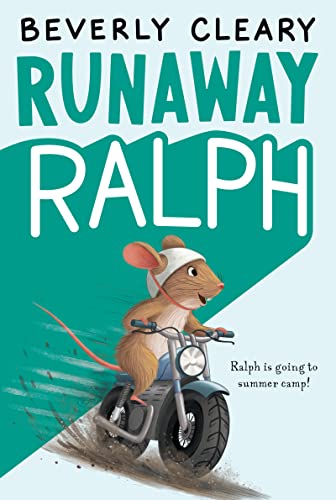
Runaway Ralph

Beverly Cleary (J Fiction)

Ralph wants a life of speed, danger, and excitement. Ralph wants to be free from his cousins and the rules imposed by his mother and uncle. But most of all, Ralph just wants a peanut butter and jelly sandwich! Determined not to be just another crumb-scrounging rodent, he decides to run away from his home at the Mountain View Inn and heads to a place filled with the promise of those wonderful sandwiches…Happy Acres Camp. With a little effort, and some luck from a downhill journey, Ralph is on his way. It’s not long after that he gets more than he bargained for when he meets the camp guard dog, a sneaky tom cat, and a philosophical neighbor in the form of a hamster. Soon, Ralph realizes that perhaps home isn’t so bad after all.

Cleary delights audiences once again with this charming follow-up to her popular The Mouse and the Motorcycle. In the first book, Ralph meets an extroverted boy confined to his hotel room due to illness. This time around, he meets an introverted boy confined by his own self-doubts, shyness, and desire to be alone. It’s a nice twist for Ralph to meet such an opposite ally named Garf (short for Garfield). The reader also gets to watch Garf come out of his shell as he’s given the responsibility of caring for Ralph and begins to develop a friendship with the mouse. Ralph also begins a transformation of his own. Once feeling “trapped” by his mother’s silly rules, Ralph literally becomes trapped in a cage and begins to appreciate the freedom he once had at the inn. He also understands that the rules he once viewed as restrictive were actually imposed to keep him safe.

Readers shouldn’t be worried that this book will fall short of its predecessor! On the contrary, there’s plenty of action and nail-biting situations to keep young audiences engaged and ready for more. The book’s ending also introduces Ralph’s next adventure nicely and enticingly lures readers to complete their journey with Cleary’s third and final installment of her Ralph Mouse series: Ralph S. Mouse.

There’s a great quote that says, “Remember, being happy doesn’t mean you have it all. It simply means that you’re thankful for all you have.” After several near-catastrophic events, Ralph slowly began to appreciate the life he had and even started to value those pesky, nuisance rules. He missed home because he realized that home—rules, cousins, and all—was enough…even though a peanut butter and jelly sandwich every now and then would be good, too.

Rating: 4/5
Study Guide: The Magic Finger by Roald Dahl

Designed to eliminate loose papers and leftover craft pieces, this all-in-one study guide contains vocabulary words, content questions, discussion topics, puzzles, activities, crafts, and more! Everything is done IN this book and STAYS in this book! Answer key included.

Subjects: English Language Arts, Vocabulary, Reading

Grades: 3-7

Types: Lessons, Activities, Discussion Topics

https://www.teacherspayteachers.com/Product/Study-Guide-The-Magic-Finger-by-Roald-Dahl-11122038

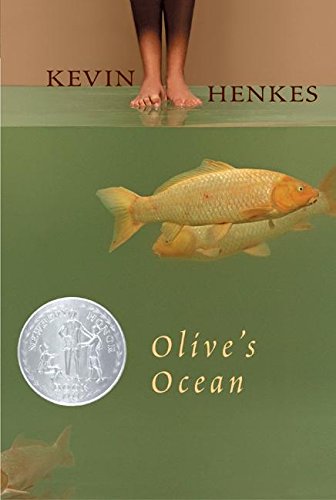
Olive’s Ocean by Kevin Henkes (J Fiction)

Olive’s Ocean

Kevin Henkes (J Fiction)

Twelve-year-old Martha Boyle and her family were leaving on their annual vacation to the Atlantic coast when a woman appeared on the Boyle’s doorstep. She introduced herself as Olive’s mother, one of Martha’s classmates who had recently been killed. She handed Martha a folded piece of paper from Olive’s journal. As Martha read the note written by a girl she barely knew, she was struck by just a few simple sentences: I hope that I get to know Martha Boyle next year (or this summer). I hope that we can be friends. That is my biggest hope. These kind words filled with expectation would alter Martha’s world view forever as she mourns a friendship that never was and never will be.

I raised my child on Kevin Henkes’ mouse books: Chester’s Way, Owen, Wemberly Worried, and others. Each helped me reinforce the value of friendship and the importance of acceptance, handling your emotions, self-reliance and many other life lessons. When I saw that Olive’s Ocean was a Newbery Honor book, I wasn’t really surprised. What DID surprise me was that it ranked 59th on the American Library Association’s list of the 100 Most Challenged Books from 2000 to 2009 for its offensive language and sexual explicitness. No wonder Wemberly worried!

Despite the ominous label it carries, Olive’s Ocean is a rather innocuous coming-of-age story about a girl dealing with the customary pre-teen fare: first love, awkwardness, rejection, humiliation, and the constant struggle of trying to figure out who she is and what she wants to be. Pretty safe stuff, but Henkes does nudge the boundaries ever so slightly causing those few, all-important feathers to be ruffled.

The “sexually explicit” reference is a brief explanation to Martha by her older brother of why their parents seem overly affectionate one morning. It seems they were exhibiting “Morning Sex Behavior” and “when they do it in the morning” they get a bit lovey-dovey. Regarding the “offensive language”, there are instances of mild profanity, but nothing too over-the-top for the publisher’s recommended reading age of 10 and up. So, the big questions are: Are EITHER of these inclusions necessary to further the story or develop the characters? No. Could they have been excluded with little to no impact on the overall message? Absolutely. Would Henkes have omitted them if he knew the wrath that awaited him? Maybe. Maybe not. There’s no question that having your book banned instantly puts you on a reader’s radar, but clearly this was not his intent. All in all, these infractions (as most references go) are tame, but clearly remain unforced errors and prompt me to up the recommended reading age by a few years just to be prudent.

As far as stories go, this was a quick read and had several important messages about inclusivity and realizing that the world doesn’t revolve around your own personal cares and needs; however, I would have liked more Olive in Olive’s Ocean and feel that this was an opportunity wasted. The apparent connection between Olive and Martha stated in the synopsis doesn’t quite materialize in the actual book, and it would have been far more interesting if Olive’s story had been developed more deeply to show Martha’s slow and eventual evolution. Still, the targeted audience will find a nice and relatable story, while I was hoping for something a little bit more moving with a deeper and lasting message. I guess if I’m looking for these, I need to go back to the mouse stories.

Rating: 3/5

* Book cover image attributed to: www.abebooks.com

We’re now posting videos of some of our book reviews! Follow us on Facebook at www.facebook.com/thedustyjacket or on Instagram @tdjreviews and join in on the fun!

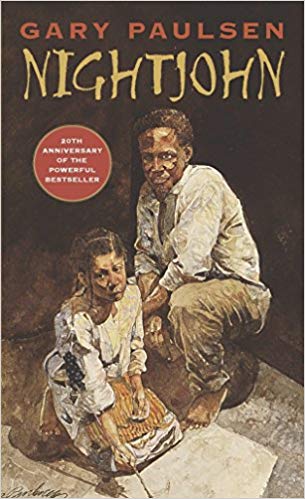
Nightjohn by Gary Paulsen (YA Fiction)

Nightjohn

Nightjohn

Gary Paulsen (Young Adult Fiction)

“It was in the flower bed that I first heard about Nightjohn.  Not by name, but by happening.”  Sarny remembers that moment well.  That and other moments—both horrible and hopeful—that has happened on Master Clel Waller’s plantation:  the beatings, the constant humiliation, the rapes, but also the songs and stories that provide some comfort to her and her fellow slaves.  But most precious of all were the moments spent with Nightjohn for he brought with him freedom.  Freedom that only knowledge could bring, and Nightjohn was bringing it to Sarny and anyone brave enough to accept this unique and powerful gift.

Gary Paulsen notes that the events written in Nightjohn (with the exception for variations in time and character identification and placement) are true and actually happened.  Knowing the atrocities, brutality, and savagery that happened during the period in American history where slavery was practiced and largely accepted, the story of Sarny and what she witnessed and experienced should come as no shock.  Unfortunately, it does for Paulsen is relentless in his detail and spares no sensibilities when it comes to depicting the treatment of slaves and the punishment ravaged upon those attempting escape.  The book is recommended for ages 12 and up and although the message is important and the details written are accurate, I would suggest a slightly higher starting age due to several highly graphic scenes and some mature subject matter.

I appreciated the theme of this book and the heroism shown by Nightjohn who had successfully acquired freedom in the north, but chose to return south so that he could teach slaves to read and write.  During one pivotal scene, Sarny’s “adoptive” mother, Mammy, asked Nightjohn why teaching the slaves to read and write mattered.  “They have to be able to write,” Nightjohn responded.  “They have to read and write.  We all have to read and write so we can write about this—what they doing to us.  It has to be written.”  The singular problem I had with Paulsen’s book was the overuse of violence.  Paulsen describes what runaways endured when the dogs finally caught up with them and he did so not once, not twice, but three times.  The reader understands the gruesomeness of this action and the utter deprave satisfaction the master gets in seeing a man or woman being literally torn to shreds, but to restate it numerous times was borderline gratuitous.

Nightjohn is a quick read (the hardback edition is ninety-two pages with large typeface and a narrow page width), but its characters and their unfailing faith, their struggle for dignity, and their fight for a better life will have a long-lasting impact on you and will forever change how you view the everyday things that are often taken for granted.  In that respect, Nightjohn has given each of us a very valuable lesson.

(Reviewer’s Note: In 1997, Paulsen wrote Sarny: A Life Remembered, a sequel to Nightjohn, which follows Sarny after she fled the Waller plantation in the last days of the Civil War.)

Rating: 4/5

*Book cover image attributed to www.amazon.com

**Want more?  Visit our Facebook page at www.facebook.com/thedustyjacket