

Hidden Figures Young Readers’ Edition by Margot Lee Shetterly (J Non-Fiction)

Hidden Figures Young Readers’ Edition

Margot Lee Shetterly (J Non-Fiction)

The newspaper ad caught the attention of many women. It read: “Reduce your household duties! Women who are not afraid to roll up their sleeves and do jobs previously held by men should call the Langley Memorial Aeronautical Laboratory.”

It was one thing to break the gender barrier—to perform jobs exclusively held by men—but four women would heed the call and begin crumbling racial roadblocks as well. While Americans were fighting for freedom overseas, these women were fighting their own war at home: overcoming impossible odds, challenging societal norms, and battling racial prejudice to ensure that the United States of America would be the first to land a man on the moon.

The stories of Dorothy Vaughan, Mary Jackson, Katherine Johnson, and Christine Darden were likely unknown to most before the movie—of the same title—hit the big screens. Stories such as theirs should be celebrated and studied because of their importance to American history. These women’s rise through the ranks of a segregated government are both inspirational and affirmational: Dorothy Vaughan joined the National Advisory Committee for Aeronautics (NACA) in the first year they began hiring African American women as “computers” (or mathematicians) and was the first to be promoted into a management position; Mary Jackson became NASA’s first African American female engineer in 1958 and worked to make supersonic aircraft fly higher and faster; Katherine Johnson worked on the numbers to successfully plot the trajectory of an orbital mission around Earth and to land on the Moon; and Christine Darden became one of the world’s leading experts on supersonic flight. Each were remarkable not only for their knowledge, courage, and determination, but also because they never hesitated to support and elevate other women in their careers and offer them opportunities that would otherwise have been unattainable and unimaginable.

This book took me an unnecessarily long time to finish as it read more like a textbook than a story, which is the reason why I enjoy reading historical fiction so much. The publisher’s recommended reading age for this book is listed as 9 to 12, although I really can’t imagine that age bracket sticking with this book long enough to finish it. Although it spanned many pivotal events in history: World War II, V-J Day, the breaking of the sound barrier, the Rosenburg trial, IBM’s first computers, the Cold War, the “Little Rock Nine”, the Space Race, Sputnik, Brown v. Board of Education,the Mercury 7, the “Greensboro Four”, punch cards, MLK Jr.’s “I Have a Dream” speech, the tragedy of Apollo 1 and more stuffed onto just 216 pages (using large typeface) presents an overwhelming challenge for readers of any age. I do appreciate Shetterly providing backgrounds on our four groundbreakers, although Christine Darden’s story got the least amount of coverage as she was born about a generation after Dorothy, Katherine, and Mary and represented the next generation of female space scientists. If young readers had to provide an in-depth book report on the vital role that these women played in the advancement of space exploration, then this is the book for them; otherwise, if they are looking for an engaging and immersive read, it’s just too fact-heavy for the casual reader.

A common theme throughout the book is the idea of breaking barriers. As soon as these women conquered one obstacle, another would quickly form and take its place. Wall after wall was broken down by these women and their tireless efforts paved the way for those that followed. When Shetterly was describing Mary Jackson’s son’s accomplishment of being the first black boy to win the Hampton Road area’s soap box derby, she relished in the idea that the best thing about breaking a barrier was that it doesn’t have to be broken again. Hidden Figures is not just a remarkable story of four women, it’s also an homage to all individuals who make a sacrifice and are willing to pay the ultimate price in order to break walls so that others may walk through.

Rating: 4/5

* Book cover image attributed to: www.abebooks.com

We’re now posting videos of some of our book reviews! Follow us on Facebook at www.facebook.com/thedustyjacket or on Instagram @tdjreviews and join in on the fun!
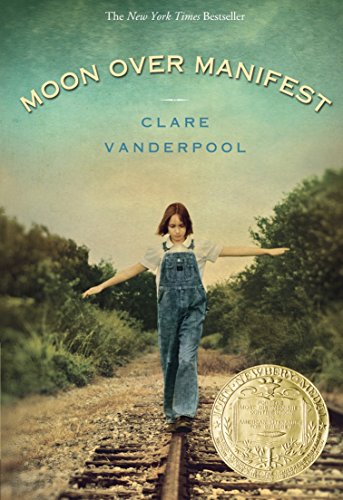
Moon Over Manifest by Clare Vanderpool (J Historical Fiction)

“To write a good story, one must watch and listen.”

Moon Over Manifest

Clare Vanderpool (J Historical Fiction)

Every story has a beginning, middle, and an end, but Abilene Tucker’s story seemed to be nothing but middle. It’s 1936 and while her father, Gideon, works a railroad job in Iowa, she is sent to the town where he grew up…Manifest, Kansas. She’s to spend the summer with her father’s old friend, Pastor Shady Howard, whose home is a combination saloon, church, and carpenter’s shop. While upstairs in her father’s old room, Abilene discovers an old cigar box with various trinkets, as well as some handwritten letters addressed to a boy named Jinx. Could these items—a cork, fishhook, silver dollar, key, and a little wooden doll—help Abilene uncover the mystery of her father’s past? With the help of two new friends, Abilene embarks on a hunt for a possible spy and meets a diviner who helps her uncover a few things about her father and herself.

This book covers two periods of time: 1936 (present day narrated by Abilene) and 1918 (told in third person). Although this book makes multiple time jumps involving several characters, Vanderpool does a terrific job at making sure young readers stay engaged by keeping the two storylines separate and straightforward. Our diviner, Sadie, eases readers into the past as she reveals Manifest’s history that involves several actual events including World War I, orphan trains, and the Spanish influenza. Moon Over Manifest does deal with some disturbing content such as racism, murder, alcohol use, and the ugliness of war, but in doing so gives readers an honest and rare opportunity to learn about important periods in American history through the unique lenses of a twelve-year-old hardworking and fearless girl and a thirteen-year-old runaway conman. Together, these two protagonists teach us that everyone deserves a do-over, things are not always what they seem, and perhaps there’s nothing more dangerous than hope.

Vanderpool packs so many wonderful takeaways and lessons into this book but overall, Moon Over Manifest is a celebration of immigrants and the richness and vibrancy they add to the American fabric. Manifest is a community represented by Scotland, Poland, Greece, Norway, Italy, Germany, Hungary, and Russia. These people—from very different countries and cultures—all unite behind a young con artist and collectively take a leap of faith to not only save their town, but to save their way of life and themselves. U.S. President Lyndon B. Johnson said on October 3, 1965 at the Statue of Liberty, “The land flourished because it was fed from so many sources—because it was nourished by so many cultures and traditions and peoples.” Although Manifest was a town torn apart by racism and stricken with war and an epidemic, its community flourished because of the strength and uniqueness of its people…people who were all lucky enough to call Manifest home.

Rating: 5/5

* Book cover image attributed to: www.abebooks.com

We’re now posting videos of some of our book reviews! Follow us on Facebook at www.facebook.com/thedustyjacket or on Instagram @tdjreviews and join in on the fun!
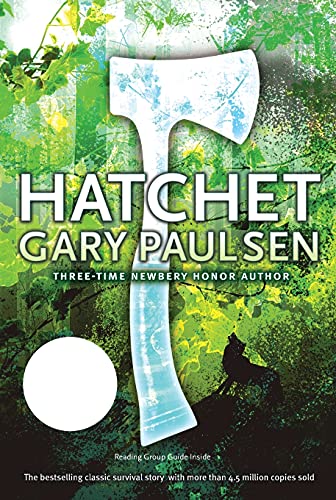
Hatchet by Gary Paulsen (J Fiction)

My name is Brian Robeson and I am thirteen years old and I am alone in the north woods of Canada.

Hatchet  

Gary Paulsen (J Fiction)

My name is Brian Robeson and I am thirteen years old and I am alone in the north woods of Canada.

Brian Robeson’s mother and father recently divorced. Nothing much was said about it, but Brian knew the reason because he knew the Secret. He lives in New York with his mother, but is headed to Canada to spend the summer with his father. He boards the Cessna 406 and makes his way north with his belongings in a suitcase and a hatchet hooked in his belt—a present given to him by his mother on the ride to the airport. This last-minute gift would tip the scales between almost-certain death and survival as Brian’s plane goes down in the Canadian wilderness and this city boy faces decisions that he never imagined he would be making.

This Newbery Honor book was challenged for its graphic descriptions of trauma and injury and removed from school libraries in Tennessee for its sexual content and violent imagery. Hatchet has a recommended reading age of nine to twelve so it was banned from elementary school libraries. As this story deals with survival, some portions of this book are graphic (especially the scene describing the pilot’s death), but nothing that would tremendously affect a typical fourth grader who hungrily clamors for the next installation in the Marvel Cinematic Universe. Also, the “sexual content” reference refers to Brian witnessing his mother sitting in a car and kissing a man who is NOT his father so don’t let this be a major red flag if your youngster reaches for this book.

I liked how Paulsen uses repetition in his writing to build suspense (He was stopped. Inside he was stopped. He could not think past what he saw, what he felt. All was stopped.) or to reinforce urgency (He had to fly somehow. Had to fly the plane. He had to help himself. The pilot was gone, beyond anything he could do. He had to try and fly the plane.). This is incredibly effective—especially with this age group—and although he incorporates it often throughout the book, it never becomes tedious or loses its impact. Also, Brian’s learning curve is inline with someone of his age. Although raised in the city, he pulls lessons he’s either learned in school or seen on the screen and these allow him to adapt to his situation and surroundings. He quickly realizes that self-pity and panic are only liabilities and quickly discounts them as useful reactions to his predicament. He systematically and logically approaches his obstacles and begins to understand the importance and necessity of not merely surviving day by day, but also preparing for the future. The reader witnesses Brian’s evolution and although we mourn the innocence that he’s lost, we applaud him for the bigger lessons that he’s learned about life and what’s truly important and necessary.

Gary Paulsen died in 2021 and during his lifetime—having written over 200 books throughout his career—was one of the most challenged authors of the 21st century according to the American Library Association. Because several of his books were banned because his writing was just “too realistic” speaks volumes to just how gifted a storyteller Paulsen was and why he continues to amass such a large and loyal fan base. Just as Brian changes throughout the story, I hope that we too continue to evolve and begin to realize just how important stories like Paulsen’s are in showing young readers the importance of believing in yourself, the downside of underestimating your abilities, and the courage it takes to wake up each morning with a renewed sense of determination and hope. How can anyone think of banning a book such as this?

Rating: 5/5

* Book cover image attributed to: www.abebooks.com

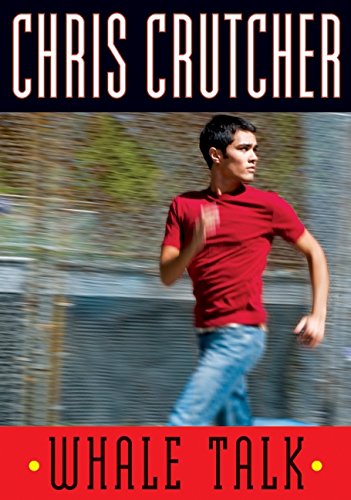
Whale Talk by Chris Crutcher (YA Fiction)

Whale Talk  

Chris Crutcher (YA Fiction)

It’s interesting being “of color” in a part of the country where Mark Fuhrman has his own radio talk show. My parents have always encouraged me to be loud when I run into racism, but I can’t count on racism being loud when it runs into me.

The Tao “T.J.” Jones is almost 18, adopted, and of mixed race (he’s black, Japanese, and white). He’s had to deal with racism early and often and isn’t much bothered by it anymore. What bothers him NOW is the elitism and exclusivity that the Cutter High School athletics department has placed on earning a letter jacket—an article of clothing he vehemently avoids acquiring. But after he’s recruited (rather academically coerced) into starting a swim team, he sets his sights on taking back his slice of the pie and assembles the unlikeliest group of misfits with the promise that each will earn a letter jacket of their own. Over the weeks, these young men not only begin to strengthen physically, but they start to heal emotionally and the lessons they learn in the water will stay with them long after the last swimmer touches the wall.

Crutcher’s Whale Talk was one of the American Library Association’s Top Five Most Challenged Books in 2005 and was removed from the Limestone County, Alabama school district’s five high school libraries for racism and offensive language. But the book also received countless honors and awards—all well deserved. Was the language spicy and derogatory? Sure was. There were also instances of physical abuse, bullying, child abuse, sexual assault, not to mention a little teacher-student blackmail, but instead the school board decided to focus on the “bad words” thus denying its students the opportunity to benefit from the many lessons contained in this exceptional book.

Whale Talk is my first introduction to Chris Crutcher and it won’t be my last. The story (think The Sandlot meets The Outsiders) is a feel-good story about a bunch of misfits who—led by a no-nonsense coach; a homeless, loyal assistant; and a talented, fearless team captain—band together to defy the odds and earn themselves a coveted prize. It’s a tale as old as time. Crutcher could have easily written a trite and predictable underdog story, but instead delivers a tale full of heart, hope, and forgiveness. These kids are diamonds in the rough and each is given an opportunity to shine and show their worth not only to their team, but to one another. These are principled young men who understand that they’re not fighting for a jacket with a fancy letter, but they’re standing up against stereotypes and proving that they are more than the label they’ve been assigned by their peers and society. These characters are steadfastly devoted to each other and you can’t help but cheer as each touches the wall and moves closer to achieving their goal. Crutcher is a master storyteller and truly taps into the high-school mindset with characters that are relatable, likeable, and you just can’t help but root for. With morally centered characters (including T.J.’s adoptive parents and especially his father who was given an incredibly heartbreaking backstory) and themes of acceptance, perseverance, and grace, Whale Talk should be moved from the banned books and instead placed on the required reading list.

Although T.J. may have started this journey with a questionable motive, he learned a lot about his teammates and himself along the way. There is a common theme of being able to project your own thoughts and feelings to the world so that everyone would instantly know your challenges, struggles, triumphs, and joys. T.J.’s therapist once told him that, “There is very little about humans that doesn’t have to do with connection.” Author Rachel Naomi Remen wrote, “The most basic and powerful way to connect to another person is to listen.” Imagine how many problems we could solve if we all just stopped being human for a moment and instead started acting a bit more like whales.

Rating: 5/5

* Book cover image attributed to: www.abebooks.com

We’re now posting videos of some of our book reviews! Follow us on Facebook at www.facebook.com/thedustyjacket or on Instagram @tdjreviews and join in on the fun!

Slug Days by Sara Leach (Juvenile Fiction)

Slug Days  

Sara Leach (Juvenile Fiction)

Lauren has two kinds of days: slug days and butterfly days. Slug days are the worst and spent trying not to flip out, figuring out how other people are feeling, and so many other things that make Lauren feel slow and slimy. But butterfly days are the best! The days that she’s able to control her temper, friends want to play with her, and she gets ice cream with her mom. It’s not easy having Autism Spectrum Disorder. With so many rules, surprises, and changes, a butterfly day can quickly turn into a slug day with just a shove or a snicker. BUT a slug day can also turn into a butterfly day if you make your baby sister laugh or happen to meet the perfect friend.

Leach has over twenty years’ experience in education and has taught and worked closely with ASD students. Her knowledge of coping mechanisms and behavioral characteristics is evident in this thoughtful and touching story about a girl struggling to fit in and be understood. It’s a quick read filled with beautiful illustrations by Rebecca Bender that give life to Lauren and her world filled with uncertainty and unpredictability. Leach’s story also demonstrates the importance of a strong support system—one that ensures Lauren has the resources she needs at school and home to thrive. From calming erasers and rubber balls to a home safety plan, Slug Days shows us that it truly does take a village to ensure that these wonderfully unique individuals are included and succeed.

This book is targeted for readers ages 7 to 9, but slightly younger readers can also enjoy and benefit from this story. Slug Days is told from Lauren’s point of view and gives readers a peek into one of her weeks at home and school. This is not a how-to kind of book, but more of a hey-I-can-see-me-through-her story that allows neurodiverse individuals to connect with Lauren and relate to her everyday obstacles and triumphs. The book is also a great tool for introducing some important discussion points about how certain behaviors can be misinterpreted and what can be done differently. For example, Leach has Lauren engaging in a few instances of inappropriate physical contact such as touching, kissing, hugging, and playing with a classmate’s hair. These instances are innocent but are important to identify and remedy, especially in today’s social climate.

Author Drishti Bablani wrote, “There is a beauty in difference that only understanding reveals.” Recent CDC reports show that around 1 in 36 children in the U.S. has been identified with autism so books like Slug Days will continue to play an important part in increasing awareness and promoting understanding and inclusion. Now wouldn’t THAT be beautiful.

Rating: 5/5

* Book cover image attributed to: www.abebooks.com

We’re now posting videos of some of our book reviews! Follow us on Facebook at www.facebook.com/thedustyjacket or on Instagram @tdjreviews and join in on the fun!

The House on Mango Street by Sandra Cisneros (Adult Fiction)

The House on Mango Street   

Sandra Cisneros (Adult Fiction)

The house on Mango Street wasn’t what Papa had talked about when he held up a lottery ticket or what Mama had dreamed up for our bedtime stories. Instead, it was small and red with crumbling bricks and no front yard. Even a nun, who was passing by the house one day, couldn’t believe that it was actually the home of little Esperanza. It was at that moment that Esperanza knew that she had to have a house. One with stairs on the inside and a front yard with grass. One that was filled with quiet. Quiet like snow. A home all her own.

Published in 1984, Cisneros’s celebrated The House on Mango Street is a coming-of-age story about 12-year-old Esperanza Cordero, a Chicana girl growing up in the Hispanic quarter of Chicago. Comprising of 44 vignettes and being just a squeak above a novelette, Cisneros introduces us to several memorable characters who are the color, texture, and fabric that make up Mango Street. We meet the rotten Vargas kids, Alicia who studies to avoid a life in a factory or behind a rolling pin, Darius the philosopher, Sally with the Cleopatra eyes, and Geraldo who was so much more than a shiny shirt and green pants. But as is the nature of vignettes, our knowledge and connection with these and other characters are superficial and barely scratch the surface. Like a movie trailer, we get the highlights, but not the heart.

In her introduction—which I loved and wished that the rest of the book had been this immersive and rooted—Cisneros wrote that she wanted to write a book “that can be opened at any page and will still make sense to the reader who doesn’t know what came before or what comes after.” I think that was the biggest barrier for me to overcome. While accomplishing her goal, Cisneros sacrificed a connectedness that would have given readers more than just a superficial glance at characters who did have a before and, more importantly, an after. I wanted to know Sally’s after, who married to be free yet ultimately found herself in a different prison. I wanted to understand Geraldo’s before in hopes that someone would miss this charismatic young man who loved to dance.

Although I miss the richness of the novel that could have been, I can’t deny the beautiful and artful way Cisneros evokes raw emotion and vivid images with just a few well-placed words. She describes a family who enters a garden area between her building and a brick wall as “a family who speak like guitars”, equates the entry into womanhood by describing the sudden development of hips as “One day you wake up and they are there. Ready and waiting like a new Buick with the keys in the ignition. Ready to take you where?”, and recalls meeting her three aunts as “one with laughter like tin and one with eyes of a cat and one with hands like porcelain.”

Jørgen Vig Knudstorp, a Danish businessman and the former CEO of the Lego Group, said, “Any creative people are finding that creativity doesn’t grow in abundance, it grows from scarcity.” Now, he was talking about Legos and how having more doesn’t necessarily equate to more creativity, but it does show how a novella, not quite 18,000 words, is beautiful and creative because of its scarcity rather than in spite of it.

Rating: 4/5

* Book cover image attributed to: www.abebooks.com

We’re now posting videos of some of our book reviews! Follow us on Facebook at www.facebook.com/thedustyjacket or on Instagram @tdjreviews and join in on the fun!
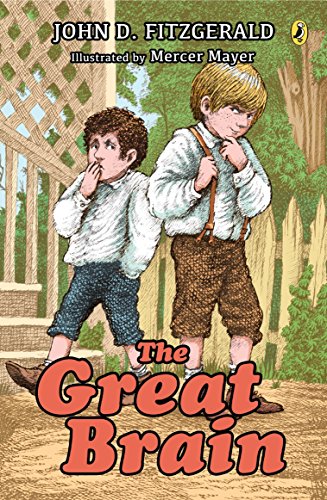
The Great Brain by John D. Fitzgerald (J Historical Fiction)

The Great Brain (Great Brain #1) 

John D. Fitzgerald (J Historical Fiction)

It’s 1896 and the territory of Utah officially became a state. But to the 2,500 residents in the town of Adenville, it was the year of The Great Brain’s reformation. Having The Great Brain as a brother has its ups and downs. Just ask his little brother J.D. It was nearly impossible to catch any sunlight while constantly in the shadow of such magnificence and brilliance. Expert eavesdropping, a perilous cave rescue, and the great whiskey raid were the works of one Tom Dennis Fitzgerald and his intellect was the stuff of legend. But, has The Great Brain finally changed his scheming ways? Why, that would be bigger news than the day Adenville got its very first water closet!

Published in 1967, The Great Brain is the first in an eight-book series and loosely based on author John D. Fitzgerald’s own childhood experiences. The story is narrated by the Fitzgerald’s youngest son John (J.D.) who is seven—going on eight. This is one of those books that I have equally strong feelings of delight and horror. With a publisher-recommended reading age of 8 and up, it is important to note that this is a 1967 book and times they did change (and boy, did they ever)!

Setting aside the starting reading age (which I would emphatically suggest bumping up to at least 12), this book deals with some heavy societal and political issues largely centering around ethnic prejudice and hatred. Fitzgerald details how Adenville’s first Greek immigrant family (their son in particular) was the object of brutal bullying and verbal assault. The author also goes into a multi-page diatribe regarding the treatment of Jews compared to other ethnicities within their community and how a “beloved” member of their town somehow slipped through the cracks with devastating consequences. This wasn’t just a matter of negligence or ignorance, it was apathy and this entire topic—and its importance and relevance—is sadly bound to go right over a young reader’s scope of understanding.

Also, Tom is really nothing more than an opportunistic schemer. Would a young reader delight in his antics and ability to always find a way to one-up his friends? It seems so since this book not only gave way to seven successors, but earned Fitzgerald The Young Reader’s Choice Award for children’s literature in both 1976 and 1978. Shows what I know. Tom’s ability to do good does benefit those around him who learn how to defend themselves and develop a sense of self-worth, but the fact that he always seeks an “angle” puts him one step above a sleezy snake oil salesman. The upside is that Tom truly does have his beneficiaries’ best interests in mind and eventually experiences a moral awakening, but we know it doesn’t last long and future books probably contain more of the same self-serving behavior.   

Perhaps THE most disturbing part of this book comes near the end when John is helping another boy end his life because he wants to prove himself to be a good pal. The various ways the boys plot and attempt to carry out this horrific act is beyond boyish hijinx and madcap mayhem. I can’t possibly think what was going on in the author’s head that he thought this would be appropriate material to print for a child of eight. I was a child of the 70s and I wouldn’t look at this entire passage as merely being slapstick fun (Oopsies! THAT didn’t work. Let’s try this!) I shudder to think just HOW much of this book falls into the “own childhood experience” category.

My overall impression is that this book didn’t age well and should be left for a much older and morally mature reader. And even though my brain is not-so-great, I know there are more appropriate books out there for young readers that teach the virtues of friendship, the value of community, the strength of family, and the satisfaction you get from doing good with the expectation of receiving absolutely nothing in return.

Rating: 3/5

* Book cover image attributed to: www.abebooks.com

We’re now posting videos of some of our book reviews! Follow us on Facebook at www.facebook.com/thedustyjacket or on Instagram @tdjreviews and join in on the fun!
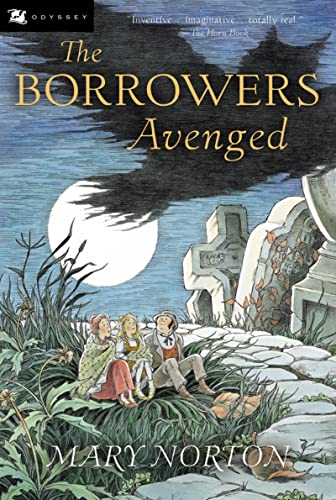
The Borrowers Avenged (The Borrowers #5) by Mary Norton

The Borrowers Avenged (The Borrowers #5) 

Mary Norton (Juvenile Fantasy)

In shock over the loss of their trio of moneymakers, the Platters plan to stake out Little Fordham to recapture the little people who have inexplicably escaped their attic prison. Meanwhile, Miss Menzies is distraught at the sudden absence of her friend Arrietty and the family that she’s come to love. Knowing that no good deed goes unpunished, Pod understands the immediacy of getting his family as far away from Little Fordham as possible before those nasty Platters return because luck and ingenuity will not save them next time. With the discovery of a permanent home—along with a new borrower—it seems that things are finally as they should be for our favorite little family, but their safety may once again be at risk when the Platters learn that a credible “finder” is in their midst and with the help of a bit of clothing left behind by Homily, could the Clock’s days of freedom be coming to an end?

Written twenty-one years after her fourth book in The Borrowers series, The Borrowers Avenged fails to live up to the expectations set by its predecessors and is the weakest and most disappointing of Norton’s five-book series. I entered with high hopes and was not disappointed as the beginning indicated that Norton hadn’t missed a day when she picked up the story of our beloved Clock family. However, with its overly descriptive text (the story loses valuable momentum quite a few times throughout the book), the introduction of three other-worldly characters who added no value and served no purpose to the overall story, and an ending that is perhaps the bleakest and darkest I have ever read in a children’s book, it seems that Norton was writing more to her original fans (who had aged 20+ years since her last installment putting them in their early 30s) rather than to the book’s intended audience of readers aged eight to twelve. Norton even goes so far as to introduce the topic of suicide in her book, which goes beyond the pale. I’m not sure why Norton waited so long to conclude her series (which was really unnecessary), but after reading this book, not only did her characters deserve better, but her fans did as well.

There were some bright spots in this last book: the reunion with the Hendrearys; the rekindled relationship between Arrietty and her young cousin Timmus; and the introduction of Peagreen Overmantle who forces Homily to again rethink her past prejudices and appreciate that trustworthy and dependable allies come from the unlikeliest of places. Despite these, The Borrowers Avenged lacks the magic, wonder, and youthful spirit that we’ve come to expect in the series and should serve as a reminder that sometimes revenge isn’t all that it’s cracked up to be.

Rating: 3/5

* Book cover image attributed to: www.abebooks.com

We’re now posting videos of some of our book reviews! Follow us on Facebook at www.facebook.com/thedustyjacket or on Instagram @tdjreviews and join in on the fun!
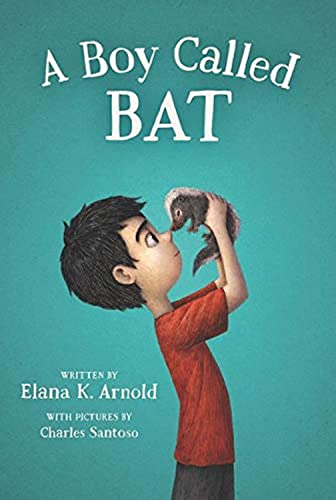
A Boy Called Bat by Elana K. Arnold (Juvenile Fiction)

A Boy Called Bat (Bat Trilogy #1) 

Elana K. Arnold (Juvenile Ficiton)

Bixby Alexander Tam, nicknamed Bat, has a long list of things he doesn’t like: unspoken rules, people rumpling his hair, eating leftovers, food smashed together, cheese that has to be sliced, loud sounds, and waiting. But one thing that Bat DOES like is the orphaned newborn skunk that his veterinarian mother brings home one day. Although it’s hard for Bat to connect with people, he forms an instant bond with the kit and silently promises the animal that he will figure out a way to keep him. With the help of his third-grade teacher, Bat forms a plan that’s sure to make the baby skunk a permanent member of the Tam family. Afterall, Bat made a promise and he never lies. Lying makes him feel itchy…another thing that Bat doesn’t like.

A Boy Called Bat is the first in a series of three books in the Bat Trilogy. Written with candor and warmth, Arnold gives young readers a story of a boy on the autism spectrum who struggles to regulate his emotions, understand non-verbal social cues, navigate unexpected circumstances, and just adjust to life in general. We wince as we watch Bat say things without thinking, misread body language, and overreact to situations that all end in awkward and painful outcomes. Arnold accurately captures the nuances that are associated with the autism spectrum such as dealing with the subtleties of sarcasm or taking idioms literally. Spoken language along with unspoken facial cues and body gestures are just everyday landmines that Bat has to constantly tiptoe around with one wrong step spelling disaster.

Although I am a sucker when it comes to brother-and-sister relationships that are all cuddles and kisses and unicorn wishes, I did appreciate Arnold portraying Bat’s sister Janie realistically. She often loses her temper with Bat, she knows exactly what buttons to push when she wants a reaction out of him (and she DOES push), and yes, she thinks he’s weird. But Janie’s human and you really can’t fault her for wanting a predictable trip out or just ONE boring dinner with no drama. Yes, she’s a stinker because she knows better than anyone else how many things are out of Bat’s control, but I think that’s why I like her so much. She’s every sibling out there who assumes the dual roles of defender and detractor and it’s rewarding and exhausting at the same time. For every Bat, there’s one or two Janies and they deserve attention, patience, and understanding as well.

I think my favorite part of the book was how Bat viewed his mom: “Then he followed Mom through the door that separated the waiting room from the back and watched as she took her white coat from its hook. She put it on, and then Mom was Dr. Tam. A veterinarian. Better than a superhero.” Valerie Tam wasn’t a superhero because she was able to make sick animals well. She was extraordinary because she championed and believed in a boy who thought himself to be less than perfect. Parents of neurodiverse children put on a cape every single day—not because they want to, but because they have to because they know exactly who they’re fighting for and what they’re fighting against and they won’t ever, ever give up. Take that, Superman.

Rating: 5/5

* Book cover image attributed to: www.abebooks.com

We’re now posting videos of some of our book reviews! Follow us on Facebook at www.facebook.com/thedustyjacket or on Instagram @tdjreviews and join in on the fun!
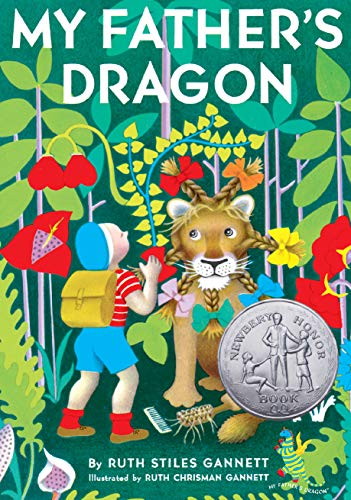
My Father’s Dragon by Ruth Stiles Gannett (Juvenile Fantasy)

My Father’s Dragon (The Tales of My Father’s Dragon Series #1)  

Ruth Stiles Gannett (Juvenile Fantasy)

Elmer Elevator wants to fly more than anything in the world and will do whatever it takes to have that chance. He soon gets his wish when a wet alley cat tells him of an imprisoned baby dragon held on Wild Island. Soon, Elmer has packed his knapsack and secretly stowed away on a ship headed to the Island of Tangerina. But Wild Island is dangerous and no one has ever come back alive from it. No one except for a wet alley cat. Loaded up with some lollipops, hair ribbons, rubber bands, an empty grain sack, and a few other inconsequential items, Elmer is off on the adventure of a lifetime, but can he survive the dangers of Wild Island AND rescue the dragon? For a chance to fly, it’s a risk he’s willing to take.

My Father’s Dragon is the first in The Tales of My Father’s Dragon series by Ruth Stiles Gannett. It’s a short and fanciful story showcasing the cleverness and ingenuity of a young boy that is retold by his son. At seventy-four pages, it’s a fast read full of slapstick scenarios and delightful dilemmas. The book has a recommended reading age of 8 to 12, but if it’s read aloud, younger readers can enjoy Elmer’s antics as well—which I highly encourage. Although Elmer does encounter tigers, a lion, crocodiles, a gorilla, and wild boars that are ALL trying to eat him, these incidents are silly rather than scary and children will revel in how Elmer manages to slip out of one precarious predicament after another.

The only things better than the story are the wonderful illustrations by Gannett’s stepmother, Ruth Chrisman Gannett. Her black-and-white, grease-crayon drawings are a wonderful complement to her stepdaughter’s words and give life to Elmer and the inhabitants of Wild Island. What I loved most was the map included at the beginning of the book. It not only labels the islands and ports, but it also shows readers where Elmer slept, met the fisherman, stopped to talk to tortoises, and other events that happened along his journey. This added attention to detail truly allows readers to become a part of Gannett’s world as they follow Elmer’s path in his quest to find and rescue the dragon.

One of my favorite quotes on bravery is this one by American journalist Franklin P. Jones: Bravery is being the only one who knows you’re afraid. And although this is a whimsical and silly fantasy book, it gives us a valuable lesson of how a young boy pushed aside his fear and used wit rather than weapons to outsmart his foes and help a fellow creature in need. On second thought, there’s nothing really silly about that after all.

Rating: 5/5

* Book cover image attributed to: www.abebooks.com

We’re now posting videos of some of our book reviews! Follow us on Facebook at www.facebook.com/thedustyjacket or on Instagram @tdjreviews and join in on the fun!