
…and now Miguel by Joseph Krumgold (J)

And Now Miguel

…and now Miguel    

Joseph Krumgold (Juvenile Fiction)

“I am Miguel.  For most people it does not make so much difference that I am Miguel.  But for me, often, it is a very great trouble.”

Twelve-year-old Miguel is a Chavez and in the Chavez family there is always one thing—sheep.  To raise sheep is the work of the family.  Wherever you find a Chavez man, you’ll find a flock of sheep.  Miguel lives near Taos, New Mexico and is straddled between two brothers who have it easy: little Pedro is small and has all that he wants and big brother Gabriel is old enough that anything he wants he can get.  But being Miguel is not so easy.  What he wants, what he truly desires, is to go to the Sangre de Cristo mountains where the Chavez men take the sheep to graze each summer.  But year after year, Miguel is left behind.  How can he prove to his father that he is finally ready for this responsibility?  But since he is only Miguel, he knows that this will not be an easy thing to do.

…and now Miguel is based on actual people whom Krumgold spent time with and got to know.  Hearing him tell Miguel’s story and his desire to prove himself worthy to a father he adores and respects is intimate and personal.  The reader deeply connects with Miguel as he attempts to be needed and longs to make a difference.  Miguel’s biggest obstacle is not his will or desire, but simply time.  As his mother once said to him, “To become something different from what you are, it takes more than being strong.  Even a little time is needed as well.”  How often do we find ourselves pursuing opportunities that we know we aren’t ready for?

This story has so many positive messages and relatable situations for young readers (aged ten and above).  Unfortunately, it does lag quite a bit near the end when Miguel and Gabriel discuss the strengths and weaknesses of making a wish, which is actually the two coming into their own spiritual awakening through the recognition of Devine intervention and providence.  This was a weighty and lengthy dialogue between the two that could have been greatly condensed and had the same effect.  Although this is a pivotal moment for the two brothers, the momentum of the story ultimately suffered and was never able to fully recover.

Miguel reminds us that things don’t always go the way we wish or plan for life always seems to get in the way somehow.  Big surprises or unexpected announcements are never delivered or received in the way in which we hope.  Miguel is a deeply devoted boy who, in the end, realizes that his life—his fate—is not in his control.  He must rely on his faith in knowing that everything will work out as it should.  His mother and father understand this, Gabriel understands this…and now Miguel will understand this and will realize that by him just being Miguel has already made a great difference.

Rating: 4/5

* Book cover image attributed to www.goodreads.com 
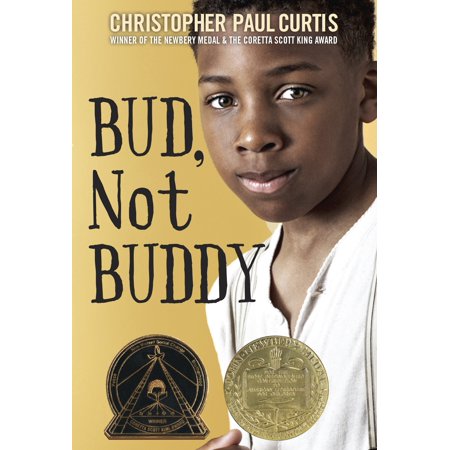


Bud, Not Buddy by Christopher Paul Curtis (J)

Bud Not Buddy

Bud, Not Buddy    

Christopher Paul Curtis (Juvenile Fiction)

“Here we go again.”  Bud (not Buddy) Caldwell is growing up during the Great Depression in Flint, Michigan.  He is ten-years old, currently on his third foster home, and presently being rightly pummeled by his current foster family’s son.  But Bud is determined that this will be his last foster family, as well as his last night in Flint because woop, zoop, sloop, just 120 miles away in Grand Rapids is his father, the famous jazz musician Herman E. Calloway.  At least he THINKS this is his father.  His mother wasn’t very specific about his father’s identity before she passed away, but he does have a cardboard suitcase full of clues and a heart full of hope.  But before he reaches his destination, Bud will have to confront a vampire, closet monsters, fear, and hunger.  Woop, zoop, sloop!  This is going to be the adventure of a lifetime!

Christopher Paul Curtis delights and engages readers with a charming boy who is not only an aspiring musician, but also the author of Bud Caldwell’s Rules and Things for Having a Funner Life and Making a Better Liar Out of Yourself.  Bud’s many rules give readers practical and humorous pointers on how to navigate life’s unexpected twists and turns.  For example, Rules and Things Number 3: “If You Got to Tell a Lie, Make Sure It’s Simple and Easy to Remember.” or Number 83: “If a Adult Tell You Not to Worry, and You Weren’t Worried Before, You Better Hurry Up and Start ‘Cause You’re Already Running Late.”  Although Bud was orphaned at the age of six, his mother would have been proud at the young man he has become: always saying “sir” and “ma’am”, “please” and “thank you”, and lying ONLY when absolutely necessary.  He’s brave, determined, resourceful, and fiercely optimistic during a time when hope and promise are a scarcity.

Throughout the book, Bud is always reminding people that his name is Bud, not Buddy.  His mother named him Bud after a flower bud…a flower-in-waiting.  “Waiting for just the right warmth and care to open up.  It’s a little fist of love waiting to unfold and be seen by the world,” his mother would often say to him.  We’ll never know if the name made the boy or the boy made the name, but one thing we can be sure about is that Bud, not Buddy, has plenty of love to share and enough spirit and pride to make his own warmth and to shine his own light.  Woop, zoop, sloop.

Rating: 5/5

* Book cover image attributed to www.walmart.com 

The Birchbark House by Louise Erdrich (J)

The Birchbark House

The Birchbark House    

Louise Erdrich (Juvenile Fiction)

“She was named Omakayas, or Little Frog, because her first step was a hop.”

Omakayas is seven years old and lives on an island in Lake Superior with her family.  They are Native American and belong to the Ojibwa tribe.  It is the summer of 1847 and everyone is busy preparing for fall.  Once their birchbark house is built, there are skins to soften and tan, berries to gather, and the corn patch to tend.  The family works together to ensure their survival from season to season, but all Omakayas is focused on is avoiding her pesky little brother, thinking of ways to be more like her big sister, and watching her father worry about the ever-increasing encroachment of the “chimookoman”, the white people.  Still, life is good for Omakayas and her family until that one winter night when a stranger enters their community and makes Omakayas reevaluate everything that she once thought important.

The Birchbark House is reminiscent of The Little House on the Prairie by Laura Ingalls Wilder, only Erdrich tells her story from the Native American point of view.  We follow Omakayas and her family through one full year and learn how they gather and preserve their food, construct their lodgings, deal with the harshness and dangers of their environment, treat their sick and wounded, and struggle for survival.  Any fan of our spirited prairie heroine, Laura Ingalls, will appreciate this new perspective on the same issues that we all encounter: love, loss, family, friendship, and finding your place in a very big world.

There is an Ojibwa proverb that says, “Sometimes I go about pitying myself and all the while I am being carried across the sky by beautiful clouds.”  There is point in the story where Omakayas is thrown into a very deep and dark place that tests both her strength and faith.  But in time, she realizes all the gifts that life has yet to offer and that is just enough to allow her to rise above her sorrow and look up to the sky—into the clouds—for hope.

*Reviewer’s note: The Birchbark House is the first in a series of five books by Louise Erdrich that follows the life of Omakayas and her Ojibwa community.

Rating: 5/5

* Book cover image attributed to www.amazon.com 

The Night Garden by Polly Horvath (J)

the night garden

The Night Garden

Polly Horvath (Juvenile Fiction)

Despite the war overseas, life was fairly predictable and peaceful in the spring of 1945 for the family at East Sooke Farm.  Twelve-year-old Franny Whitekraft had her writing; her mother, Thomasina (Sina for short), had her sculpting; and her father, Old Tom, had his gardens—his many, many gardens.  There was the English garden, herb garden, Japanese garden, Italian garden, kitchen garden, statuary garden…but perhaps the most mysterious and closely-guarded garden of all was the night garden.  That garden Old Tom kept locked up nice and tight.  So, days floated by with little fanfare until one day, Crying Alice (that’s Mrs. Alice Madden to you and me) showed up on the Whitekraft doorstep and dropped off her three children: Wilfred, Winifred, and Zebediah.  You see, her husband, Fixing Bob (who does maintenance on the Canadian Air Force’s special plane), is going to do something stupid and she simply has to go and talk some sense into him.  Now, if three new houseguests weren’t enough, just throw in a UFO, ghost, psychic, several mysterious letters, mermaids, and a missing plane and you’ve got a recipe for anything BUT a predictable and peaceful spring.

This is the second book by Polly Horvath that I’ve had the pleasure of reading (the first being The Canning Season) and she continues to amaze and please with her witty dialogue and amusing situations.  Horvath not only entertains her young readers, but she manages to educate them as well.  She’s an English teacher’s dream as she dishes out a veritable smorgasbord of delicious words to savor:  presaged, traversed, bereft, contiguous, compeers, and ilk.  Aren’t they scrumptious?  She also delights us with an assortment of quirky characters that we feel inexplicably drawn to—not in spite of their flaws and rough edges, but because of them.

The Night Garden is a non-stop, heart-thumping thrill ride that will excite and enthrall readers of all ages.  It is a story of family and a love that is blind, slightly deaf, and a little bit thick, but love amongst family is often like that.  The Night Garden also provides us with many valuable lessons—from Miss Macy’s advice on being prepared (“Always wear clean underwear.”) to Franny’s philosophy on self-sacrifice (“Well, we were all put on this earth to suffer.”).  But perhaps it is Old Tom himself who best sums up the greatest lesson of all, “Never, ever, ever have houseguests!”  Old Tom is seldom wrong.

Rating: 4/5

* Book cover image attributed to http://www.goodreads.com


A Million Shades of Gray by Cynthia Kadohata (J)

a million shades of gray

A Million Shades of Gray    

Cynthia Kadohata (Juvenile Fiction)

Even at eleven years old, Y’Tin Eban knew what his future would look like:  he would work with his elephant, Lady, until she died; he would travel to Ban Me Thuot then to Thailand and finally to America; and he would open an elephant-training school in Vietnam.  But it’s 1975 and the American soldiers have been gone from Vietnam for two years now.  Y’Tin and his tribe live in Central Highlands in South Vietnam and every day, soldiers from the north are advancing closer and closer to his village.  The Americans called it the Vietnam War.  His father called it the American War.  And now, this war was coming to Y’Tin’s remote part of the country and everything that his future once promised is about to change forever.

It’s never easy to discuss the horror and ugliness of war, especially when that discussion involves a younger audience (this book is targeted for readers ages ten and older).  Cynthia Kadohata is able to portray a country savagely torn apart by Civil War with remarkable honesty and sensitivity.  Because she is dealing with younger readers, she avoids graphic details and opts for subtle clues and visuals that guide readers to the desired conclusion.  For example, she describes a scene where captive male villagers are forced to dig a very long and deep pit on the outskirts of the village.  Older readers know immediately that this is a mass grave and the outlook is bleak for the villagers.  However, the younger reader shares the same learning curve as Y’Tin and both share in the eventual realization of what is actually taking place at the same time.

Several reviewers found this book to be too “anti-American” given the repeated mentions by the villagers of the Americans’ broken promise to return should assistance be needed.  But Kadohata foregoes popularity points by choosing to give us a story based on the villagers’ perspective.  They are a community that is scared, helpless, and feels very much abandoned and alone.  It’s an honest representation of the many thousands who were facing certain annihilation by their own government.  While this book deals mainly with war and its effects, at the heart is a young boy—rapidly thrown into manhood—and his relationship with his elephant, Lady.  The mutual trust they have for one another and the formidable bond they share serve as the singular bright spot in what is often a rather dark and grim story.

The book’s title, A Million Shades of Grey, refers to the colors of the jungle right before sunrise, as well as the color of an elephant’s hide.  In life, we often view things—view choices—as being a matter of “black or white”.  Kadohata reminds us that things aren’t always that simple and that every day we face or own “million shades of gray”.  At one time, Y’Tin said that you don’t love and you don’t make promises during times of war.  But it took his village’s smallest but strongest elephant to show him otherwise…that even during war, it is possible to have both.

Rating: 4/5

* Book cover image attributed to www.publishersweekly.com 


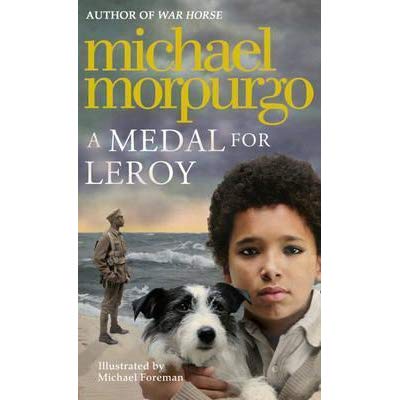
A Medal for Leroy by Michael Morpurgo (J Historical Fiction)

A Medal for Leroy

A Medal for Leroy   

Michael Morpurgo (Juvenile Historical Fiction)

Michael has no father, brothers, or sisters.  Just his mother, Maman, and two aunts:  Auntie Pish and Auntie Snowdrop.  It is 1940s London and right after the war.  Michael’s friends call him “Poodle” because of his frizzy hair and French ancestry.  But Michael doesn’t mind much.  In fact, he likes being different, being special.  Regarding his father, Michael knows only what his mother has told him:  his father’s name was Roy, he was a Spitfire pilot, and he was killed in the war.  But when Michael’s aunt passes away, she leaves behind a clue that will not only shed light on his past, but also finally reveal who he is.

A Medal for Leroy was inspired by the true story of Walter Tull, the first black person to serve as an officer in the British Army.  Like his fictional counterpart in this story (Michael’s grandfather, Leroy), Tull grew up in an orphanage, played soccer, served heroically in battle, and has no known grave.  Both Tull and Leroy deserved a medal for bravery, but were denied because of the color of their skin.  Morpurgo is a master storyteller (author of the spectacular novel War Horse) and provides his characters with a surprising amount of depth given that his book is only 130 pages.  He delicately tackles the ugliness of racial intolerance and inequality while showing young readers the value of having dignity in the face of disgrace and showing love without reservations or conditions.

In a world that still seems divided by so many factors, it is worth looking at the words that Michael’s aunt, who served as a nurse during the First World War, wrote to Michael: “It was while I was with those poor wounded soldiers that I first understood, Michael, that when all’s said and done, it’s what we all want and need most: to love and to be loved.”  Words lovingly passed along to a beloved nephew that would serve us all to remember today and always.

Rating: 4/5

* Book cover image attributed to www.goodreads.com
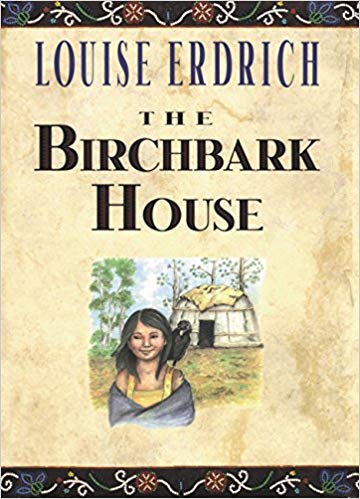
 

In the Year of the Boar and Jackie Robinson by Bette Bao Lord (J)

In the Year of the Boar and Jackie Robinson

In the Year of the Boar and Jackie Robinson   

Bette Bao Lord (Juvenile Fiction)

Bandit is confused.  What would make Mother smirk, Grandmother cry, and Grandfather angry?  The House of Wong is certainly unsettled, but why?  Bandit quickly learns that her father will not be returning to Chungking.  Instead, she and her mother will be going to him…to America.  But Bandit isn’t worried because no bad luck will come her way.  This is the year of the Boar and travel, adventure, and double happiness await her.  Soon, Bandit will begin her journey from China to San Francisco to her eventual home in Brooklyn, New York.  She will travel thousands of miles with a new name and new dreams.  But will America be all that Bandit hopes it will be?

In the Year of the Boar and Jackie Robinson is a charming and humorous story largely based on Bette Bao Lord’s own experiences as a newcomer to America.  Bandit (who adopts an American name of Shirley Temple Wong) endures teasing, bullying, and rejection that often comes with simply being different.  Despite her difficulties with fitting in, she is constantly reminded by her mother of the importance of maintaining your self-respect despite struggling through ridicule: “Always be worthy, my daughter, of your good fortune.  Born to an illustrious clan from an ancient civilization of China, you now live in the land of plenty and opportunity.  By your conduct show that you deserve to enjoy the best of both worlds.”  Her mother’s words serve as a valuable reassurance to Bandit that her past life in China need not be forgotten or sacrificed for her present life in America.  She is much richer for having both.

Despite her trials and torments, Bandit makes friends through America’s favorite pastime—baseball—and its formidable hero, Jackie Robinson and realizes that things are not always what they appear to be.  On the day Bandit gains the unlikeliest of allies, she recalls something that her grandfather had told her many times: “Things are not what they seem.  Good can be bad.  Bad can be good.  Sadness can be happiness.  Joy, sorrow.”  In the year of the Boar, Bandit discovers the pride in being yourself and the value of friends who accept you just the way you are.  Double happiness.

Rating: 4/5

* Book cover image attributed to www.harpercollins.com


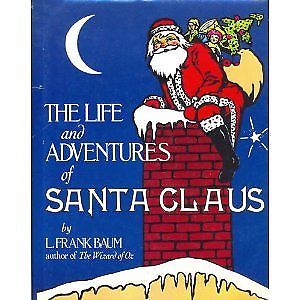
The Life and Adventures of Santa Claus by L. Frank Baum (J)

The Life and Adventures of Santa Claus

The Life and Adventures of Santa Claus     

L. Frank Baum (Juvenile Fiction)

Did you ever wonder why Santa delivers presents on Christmas Eve or why he climbs down a chimney?  Why reindeer were chosen to pull his sleigh or how the first Christmas tree came about?  All of these questions and more are answered about the jolly old man who delivers joy and happiness to every child around the globe on one very special night each year.  From his introduction as a helpless infant who was discovered by the Wood-Nymph Necile in the Forest of Burzee to the night he escaped the Spirit of Death by being given the Mantle of Immortality, the life of Santa Claus is finally shared and what you thought you knew about the man in red may never be the same again.

Two years after The Wonderful Wizard of Oz was published in 1900, L. Frank Baum delighted audiences again with another tale of mythical creatures and magical worlds.  The Life and Adventures of Santa Claus is not just a history of one of the world’s most notable and recognized figures, but it is a heartwarming story of selflessness, devotion, family, and love.  More importantly, Baum gives us a book extolling and celebrating the virtues of inclusion.  As an abandoned baby, Claus was lovingly adopted and wholly accepted within the secret and protected world of immortals.  As an adult, he once questioned whether or not wealthy children were also deserving of gifts since they already possessed so much.  The Queen of the Fairies replied, “Whether it be rich or poor, a child’s longings for pretty playthings are natural.  I think, friend Claus, it is your duty to make all little ones glad, whether they chance to live in palaces or in cottages.”

Children and adults alike can benefit from the messages Baum delivers in this classic children’s story.  The idea of extending grace, mercy, and joy to everyone we encounter is something we should aspire to every day of the year and not just one.

“’In all this world, there is nothing so beautiful as a happy child,’ says good old Santa Claus; and if he had his way the children would all be beautiful, for all would be happy.”

Merry Christmas from The Dusty Jacket.

Rating: 5/5


A Christmas Memory by Truman Capote (J)

A Christmas Memory

A Christmas Memory     

Truman Capote (Juvenile Fiction)

There was something special about that late November morning: the air lacked the songs of birds; the courthouse bell sounded cold and clear; and the once-empty hearth boasted a blazing fire.  All of these meant only one thing—it was fruitcake weather!

A Christmas Memory is Truman Capote’s earliest memories of his life in a small rural Alabama town.  Up until the age of ten, he lived there with a family of distant and elderly cousins.  One cousin, in particular, he was especially fond of and considered her to be his best friend.  She called him “Buddy”, after her former best friend who died in the 1880’s, and he referred to her as simply “my friend”.  Capote’s book is filled with his personal heartwarming memories of Christmas—beginning with the inaugural baking of the fruitcakes (which includes a charming visit to one Mr. Haha Jones) and followed by searching for the perfect tree, hanging wreaths on all the front windows, and making gifts for the family.  Capote’s vivid descriptions and eloquent prose allow us to smell the fruitcakes baking in the oven and luxuriate in the warmth emanating from the home’s stone fireplace.

On Christmas Eve night, “my friend” confesses to Buddy her desperate desire to give him a bicycle for Christmas, but her inability to do so for lack of money.  “It’s bad enough in life to do without something you want,” she laments, “but confound it, what gets my goat is not being able to give somebody something you want them to have.”  During this time of year, we seem to be inundated with an endless barrage of commercials, movies, and television shows that all seek to remind us about the true meaning of Christmas through animated animals, complicated romantic triangles, or splashy musicals.  I’m grateful for Mr. Capote for sharing his personal Christmas memory and for showing us in a loving, compassionate, and quiet way that we should be thankful not for the gifts that lie under our tree, but rather for those who gather around it.

Rating: 5/5

* Book cover image attributed to www.goodreads.com 
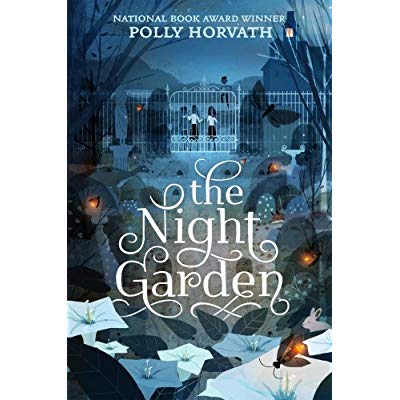
 

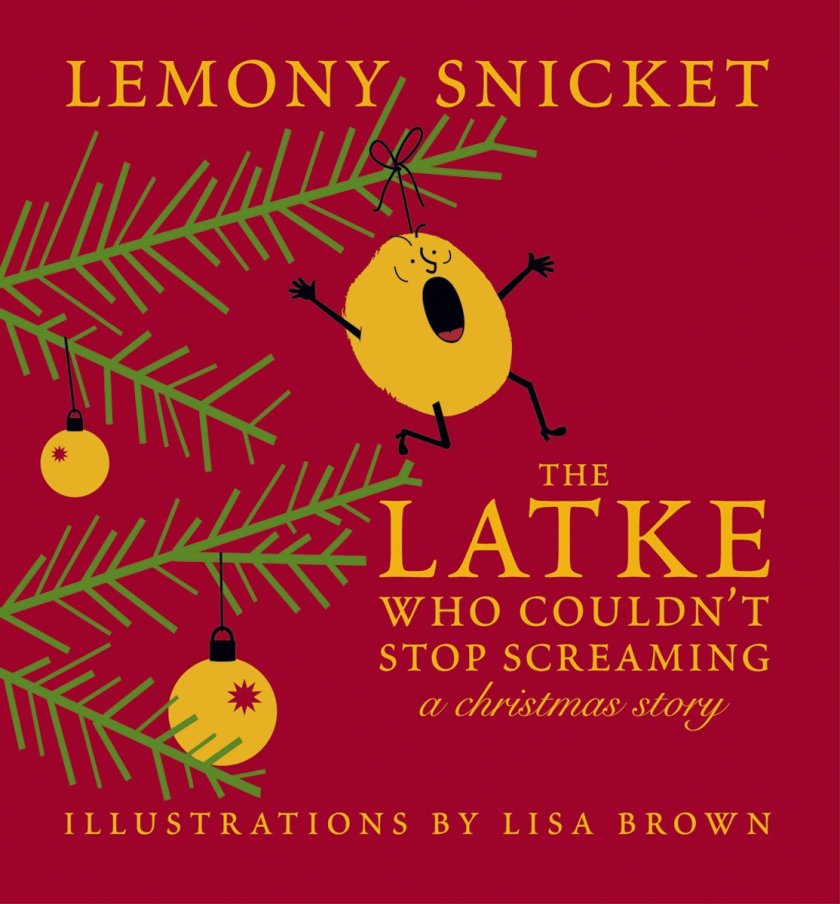
The Latke Who Couldn’t Stop Screaming by Lemony Snicket (J)

The Latke Who Couldnt Stop Screaming

The Latke Who Couldn’t Stop Screaming: A Christmas Story     

Lemony Snicket (Juvenile Fiction)

“This story ends in someone’s mouth, but it begins in a tiny village more or less covered in snow.”

This is no ordinary Christmas story.  This is a story of a latke—that delicious, traditional part of the Hanukah celebration.  This particular latke talks—food and animals often talk in stories such as this—and this talking latke is trying very hard to explain exactly what it is and what it represents.  It’s not having much luck.  Well, YOU try explaining Hanukah to a string of lights, a candy cane, and a pine tree…ALL of which keep comparing your traditions to Christmas.  Hanukah is NOT Christmas.  It’s a totally different thing.  Will they EVER get it right?

In true Lemony Snicket spirit, this story is a wickedly funny and dastardly delightful tale about likenesses, differences, traditions, and the need to find a common thread that connects us all.  This book is a wonderful way to introduce young readers to the history of Hanukah and the symbolism behind the eight-day celebration.  Pre-readers can become a fun and interactive part of the story by providing the AAAHHHHHHHH!!! parts that the latke screams out of frustration.  Snicket describes this as “A Christmas Story”, but Hanukah is a totally different thing.  Just ask the latke.

Lemony Snicket has entertained readers with a number of unpleasant books, but this one offers a sweet and valuable lesson.  When the latke explains how Christmas and Hanukah are completely different things, this time to a pine tree, the tree replies, “But different things can often blend together.”  It would serve us all well to carry this message with us, not just at Christmas or Hanukah, but during all the days of the year.  Different things can indeed blend together—like applesauce or sour cream blends with, for instance, latkes!  AAAHHHHHHHH!!!

Rating: 4/5

Posted: 12/11/2018

* Book cover image attributed to www.amazon.com