

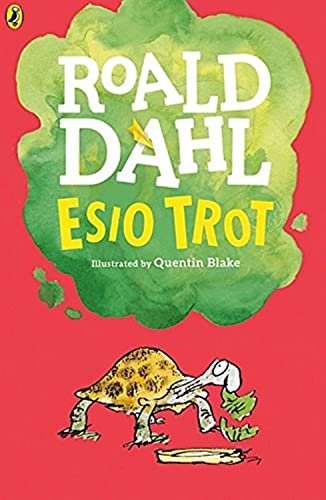
Esio Trot by Roald Dahl (J Fiction)

Esio Trot

Roald Dahl (J Fiction)

Mr. Hoppy has two loves in his life: his flowers and the widowed Mrs. Silver. If only Mr. Hoppy was the object of Mrs. Silver’s affection, but that honor goes to Alfie, her pet tortoise. But, as luck would have it, something happens on a certain bright morning in May that would be the answer to Mr. Hoppy’s prayers. He would not only find a way to make Mrs. Silver’s wish come true, but his own wish as well. But to what lengths is Mr. Hoppy willing to go to make dreams come true?

As I’ve said countless times before, the hardest part about reviewing a children’s book as an adult is suppressing my own experiences and expectations and instead looking at the story through the untarnished and innocent eyes of a child—for whom it was written. Normally, I’m able to balance this fairly effectively…until now. No matter how I try to rationalize this story and understand whatever lesson it’s attempting to convey, Esio Trot is a disappointment on a moral, human, psychological, and ethical level. No matter how many ways you analyze this story and the behavior of the main character, dishonesty and betrayal are the underlying drivers in what is meant to be a funny and slapstick children’s story.   

A stark contrast to most beloved Dahl protagonists, Mr. Hoppy has no redeeming qualities whatsoever. He’s a lying, scheming, manipulative, and totally self-serving individual. At every turn, he puts his own wants and needs above everyone else under the delusion that he’s helping his beloved acquire her one true desire. His intentions are truly devious and there’s nothing charming or humorous about it. In the hands of a child, it might be viewed as Ha, ha! Boy, did he really trick Mrs. Silver! Wasn’t he smart? Hurray, Mr. Hoppy! But to the average reader who possesses the smallest understanding of right and wrong, the moment eventually comes when the hero’s motive is justifiably questioned and it’s decided that a line has not only been crossed, but absolutely eviscerated. I even held out hope that perhaps Mr. Hoppy would have an Ebenezer-Scrooge moment when he realizes the error of his ways and immediately seeks redemption. Sadly, this was not to be and all I took away from this book is that if you lie to the one you love, then all of your dreams will come true AND, if you’re super slick, you’ll manage to convince them that your dream is actually what they wanted for themselves all along, too.

Ironically, Roald Dahl once said, “Having power is not nearly as important as what you choose to do with it.” Too bad that he didn’t have his own Mr. Hoppy choose better for if he had, he would have realized that the greatest gift he could have given Mrs. Silver was simply his company, his friendship, and perhaps a lovely flower or two.

Rating: 1/5

* Book cover image attributed to: www.abebooks.com

We’re now posting videos of some of our book reviews! Follow us on Facebook at www.facebook.com/thedustyjacket or on Instagram @tdjreviews and join in on the fun!

The Last Holiday Concert by Andrew Clements (J Fiction)

The Last Holiday Concert

Andrew Clements (J Fiction)

Hart Evans was officially a Palmer kid—that wonderful immersion of sixth graders from Collins Elementary School and Newman Elementary School. Out of almost 400 kids, Hart was well on his way to becoming the most popular student at Palmer Intermediate School. But all that was about to change when he decided to make his uncool chorus class a little more fun. When you combine a sweeping arts budget cut with two misfired rubber bands and a disillusioned chorus director, you get one Hart Evans who is suddenly in charge of this year’s holiday concert. What started out as a joke turns into a battle of wills between the chorus director, Mr. Meinert, and Hart. With so much infighting and time quickly running out will Hart and his class deliver the best holiday concert…or the last?

I REALLY enjoyed this book. Not only does it accurately portray middle-school life, but I was delighted that it lacked the stereotypical “bad guys” that you often expect to see in school-related books targeted for this age range: the adult, authoritative figure being the oppressor or the stuck-up popular kid who belittles the weak. Clements avoids those overused pitfalls and instead delivers a heartfelt, sweet, and human story about a teacher feeling betrayed by the institution he loves and a popular kid who suddenly realizes that he can’t make everything right simply by pleasing everyone. Both Hart and Mr. Meinert may seem very different at first, but as the story progresses, we see how much alike they are in wanting to be appreciated and valued. They even learn how to work together and in a nice twist, the teacher realizes just how much he can learn from his students and the students understand just how much their teacher has to offer.

At a time when teachers are abandoning their profession at an alarming rate, Andrew Clements reminds us that everyone wants to feel valued and needed and teachers are no exception. He shows us that leading begins with listening and reminds us of the astounding impact that a teacher can have on learning.

One of my favorite authors, Michael Morpurgo, once wrote, “It’s the teacher that makes the difference, not the classroom.” Facing dismissal and an overwhelming feeling of obsolescence, Mr. Meinert could have easily turned his back on his class and school, but he eventually realizes the reason that he became a teacher in the first place and that was to make a difference. And what a difference he made. Thank you teachers…everywhere.

Rating: 5/5

* Book cover image attributed to: www.abebooks.com

We’re now posting videos of some of our book reviews! Follow us on Facebook at www.facebook.com/thedustyjacket or on Instagram @tdjreviews and join in on the fun!
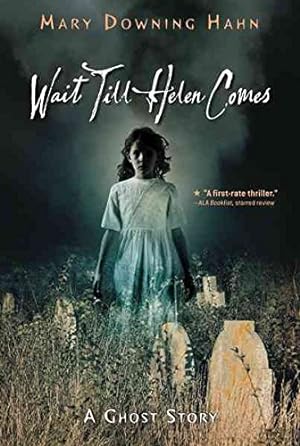
Wait Till Helen Comes: A Ghost Story by Mary Downing Hahn (J Horror)

Wait Till Helen Comes: A Ghost Story

Mary Downing Hahn (J Horror)

“YOU’VE BOUGHT a church?” That was Molly’s reaction when she found out that her mother and stepfather were planning to move their blended family to a renovated church with a cemetery in the backyard. Making matters worse is her new seven-year-old stepsister, Heather who is mean, lies, tattles, and is an overall troublemaker. Soon after they arrive, Heather discovers the grave of a girl named Helen who shares her initials AND was her age when she died. Over time, Heather begins to turn even more hateful and diabolical towards her new siblings and as Molly and her brother Michael uncover the tragic events surrounding them, things begin to get worse and more dangerous…especially when Helen comes.

Hahn delivers an eerie and suspenseful ghost story that’s spooky yet spares readers the gore that authors sometime rely on to raise the hairs on our neck. Hahn psychologically preys upon her readers’ fear of death and delves into feelings of isolation, loneliness, guilt, and jealousy through Heather’s possessive and protective relationship with her father. Heather harbors some deep-seeded trauma that is never fully resolved and this spills over into her relationship with her new siblings. Young readers won’t think twice about the obvious parental negligence of not providing Heather with the therapy she clearly requires, but they will most certainly see how unfairly Molly and Michael are castigated (especially by their own mother) for things that are clearly not their fault. In this respect, the siblings’ dislike for their parental figures is clearly warranted and make them even more sympathetic.

This is the second book that I’ve read by Hahn (the first being The Old Willis Place) and I understand why young readers are drawn to her books when desiring a good old-fashioned ghost story. The characters are well established, the story has a nice momentum and never lags, and Hahn effectively increases the tension and heightens the fear as Heather’s dependency on Helen grows stronger and more resolute. I really like how the author reverses predictable roles to create a sense of chaos and unpredictability as family members become untrustworthy or unreliable allies and antagonists turn out to be more than meets the eye. This flip really jostles the reader and keeps things uncomfortably off balance as Molly fights to separate fact from fantasy while struggling to nurture a relationship with a stepsister that clearly despises her and even threatens her with death. And you thought Cinderella had it tough!

As an adult reading this book, I thought the parents were selfish, neglectful, and terrible role models; however, young readers will overlook these self-centered people and instead delight in a heart-pounding, thrilling read that will have them anxiously flipping pages toward a rollercoaster ending. So, buckle up, hold on tight, and just wait till Helen comes.

Rating: 4/5

* Book cover image attributed to: www.abebooks.com

We’re now posting videos of some of our book reviews! Follow us on Facebook at www.facebook.com/thedustyjacket or on Instagram @tdjreviews and join in on the fun!

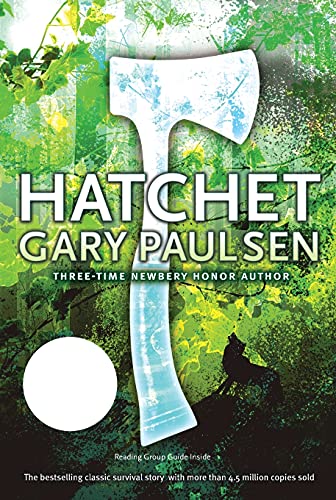
Hatchet by Gary Paulsen (J Fiction)

My name is Brian Robeson and I am thirteen years old and I am alone in the north woods of Canada.

Hatchet  

Gary Paulsen (J Fiction)

My name is Brian Robeson and I am thirteen years old and I am alone in the north woods of Canada.

Brian Robeson’s mother and father recently divorced. Nothing much was said about it, but Brian knew the reason because he knew the Secret. He lives in New York with his mother, but is headed to Canada to spend the summer with his father. He boards the Cessna 406 and makes his way north with his belongings in a suitcase and a hatchet hooked in his belt—a present given to him by his mother on the ride to the airport. This last-minute gift would tip the scales between almost-certain death and survival as Brian’s plane goes down in the Canadian wilderness and this city boy faces decisions that he never imagined he would be making.

This Newbery Honor book was challenged for its graphic descriptions of trauma and injury and removed from school libraries in Tennessee for its sexual content and violent imagery. Hatchet has a recommended reading age of nine to twelve so it was banned from elementary school libraries. As this story deals with survival, some portions of this book are graphic (especially the scene describing the pilot’s death), but nothing that would tremendously affect a typical fourth grader who hungrily clamors for the next installation in the Marvel Cinematic Universe. Also, the “sexual content” reference refers to Brian witnessing his mother sitting in a car and kissing a man who is NOT his father so don’t let this be a major red flag if your youngster reaches for this book.

I liked how Paulsen uses repetition in his writing to build suspense (He was stopped. Inside he was stopped. He could not think past what he saw, what he felt. All was stopped.) or to reinforce urgency (He had to fly somehow. Had to fly the plane. He had to help himself. The pilot was gone, beyond anything he could do. He had to try and fly the plane.). This is incredibly effective—especially with this age group—and although he incorporates it often throughout the book, it never becomes tedious or loses its impact. Also, Brian’s learning curve is inline with someone of his age. Although raised in the city, he pulls lessons he’s either learned in school or seen on the screen and these allow him to adapt to his situation and surroundings. He quickly realizes that self-pity and panic are only liabilities and quickly discounts them as useful reactions to his predicament. He systematically and logically approaches his obstacles and begins to understand the importance and necessity of not merely surviving day by day, but also preparing for the future. The reader witnesses Brian’s evolution and although we mourn the innocence that he’s lost, we applaud him for the bigger lessons that he’s learned about life and what’s truly important and necessary.

Gary Paulsen died in 2021 and during his lifetime—having written over 200 books throughout his career—was one of the most challenged authors of the 21st century according to the American Library Association. Because several of his books were banned because his writing was just “too realistic” speaks volumes to just how gifted a storyteller Paulsen was and why he continues to amass such a large and loyal fan base. Just as Brian changes throughout the story, I hope that we too continue to evolve and begin to realize just how important stories like Paulsen’s are in showing young readers the importance of believing in yourself, the downside of underestimating your abilities, and the courage it takes to wake up each morning with a renewed sense of determination and hope. How can anyone think of banning a book such as this?

Rating: 5/5

* Book cover image attributed to: www.abebooks.com

Slug Days by Sara Leach (Juvenile Fiction)

Slug Days  

Sara Leach (Juvenile Fiction)

Lauren has two kinds of days: slug days and butterfly days. Slug days are the worst and spent trying not to flip out, figuring out how other people are feeling, and so many other things that make Lauren feel slow and slimy. But butterfly days are the best! The days that she’s able to control her temper, friends want to play with her, and she gets ice cream with her mom. It’s not easy having Autism Spectrum Disorder. With so many rules, surprises, and changes, a butterfly day can quickly turn into a slug day with just a shove or a snicker. BUT a slug day can also turn into a butterfly day if you make your baby sister laugh or happen to meet the perfect friend.

Leach has over twenty years’ experience in education and has taught and worked closely with ASD students. Her knowledge of coping mechanisms and behavioral characteristics is evident in this thoughtful and touching story about a girl struggling to fit in and be understood. It’s a quick read filled with beautiful illustrations by Rebecca Bender that give life to Lauren and her world filled with uncertainty and unpredictability. Leach’s story also demonstrates the importance of a strong support system—one that ensures Lauren has the resources she needs at school and home to thrive. From calming erasers and rubber balls to a home safety plan, Slug Days shows us that it truly does take a village to ensure that these wonderfully unique individuals are included and succeed.

This book is targeted for readers ages 7 to 9, but slightly younger readers can also enjoy and benefit from this story. Slug Days is told from Lauren’s point of view and gives readers a peek into one of her weeks at home and school. This is not a how-to kind of book, but more of a hey-I-can-see-me-through-her story that allows neurodiverse individuals to connect with Lauren and relate to her everyday obstacles and triumphs. The book is also a great tool for introducing some important discussion points about how certain behaviors can be misinterpreted and what can be done differently. For example, Leach has Lauren engaging in a few instances of inappropriate physical contact such as touching, kissing, hugging, and playing with a classmate’s hair. These instances are innocent but are important to identify and remedy, especially in today’s social climate.

Author Drishti Bablani wrote, “There is a beauty in difference that only understanding reveals.” Recent CDC reports show that around 1 in 36 children in the U.S. has been identified with autism so books like Slug Days will continue to play an important part in increasing awareness and promoting understanding and inclusion. Now wouldn’t THAT be beautiful.

Rating: 5/5

* Book cover image attributed to: www.abebooks.com

We’re now posting videos of some of our book reviews! Follow us on Facebook at www.facebook.com/thedustyjacket or on Instagram @tdjreviews and join in on the fun!
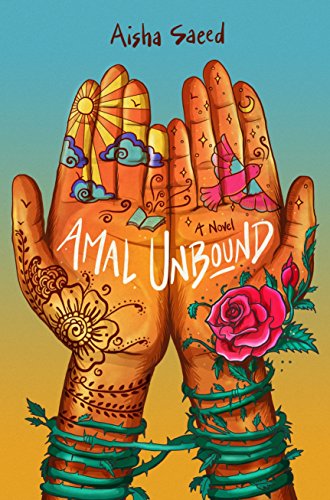
Amal Unbound by Aisha Saeed (Juvenile Fiction)

Amal Unbound

Aisha Saeed (Juvenile Fiction)

Twelve-year-old Amal belongs to one of the more prosperous families in her Punjabi village in Pakistan and dreams of becoming a teacher. She vividly remembers that particular afternoon: the smell of the chalkboard, the students chattering outside the door, and talking poetry with her teacher, Miss Sadia. Little did she know that that would be her last day at school. While at the market, Amal encounters and challenges the son of the village’s powerful landlord—a slight that would have unimaginable consequences. She is forced to pay off her family’s debt by working on the Khan estate where she begins to realize the full extent of the family’s vast wealth and power. Amal must summon all her strength and courage to change the status quo because if everyone decided that nothing could ever change, then nothing ever would.

Amal Unbound is a captivating read and its short chapters allow readers to absorb the important messages and lessons that fill each page. The societal and cultural limitations that Amal brings to light accurately reflect her life and the obstacles that she faces. The idea of “fairness” is a major theme throughout the book and she constantly recalls her father’s words of life’s unfairness whenever she is at a crossroads. This is a hard thing to reconcile given the number of things totally out of her control: her sex (Maybe then I would not have learned that they thought being a girl was such a bad thing.), her birth order (Why did this random chance [being the eldest] have to dictate so much of my destiny?), and political power (How many lives had this man upended? Why did no one stop him?).

Saeed delivers a story about an ordinary girl who does an extraordinary thing…she has the audacity to speak out for change. Amal quickly realizes that life comes down to a series of choices. Choices that she doesn’t want to make or feels that she lacks the courage to do so. But her teacher at the literacy center reminds her, “Making choices even when they scare you because you know it’s the right thing to do—that’s bravery.”

In her Author’s Note, Saeed shares the story of Malala Yousafzai who was shot at point-blank range by the Taliban for advocating education for girls. Her life was also a series of choices, and her courageous advocacy led her to become the youngest recipient of the Nobel Peace Prize. Malala once said, “We were scared, but our fear was not as strong as our courage.” Amal was also scared, but sacrificed her own safety to bring about justice. In the end, she proved just how powerful a servant girl could be once she freed herself from the ties that bound her.  

Rating: 5/5

* Book cover image attributed to: www.abebooks.com

We’re now posting videos of some of our book reviews! Follow us on Facebook at www.facebook.com/thedustyjacket or on Instagram @tdjreviews and join in on the fun!
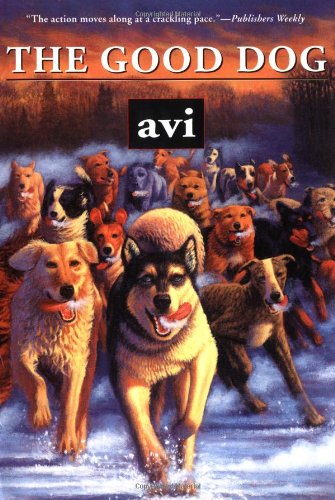
The Good Dog by Avi (J Fiction)

The Good Dog

Avi (J Fiction)

McKinley was a good dog who lived a good life. He was part of a caring family, loved by his human pup Jack, had lots of friends, and held the distinction of being head dog of the Steamboat pack. Yes, life for the malamute was very good until the day a she-wolf by the name of Lupin arrived. Her words of freedom and wild enticed McKinley as he began to feel the burden of taking care of both his pack and his pup. Lupin had him questioning his life as a bound dog…a slave to humans and their will. As McKinley begins to witness the cruelty that humans were capable of, would he submit to his wolf ancestry and join Lupin to live a life without rules and conditions? What would a good dog do?

Although this story was written in the third person, Avi delights readers with a story told from a dog’s perspective. He gives us street names like Most Cars Way, Pine Smell Way, and Elk Scat Way. Jack loves to look at his staring papers (a book) while his parents seem mesmerized by their glow box (TV) and during the day, all the pups go to their special house (school). Avi shows us McKinley constantly “marking” certain areas so that his pack will know his comings and goings, he goes through the ritual of when dogs meet each other, and even describes McKinley’s frustration while trying to convey a rather simple concept to Jack (humans can be SO thick at times).

Avi checks all the right boxes with The Good Dog: age appropriate, an engaging story, memorable characters, great moral lessons, plenty of action and suspense, a few detestable villains, a hero who questions his purpose, some surprising twists, and an ending that’s sure to please. This book shows readers the value of loyalty, honor, and courage and illustrates how bloodline doesn’t dictate who your family is or where your future lies. Countless times McKinley is always looking out for Jack or a member of his pack and although he reaps both the rewards and punishments of his actions, these selfless acts make it clear why he was chosen to be head dog.

Throughout the book, McKinley was a friend, a best friend, a companion, a nemesis, a hero, a champion, and a leader. At the end of the day though, McKinley was just a dog, but more than that, he was a good dog.

Rating: 5/5

* Book cover image attributed to: www.abebooks.com

We’re now posting videos of some of our book reviews! Follow us on Facebook at www.facebook.com/thedustyjacket or on Instagram @tdjreviews and join in on the fun!

The Boy with the Butterfly Mind by Victoria Williamson (J Fiction)

The Boy with the Butterfly Mind

Victoria Williamson (J Fiction)

Elin has never been in trouble for anything in her whole life. She is smart, respectful, and helpful. A perfect princess determined to get her divorced parents back together…even though her mother is in a relationship and her father is married. Elin has everything under control, but she doesn’t have any friends. After all, it’s lonely being so perfect all the time. Then there’s Jamie who seems to be a magnet for trouble. He has ADHD and is easily distracted, forgetful, and messy. His parents are also divorced and Jamie blames himself…as he often does for most things that go horribly wrong. It would be nice if he had a friend to talk to, but it’s lonely being bad all the time. When these two very lonely and different worlds collide, order and chaos not only meet, but they end up living together in a house that seems to grow smaller by the minute.

The Boy with the Butterfly Mind is told from the alternating viewpoints of Elin and Jamie—both eleven. Although you understand the internal and emotional struggles of both characters, it is far easier to be sympathetic towards Jamie. Although he is completely aware of his challenges and limitations, he still absorbs an unfair amount of guilt and blame while managing to maintain a trusting and forgiving attitude. His journey is a rollercoaster ride of emotions and just when we think his life is getting easier, the rug is mercilessly pulled out from him. With so much against him, we can’t help but cheer on this perpetual underdog.

Williamson is a primary school teacher with a Master’s Degree in special needs education. She’s worked with children requiring additional support needs and this real-world experience is evident in her writing. We see it as Jamie details his struggles and feelings and especially when he describes his interactions with his mother who is completely overwhelmed and emotionally drowning. These occurrences are raw and ugly and uncomfortably accurate. When Jamie hurts, we hurt, which makes this book all the more thought provoking and poignant.

By focusing on Jamie, I don’t mean to downplay Elin and her feelings. She, too, is struggling with her own demons as she feels that the only way to win her father back is to maintain a level of perfection that is both unrealistic and impossible. She puts undue pressure on herself and the introduction of an imperfect and unwanted addition to her family just adds to her burden. It’s a lose-lose situation for everyone and we can’t help but wince as we witness the walls around these people come tumbling down. However, the measures that Elin takes in her own personal “war” against these unwanted intruders are both cruel and dangerous and under these circumstances it is difficult to extend her any mercy or grace although she is keenly aware and witnesses the consequences of her actions.

Using data from 2016-2019, the Centers for Disease Control and Prevention estimated that 6 million children—between the ages of 3 to 17—were diagnosed with ADHD, which is why books like this one are so important and valuable. To show the bullying and isolation that children with this diagnosis experience is just the first of many steps that need to be taken to promote understanding, acceptance, and inclusion.

There’s a quote about friendship that I’ve used before in a review that’s from an anonymous source. It’s one of my favorites: A friend is one who overlooks your broken fence and admires the flowers in your garden. Although Jamie felt broken and just wanted to be “normal”, he was lucky enough to find such a friend who made him realize that you don’t have to be perfect in order to be a perfect friend. I think the world would be a much better place with more people like that in it and I’m glad that Elin eventually realized this, too.

Rating: 5/5

* Book cover image attributed to: www.abebooks.com

We’re now posting videos of some of our book reviews! Follow us on Facebook at www.facebook.com/thedustyjacket or on Instagram @tdjreviews and join in on the fun!

Island of the Blue Dolphins by Scott O’Dell (J Fiction)

Island of the Blue Dolphins

Scott O’Dell (J Fiction)

Twelve-year-old Karana loved her village of Ghalas-at where everyone had their place and knew their role. Life was good until the day the Aleut ship—with its two red sails—arrived at the Island of the Blue Dolphins to hunt otters. What should have been an amicable partnership turned into betrayal and bloodshed and would mark the beginning of a new life for Karana and her people. With most of their men dead, the villagers spot another ship, this one bearing white sails and wanting to take them all to somewhere safe. But fate intervened and Karana found herself abandoned and alone on her beloved island. As she awaits the ship’s return, Karana learns how to survive while avoiding danger both on and off the island. As the years pass, she continues to scour the water looking for the sails: white will reunite her with her family while red will surely bring her death.

Based on the true story of a Nicoleño woman who survived alone on San Nicolas Island for 18 years, Island of the Blue Dolphins is a story of courage, survival, and perseverance. With only herself to rely on, Karana quickly disregards the laws of her village which forbade women to make weapons. She also finds a safe place to sleep, stocks food, constructs a home, and secures her property. Only when she becomes injured does she truly understand the precarious position that she is in: if she is incapacitated, no one else will care for her and she will most certainly die. This new realization causes an awakening in Karana and we see her mature almost overnight.

It would have been easy and appropriate for O’Dell to allow Karana time to grieve and buckle under the weight of her predicament and tremendous responsibilities. Instead, he gives us a character who rises above her circumstances to forge a new life for herself while finding courage, compassion, and companionship along the way.

Although O’Dell gave us Karana in 1960, I hope that a new generation discovers her and finds a heroine who doesn’t need a wand or cape or superhuman abilities to prove her worth or to define who she is. Karana shows us that often times a great heroine is strong and brave and kind not because of who she is, but because life requires it of her and she fearlessly chooses to answer the call.

Rating: 5/5

* Book cover image attributed to: www.abebooks.com

We’re now posting videos of some of our book reviews! Follow us on Facebook at www.facebook.com/thedustyjacket or on Instagram @tdjreviews and join in on the fun!
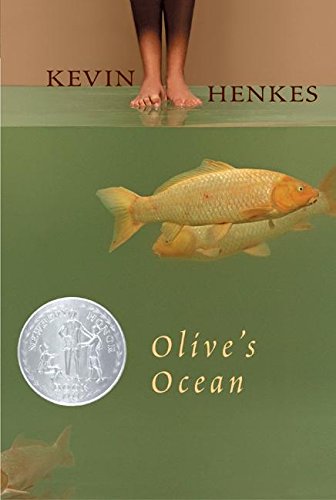
Olive’s Ocean by Kevin Henkes (J Fiction)

Olive’s Ocean

Kevin Henkes (J Fiction)

Twelve-year-old Martha Boyle and her family were leaving on their annual vacation to the Atlantic coast when a woman appeared on the Boyle’s doorstep. She introduced herself as Olive’s mother, one of Martha’s classmates who had recently been killed. She handed Martha a folded piece of paper from Olive’s journal. As Martha read the note written by a girl she barely knew, she was struck by just a few simple sentences: I hope that I get to know Martha Boyle next year (or this summer). I hope that we can be friends. That is my biggest hope. These kind words filled with expectation would alter Martha’s world view forever as she mourns a friendship that never was and never will be.

I raised my child on Kevin Henkes’ mouse books: Chester’s Way, Owen, Wemberly Worried, and others. Each helped me reinforce the value of friendship and the importance of acceptance, handling your emotions, self-reliance and many other life lessons. When I saw that Olive’s Ocean was a Newbery Honor book, I wasn’t really surprised. What DID surprise me was that it ranked 59th on the American Library Association’s list of the 100 Most Challenged Books from 2000 to 2009 for its offensive language and sexual explicitness. No wonder Wemberly worried!

Despite the ominous label it carries, Olive’s Ocean is a rather innocuous coming-of-age story about a girl dealing with the customary pre-teen fare: first love, awkwardness, rejection, humiliation, and the constant struggle of trying to figure out who she is and what she wants to be. Pretty safe stuff, but Henkes does nudge the boundaries ever so slightly causing those few, all-important feathers to be ruffled.

The “sexually explicit” reference is a brief explanation to Martha by her older brother of why their parents seem overly affectionate one morning. It seems they were exhibiting “Morning Sex Behavior” and “when they do it in the morning” they get a bit lovey-dovey. Regarding the “offensive language”, there are instances of mild profanity, but nothing too over-the-top for the publisher’s recommended reading age of 10 and up. So, the big questions are: Are EITHER of these inclusions necessary to further the story or develop the characters? No. Could they have been excluded with little to no impact on the overall message? Absolutely. Would Henkes have omitted them if he knew the wrath that awaited him? Maybe. Maybe not. There’s no question that having your book banned instantly puts you on a reader’s radar, but clearly this was not his intent. All in all, these infractions (as most references go) are tame, but clearly remain unforced errors and prompt me to up the recommended reading age by a few years just to be prudent.

As far as stories go, this was a quick read and had several important messages about inclusivity and realizing that the world doesn’t revolve around your own personal cares and needs; however, I would have liked more Olive in Olive’s Ocean and feel that this was an opportunity wasted. The apparent connection between Olive and Martha stated in the synopsis doesn’t quite materialize in the actual book, and it would have been far more interesting if Olive’s story had been developed more deeply to show Martha’s slow and eventual evolution. Still, the targeted audience will find a nice and relatable story, while I was hoping for something a little bit more moving with a deeper and lasting message. I guess if I’m looking for these, I need to go back to the mouse stories.

Rating: 3/5

* Book cover image attributed to: www.abebooks.com

We’re now posting videos of some of our book reviews! Follow us on Facebook at www.facebook.com/thedustyjacket or on Instagram @tdjreviews and join in on the fun!