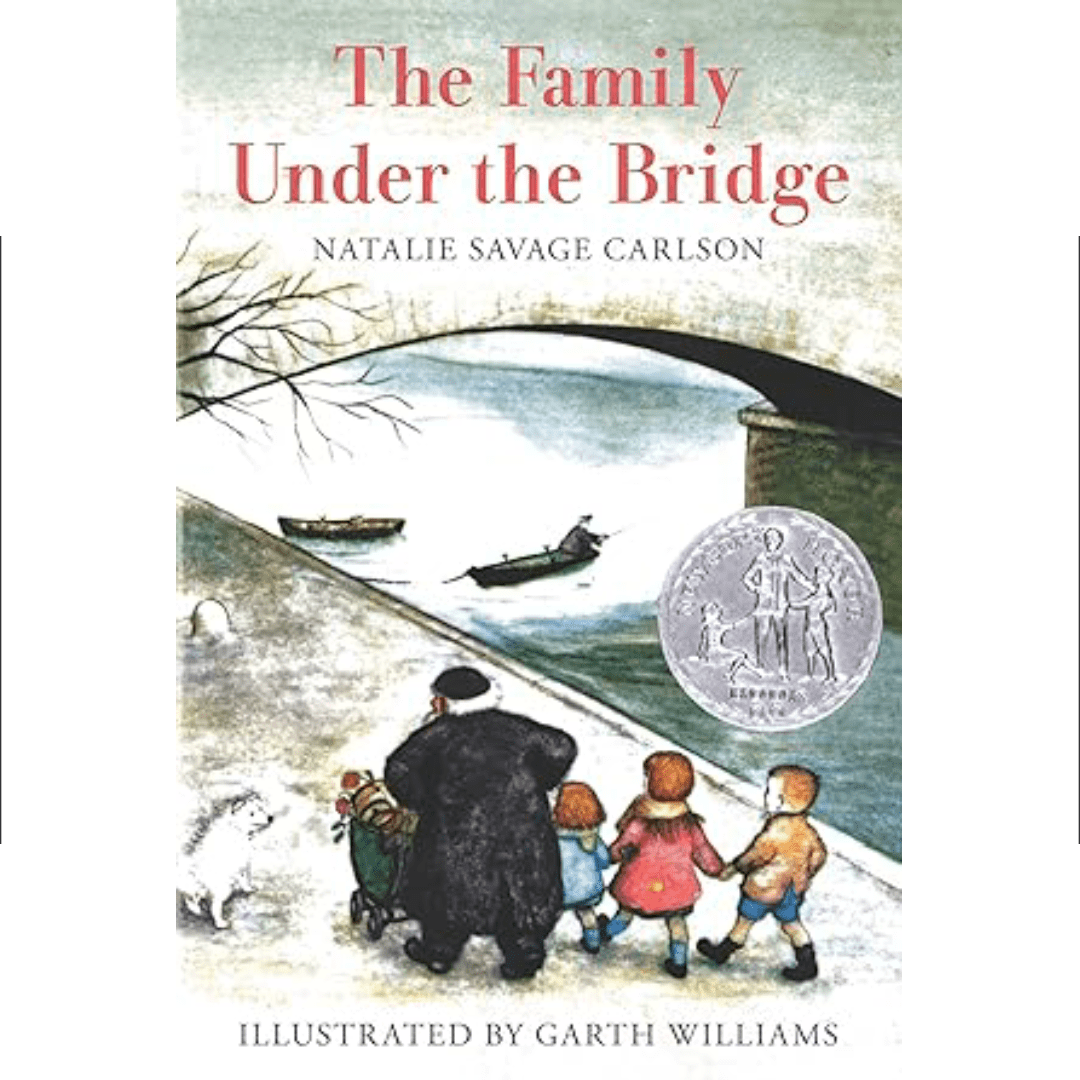
Book Review: The Family Under the Bridge by Natalie Savage Carlson

Children! Pah! Children were like starlings—witless, twittering, little pests. Besides, children meant homes and responsibilities and regular work and Armand was perfectly content living under a bridge in the city he loves more than anything else. But his perfect life changes when a gypsy woman grabs his arm and says, “You will meet with adventure today.” Then Armand meets three red-headed children, a shaggy dog that should have been white, and a proud mother determined to keep her family together. Oh, lá, lá! Adventure has certainly found Armand!

Recipient of the 1959 John Newbery Medal, The Family Under the Bridge is a charming, heartwarming story set against the backdrop of the picturesque and historic city of Paris. Natalie Savage Carlson’s story is brimming with the sights, sounds, and smells of one of the world’s most romantic cities and gives us a curmudgeon with a heart of gold through our reluctant hero, Armand Pouly. Despite his most valiant efforts, Armand opens his home and heart to this irresistible brood and becomes all the better for it.

The author sets her story during Christmas time, which is fitting as it is the season of hope, faith, and family. Family is a strong theme throughout Carlson’s book, as the children and their mother struggle against financial and social pressures to stay together. As the eldest child, Suzy, is always saying, “We’re a family and we have to stick together.” Themes of humility, kindness, and pride also permeate this lovely story as the children’s mother lets go of her pride to accept the help she greatly needs and Armand realizes that perhaps having your heart stolen by starlings isn’t such a bad thing after all.

Perhaps Armand himself sums it up best when he says, “It isn’t walls and furniture that make a home. It’s the family.” Armand always wanted adventure. Little did he know at the time that the family under the bridge would provide him with the adventure of a lifetime.

Rating: 5/5

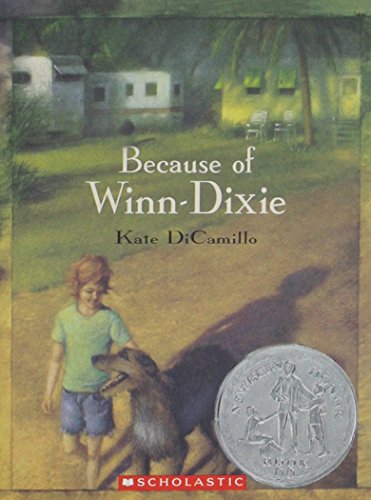
Because of Winn-Dixie by Kate DiCamillo (J Fiction)

Because of Winn-Dixie

Kate DiCamillo (J Fiction)

Opal knows ten things about her mother, but the one that sticks out most is that she hated being a preacher’s wife. Perhaps that’s why she left and never came back. When Opal’s father is given the chance to minister at a converted Pick-It-Quick store, the two leave the bad memories of Watley and move to a fresh start in Naomi, Florida. However, Opal’s lonely life changes when a stray dog she names Winn-Dixie enters her life. Because of Winn-Dixie, she meets the town’s librarian who once loaned a book to a bear, a reclusive witch with a ghost tree in her backyard, an animal-serenading ex-convict, a bald-headed baby, and a pinch-faced know-it-all. Soon, these strange individuals begin to fill the empty spot in Opal’s life and because of Winn-Dixie, maybe life in Naomi won’t be so lonely after all.

Recipient of the 2001 Newbery Honor Book award, Kate DiCamillo’s Because of Winn-Dixie is a warm and tender book about misjudging people, dealing with loneliness and loss, and the power that a simple act of kindness can have. Through a goofy dog with a penchant for smiling and a possessing a remarkably good judge of character, Winn-Dixie shows Opal that looks can be deceiving, labels are best left on soup cans, and anyone who offers you a peanut butter sandwich can’t be all that bad. With a “surrogate” mother in the form of Gloria Dump (who deals with her own demons in a unique and beautiful way), Opal begins to understand the importance of courtesy and the value of giving everyone a second chance. Although this story dabbles into some complex issues involving parental abandonment and alcohol abuse, its sweet and tender message of belonging and being true to yourself makes it a delightful and enjoyable book for readers of all ages.

Walt Whitman once wrote, “Be curious, not judgmental.” Because of Winn-Dixie, Opal learned to look beyond a person’s past actions, ugly words, or sour disposition and instead began to ask questions and listen to their stories. By using her ears rather than her eyes, she discovered what Winn-Dixie knew all along…that anyone who shows kindness, warmth, and compassion to a scraggly dog with a toothy smile can’t really be all that bad. How can they be?

Rating: 5/5

NEW!! Want to share this book with your homeschooler or classroom? Download our affordable study guide: https://www.teacherspayteachers.com/Product/Study-Guide-Because-of-Winn-Dixie-by-Kate-DiCamillo-11472615?st=76e1919aea895123a78e657eb644391f

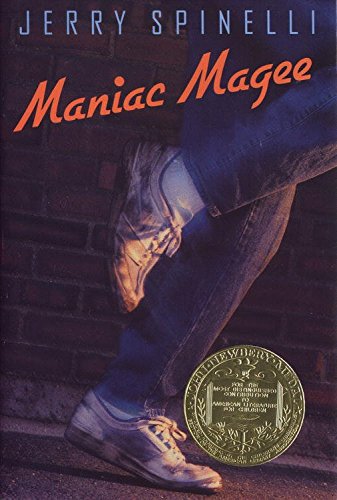
Maniac Magee by Jerry Spinelli (J Fiction)

They say Maniac Magee was born in a dump. They say his stomach was a cereal box and his heart a sofa spring. They say he kept an eight-inch cockroach on a leash and that rats stood guard over him while he slept. They say.

Maniac Magee

Jerry Spinelli (J Fiction)

They say Maniac Magee was born in a dump. They say his stomach was a cereal box and his heart a sofa spring. They say he kept an eight-inch cockroach on a leash and that rats stood guard over him while he slept. They say.

In a world where it’s hard to tell what’s real, slight exaggeration, or utter nonsense, one thing that’s undeniably true is that the boy known as Maniac is a straight-up legend. This scraggly orphan with the blown-out sneakers does more than just rescue Arnold Jones from Finsterwald’s backyard, runs along the steel rail of the railroad tracks, sleeps alongside a baby buffalo, and scores an inside-the-park homerun by bunting a frogball. No, sirree. This mythological marvel did what few would even think—nay—dare to do and that’s take on that foul and odious beast separating East End from West End in Two Mills, Pennsylvania. What beast would that be you ask? Racism.

It’s no wonder why Jerry Spinelli’s book received the highest honor in children’s literature—the John Newbery Medal. This heartwarming story of racial division, acceptance, family, and loyalty is as relevant and important today as it was when it was written in 1990. It tackles the ugliness and unfairness of racial prejudice head on with humor and heart and in a way that young readers can understand and absorb its important message of unity and understanding.

Maniac Magee tells the story of twelve-year-old Jeffrey Lionel “Maniac” Magee and his rise from runaway orphan to unforgettable legend. By performing impossible feats, he earns himself not only a spot in town folklore, but also in the hearts of just about everyone he meets. Yet despite his talents and charisma, there are still a few folks—on both sides of Hector Street—who have suffered so much pain and mistreatment in the past that they are unable to forgive, forget, and move on to face a different future.  

In his 1990 Boston Globe-Horn Book Award acceptance speech for Maniac Magee, Spinelli answered the question that so many of his fans and admirers have asked him over the years: “Were you Maniac?” And, in true Jerry Spinelli fashion, he responded, “I sure was. Weren’t we all?” Perhaps none of us will never experience the fame and notoriety of one Maniac Magee, but one thing’s for sure and that’s the world could certainly use a few more just like him right about now.

Rating: 5/5

NEW!! Want to share this book with your homeschooler or classroom? Download our study guide: https://www.teacherspayteachers.com/Product/Study-Guide-Maniac-Magee-by-Jerry-Spinelli-11348884

The Hundred Penny Box by Sharon Bell Mathis (J Fiction)

The Hundred Penny Box

Sharon Bell Mathis (J Fiction)

Michael loves counting the pennies in his great-great Aunt Dew’s old wooden box. There’s one hundred in total—each one representing a year of her life and more importantly, a memory. Aunt Dew may forget a lot of things, but she remembers every milestone that each penny represents, and Michael enjoys hearing her tell these stories over and over again. But Michael’s mother wants to get rid of the box. She says it’s old and gets underfoot. Aunt Dew has lost so much already, Michael can’t allow her to lose her beloved box as well. How can he make his mother understand its importance when all she sees is an ugly old box?

Recipient of the Newbery Honor Book award in 1976, The Hundred Penny Box is a compassionate and heartfelt book that depicts aging and caring for the aged in a realistic and thoughtful manner. It’s a moving, multi-generational story of a young boy and his beloved great-great aunt and the simple pleasures they share while counting old coins and reliving cherished memories. While their relationship is sweet, Mathis also depicts the challenges of caring for the elderly as she places all of the stress and anxiety of daily care squarely on the shoulders of Michael’s mother, Ruth. Readers will most certainly view her as the story’s villain and who can blame them when even Michael apologizes to Aunt Dew for his mother’s mean behavior.

At 47 pages—including the beautiful watercolor illustrations by Leo and Diane Dillon—this book is probably one of the shortest (if not the shortest) books to win a Newbery; however, its brevity should not be confused with simplicity for its complex themes of empathy, respect, compassion, and love make this a book that needs to be read slowly and savored. Author Tia Walker wrote, “To care for those who once cared for us is one of the highest honors.” The pennies in Aunt Dew’s box may have only added up to a dollar, but Aunt Dew was a woman whose warmth and faith made her a priceless treasure that no box could contain and whose worth could never be measured.

Rating: 5/5

NEW!! Want to share this book with your homeschooler or classroom? Download our FREE study guide: https://www.teacherspayteachers.com/Product/Study-Guide-The-Hundred-Penny-Box-by-Sharon-Bell-Mathis-11285435

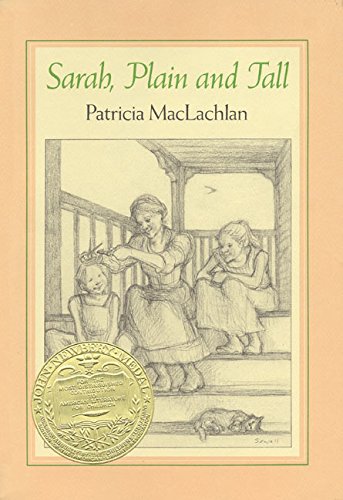
Sarah, Plain and Tall by Patricia MacLachlan (J Fiction)

Sarah, Plain and Tall

Patricia MacLachlan (J Fiction)

Sarah Wheaton is from Maine and loves the sea. She can braid hair, make stew, and bake bread, but would rather paint and build bookshelves. Her favorite colors are the colors of the sea: blue, gray, and green. She can keep a fire going at night, has a cat named Seal, and isn’t quite sure if she snores or not. Perhaps the most important thing to know about Sarah is that she’s traveling to the prairie to be a wife to Jacob Witting and a mother to his two children: Anna and Caleb. She’s coming and the children are hoping beyond hope that she won’t leave like their mother did so many years ago when she died soon after childbirth. Is it possible for Sarah—who loves the sea—to be happy with fields and grass and sky and nothing else? Can she make a home without her beloved blue and gray and green? After thirty days, they’ll know for sure.

Sarah, Plain and Tall is the first in a five-book series by Patricia MacLachlan and is one of the shortest books to ever win the Newbery Medal, which was awarded to MacLachlan in 1986. Based on a true story about the author’s ancestors, the book tells the story of an independent and stubborn woman from Maine who enters the home and lives of the Wittings. While the family introduces Sarah to haystacks, cow ponds, and lambs, she shares strange shells, tales of the sea, and a new word from Maine: ayuh meaning yes. Between her naiveté about farm life (she names the sheep and chickens) and her audacity to swim in the cow pond and wear overalls (have you ever heard of such a thing?), Sarah charms everyone around her and begins to heal a broken family.

MacLachlan takes readers back to the late 1800s with a timeless story about home and family set during a time when life was simple, struggles were many, and family meant everything. Through kindness, patience, and love, a plain and tall woman from Maine made the Witting’s house a home again by filling it with songs and treasures from the sea. So, was it possible for Sarah to be happy surrounded by fields and grass and sky and nothing else? Ayuh.

Rating: 5/5

NEW!! Want to share this book with your homeschooler or classroom? Download our affordable study guide by visiting https://www.teacherspayteachers.com/Product/Study-Guide-Sarah-Plain-and-Tall-by-Patricia-MacLachlan-11171286

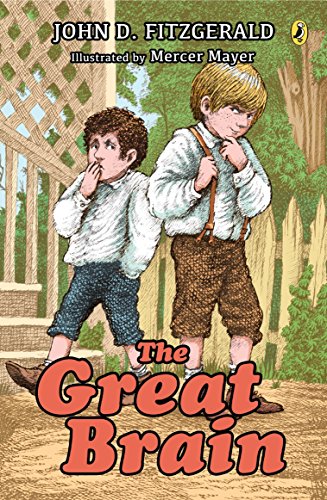
The Great Brain by John D. Fitzgerald (J Historical Fiction)

The Great Brain (Great Brain #1) 

John D. Fitzgerald (J Historical Fiction)

It’s 1896 and the territory of Utah officially became a state. But to the 2,500 residents in the town of Adenville, it was the year of The Great Brain’s reformation. Having The Great Brain as a brother has its ups and downs. Just ask his little brother J.D. It was nearly impossible to catch any sunlight while constantly in the shadow of such magnificence and brilliance. Expert eavesdropping, a perilous cave rescue, and the great whiskey raid were the works of one Tom Dennis Fitzgerald and his intellect was the stuff of legend. But, has The Great Brain finally changed his scheming ways? Why, that would be bigger news than the day Adenville got its very first water closet!

Published in 1967, The Great Brain is the first in an eight-book series and loosely based on author John D. Fitzgerald’s own childhood experiences. The story is narrated by the Fitzgerald’s youngest son John (J.D.) who is seven—going on eight. This is one of those books that I have equally strong feelings of delight and horror. With a publisher-recommended reading age of 8 and up, it is important to note that this is a 1967 book and times they did change (and boy, did they ever)!

Setting aside the starting reading age (which I would emphatically suggest bumping up to at least 12), this book deals with some heavy societal and political issues largely centering around ethnic prejudice and hatred. Fitzgerald details how Adenville’s first Greek immigrant family (their son in particular) was the object of brutal bullying and verbal assault. The author also goes into a multi-page diatribe regarding the treatment of Jews compared to other ethnicities within their community and how a “beloved” member of their town somehow slipped through the cracks with devastating consequences. This wasn’t just a matter of negligence or ignorance, it was apathy and this entire topic—and its importance and relevance—is sadly bound to go right over a young reader’s scope of understanding.

Also, Tom is really nothing more than an opportunistic schemer. Would a young reader delight in his antics and ability to always find a way to one-up his friends? It seems so since this book not only gave way to seven successors, but earned Fitzgerald The Young Reader’s Choice Award for children’s literature in both 1976 and 1978. Shows what I know. Tom’s ability to do good does benefit those around him who learn how to defend themselves and develop a sense of self-worth, but the fact that he always seeks an “angle” puts him one step above a sleezy snake oil salesman. The upside is that Tom truly does have his beneficiaries’ best interests in mind and eventually experiences a moral awakening, but we know it doesn’t last long and future books probably contain more of the same self-serving behavior.   

Perhaps THE most disturbing part of this book comes near the end when John is helping another boy end his life because he wants to prove himself to be a good pal. The various ways the boys plot and attempt to carry out this horrific act is beyond boyish hijinx and madcap mayhem. I can’t possibly think what was going on in the author’s head that he thought this would be appropriate material to print for a child of eight. I was a child of the 70s and I wouldn’t look at this entire passage as merely being slapstick fun (Oopsies! THAT didn’t work. Let’s try this!) I shudder to think just HOW much of this book falls into the “own childhood experience” category.

My overall impression is that this book didn’t age well and should be left for a much older and morally mature reader. And even though my brain is not-so-great, I know there are more appropriate books out there for young readers that teach the virtues of friendship, the value of community, the strength of family, and the satisfaction you get from doing good with the expectation of receiving absolutely nothing in return.

Rating: 3/5

* Book cover image attributed to: www.abebooks.com

We’re now posting videos of some of our book reviews! Follow us on Facebook at www.facebook.com/thedustyjacket or on Instagram @tdjreviews and join in on the fun!


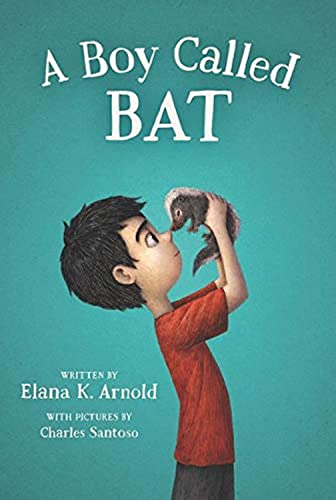
A Boy Called Bat by Elana K. Arnold (Juvenile Fiction)

A Boy Called Bat (Bat Trilogy #1) 

Elana K. Arnold (Juvenile Ficiton)

Bixby Alexander Tam, nicknamed Bat, has a long list of things he doesn’t like: unspoken rules, people rumpling his hair, eating leftovers, food smashed together, cheese that has to be sliced, loud sounds, and waiting. But one thing that Bat DOES like is the orphaned newborn skunk that his veterinarian mother brings home one day. Although it’s hard for Bat to connect with people, he forms an instant bond with the kit and silently promises the animal that he will figure out a way to keep him. With the help of his third-grade teacher, Bat forms a plan that’s sure to make the baby skunk a permanent member of the Tam family. Afterall, Bat made a promise and he never lies. Lying makes him feel itchy…another thing that Bat doesn’t like.

A Boy Called Bat is the first in a series of three books in the Bat Trilogy. Written with candor and warmth, Arnold gives young readers a story of a boy on the autism spectrum who struggles to regulate his emotions, understand non-verbal social cues, navigate unexpected circumstances, and just adjust to life in general. We wince as we watch Bat say things without thinking, misread body language, and overreact to situations that all end in awkward and painful outcomes. Arnold accurately captures the nuances that are associated with the autism spectrum such as dealing with the subtleties of sarcasm or taking idioms literally. Spoken language along with unspoken facial cues and body gestures are just everyday landmines that Bat has to constantly tiptoe around with one wrong step spelling disaster.

Although I am a sucker when it comes to brother-and-sister relationships that are all cuddles and kisses and unicorn wishes, I did appreciate Arnold portraying Bat’s sister Janie realistically. She often loses her temper with Bat, she knows exactly what buttons to push when she wants a reaction out of him (and she DOES push), and yes, she thinks he’s weird. But Janie’s human and you really can’t fault her for wanting a predictable trip out or just ONE boring dinner with no drama. Yes, she’s a stinker because she knows better than anyone else how many things are out of Bat’s control, but I think that’s why I like her so much. She’s every sibling out there who assumes the dual roles of defender and detractor and it’s rewarding and exhausting at the same time. For every Bat, there’s one or two Janies and they deserve attention, patience, and understanding as well.

I think my favorite part of the book was how Bat viewed his mom: “Then he followed Mom through the door that separated the waiting room from the back and watched as she took her white coat from its hook. She put it on, and then Mom was Dr. Tam. A veterinarian. Better than a superhero.” Valerie Tam wasn’t a superhero because she was able to make sick animals well. She was extraordinary because she championed and believed in a boy who thought himself to be less than perfect. Parents of neurodiverse children put on a cape every single day—not because they want to, but because they have to because they know exactly who they’re fighting for and what they’re fighting against and they won’t ever, ever give up. Take that, Superman.

Rating: 5/5

* Book cover image attributed to: www.abebooks.com

We’re now posting videos of some of our book reviews! Follow us on Facebook at www.facebook.com/thedustyjacket or on Instagram @tdjreviews and join in on the fun!
The Boy with the Butterfly Mind by Victoria Williamson (J Fiction)

The Boy with the Butterfly Mind

Victoria Williamson (J Fiction)

Elin has never been in trouble for anything in her whole life. She is smart, respectful, and helpful. A perfect princess determined to get her divorced parents back together…even though her mother is in a relationship and her father is married. Elin has everything under control, but she doesn’t have any friends. After all, it’s lonely being so perfect all the time. Then there’s Jamie who seems to be a magnet for trouble. He has ADHD and is easily distracted, forgetful, and messy. His parents are also divorced and Jamie blames himself…as he often does for most things that go horribly wrong. It would be nice if he had a friend to talk to, but it’s lonely being bad all the time. When these two very lonely and different worlds collide, order and chaos not only meet, but they end up living together in a house that seems to grow smaller by the minute.

The Boy with the Butterfly Mind is told from the alternating viewpoints of Elin and Jamie—both eleven. Although you understand the internal and emotional struggles of both characters, it is far easier to be sympathetic towards Jamie. Although he is completely aware of his challenges and limitations, he still absorbs an unfair amount of guilt and blame while managing to maintain a trusting and forgiving attitude. His journey is a rollercoaster ride of emotions and just when we think his life is getting easier, the rug is mercilessly pulled out from him. With so much against him, we can’t help but cheer on this perpetual underdog.

Williamson is a primary school teacher with a Master’s Degree in special needs education. She’s worked with children requiring additional support needs and this real-world experience is evident in her writing. We see it as Jamie details his struggles and feelings and especially when he describes his interactions with his mother who is completely overwhelmed and emotionally drowning. These occurrences are raw and ugly and uncomfortably accurate. When Jamie hurts, we hurt, which makes this book all the more thought provoking and poignant.

By focusing on Jamie, I don’t mean to downplay Elin and her feelings. She, too, is struggling with her own demons as she feels that the only way to win her father back is to maintain a level of perfection that is both unrealistic and impossible. She puts undue pressure on herself and the introduction of an imperfect and unwanted addition to her family just adds to her burden. It’s a lose-lose situation for everyone and we can’t help but wince as we witness the walls around these people come tumbling down. However, the measures that Elin takes in her own personal “war” against these unwanted intruders are both cruel and dangerous and under these circumstances it is difficult to extend her any mercy or grace although she is keenly aware and witnesses the consequences of her actions.

Using data from 2016-2019, the Centers for Disease Control and Prevention estimated that 6 million children—between the ages of 3 to 17—were diagnosed with ADHD, which is why books like this one are so important and valuable. To show the bullying and isolation that children with this diagnosis experience is just the first of many steps that need to be taken to promote understanding, acceptance, and inclusion.

There’s a quote about friendship that I’ve used before in a review that’s from an anonymous source. It’s one of my favorites: A friend is one who overlooks your broken fence and admires the flowers in your garden. Although Jamie felt broken and just wanted to be “normal”, he was lucky enough to find such a friend who made him realize that you don’t have to be perfect in order to be a perfect friend. I think the world would be a much better place with more people like that in it and I’m glad that Elin eventually realized this, too.

Rating: 5/5

* Book cover image attributed to: www.abebooks.com

We’re now posting videos of some of our book reviews! Follow us on Facebook at www.facebook.com/thedustyjacket or on Instagram @tdjreviews and join in on the fun!
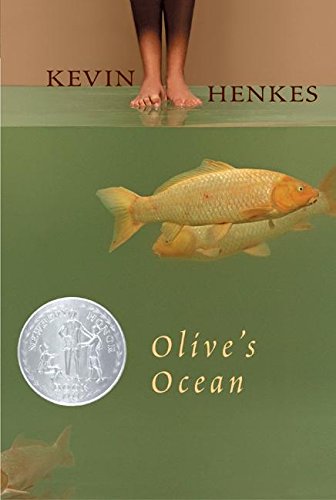
Olive’s Ocean by Kevin Henkes (J Fiction)

Olive’s Ocean

Kevin Henkes (J Fiction)

Twelve-year-old Martha Boyle and her family were leaving on their annual vacation to the Atlantic coast when a woman appeared on the Boyle’s doorstep. She introduced herself as Olive’s mother, one of Martha’s classmates who had recently been killed. She handed Martha a folded piece of paper from Olive’s journal. As Martha read the note written by a girl she barely knew, she was struck by just a few simple sentences: I hope that I get to know Martha Boyle next year (or this summer). I hope that we can be friends. That is my biggest hope. These kind words filled with expectation would alter Martha’s world view forever as she mourns a friendship that never was and never will be.

I raised my child on Kevin Henkes’ mouse books: Chester’s Way, Owen, Wemberly Worried, and others. Each helped me reinforce the value of friendship and the importance of acceptance, handling your emotions, self-reliance and many other life lessons. When I saw that Olive’s Ocean was a Newbery Honor book, I wasn’t really surprised. What DID surprise me was that it ranked 59th on the American Library Association’s list of the 100 Most Challenged Books from 2000 to 2009 for its offensive language and sexual explicitness. No wonder Wemberly worried!

Despite the ominous label it carries, Olive’s Ocean is a rather innocuous coming-of-age story about a girl dealing with the customary pre-teen fare: first love, awkwardness, rejection, humiliation, and the constant struggle of trying to figure out who she is and what she wants to be. Pretty safe stuff, but Henkes does nudge the boundaries ever so slightly causing those few, all-important feathers to be ruffled.

The “sexually explicit” reference is a brief explanation to Martha by her older brother of why their parents seem overly affectionate one morning. It seems they were exhibiting “Morning Sex Behavior” and “when they do it in the morning” they get a bit lovey-dovey. Regarding the “offensive language”, there are instances of mild profanity, but nothing too over-the-top for the publisher’s recommended reading age of 10 and up. So, the big questions are: Are EITHER of these inclusions necessary to further the story or develop the characters? No. Could they have been excluded with little to no impact on the overall message? Absolutely. Would Henkes have omitted them if he knew the wrath that awaited him? Maybe. Maybe not. There’s no question that having your book banned instantly puts you on a reader’s radar, but clearly this was not his intent. All in all, these infractions (as most references go) are tame, but clearly remain unforced errors and prompt me to up the recommended reading age by a few years just to be prudent.

As far as stories go, this was a quick read and had several important messages about inclusivity and realizing that the world doesn’t revolve around your own personal cares and needs; however, I would have liked more Olive in Olive’s Ocean and feel that this was an opportunity wasted. The apparent connection between Olive and Martha stated in the synopsis doesn’t quite materialize in the actual book, and it would have been far more interesting if Olive’s story had been developed more deeply to show Martha’s slow and eventual evolution. Still, the targeted audience will find a nice and relatable story, while I was hoping for something a little bit more moving with a deeper and lasting message. I guess if I’m looking for these, I need to go back to the mouse stories.

Rating: 3/5

* Book cover image attributed to: www.abebooks.com

We’re now posting videos of some of our book reviews! Follow us on Facebook at www.facebook.com/thedustyjacket or on Instagram @tdjreviews and join in on the fun!
The Borrowers Afloat (The Borrowers #3) by Mary Norton

The Borrowers Afloat (The Borrowers #3)

Mary Norton (J Fantasy)

It all began when Mrs. May told Kate the story of the Borrowers: Pod, Homily, and Arrietty Clock. The story of how these little people lived happily under the kitchen floorboards at Firbank until being smoked out; how they survived hunger, weather, and a sinister gypsy with the help of a human being and a loner Borrower; and how all of this ended with an unexpected reunion with Uncle Hendreary and Aunt Lupy. But, as we’ve learned, things with the Borrowers are never easy and with bad news from the human boy Tom, our three friends are off on yet another adventure, except this time they’re aided by a most resourceful and trustworthy ally, Spiller.

The Borrowers Afloat is the third installment in The Borrowers series and it’s just as thrilling and enchanting as its predecessors. Norton continues to use each book to give readers a greater insight into the world of these resourceful and brave beings. In this book, we see how Uncle Hendreary and Aunt Lupy live and understand the partnership they’ve formed with Spiller. Also, Spiller has been promoted from a supporting role to a main character as he plays an instrumental part in saving the Clocks (quite a few times by now), as well as assisting them in securing permanent housing.

Of all the characters so far, Spiller is perhaps the most underrated and gracious as he gives up his home, time, and resources to assist the Clocks on more than one occasion. Although he works through barter, the kindnesses extended Pod and Homily seem to go largely unreciprocated and unappreciated except for Arrietty who holds a genuine like and concern for this ragamuffin drifter. Lastly, Norton continues to develop our soft, pampered, and opinionated matriarch, Homily, and allows her to slowly let go of her prejudices to begin appreciating and valuing Spiller and his contributions to her family.

So far, the series continues to delight with an exciting and fun ride while this book leaves readers with the most suspenseful cliffhanger yet as Mild Eye the gypsy is hot on their heels and the return of the nasty Mrs. Driver and Crampfurl reminds us that our friends’ journey is far from over. But, as Pod was reassuring Homily after another near escape by saying, “As I see it, in life as we live it—come this thing or that thing—there’s always some way to manage. Always has been and, like as not, always will be,” andI have no doubt that Pod, Homily, and Arrietty will continue to find some way to manage as long as they’re together.

Rating: 5/5

* Book cover image attributed to: www.abebooks.com

We’re now posting videos of some of our book reviews! Follow us on Facebook at www.facebook.com/thedustyjacket or on Instagram @tdjreviews and join in on the fun!