
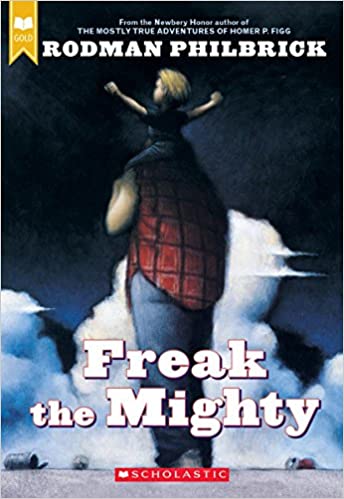
Freak the Mighty by Rodman Philbrick (YA Fiction)

Freak the Mighty

Rodman Philbrick (YA Fiction)

They were known as Freak and Kicker. Kevin Avery and Maxwell Kane had known each other since daycare and you’d think that given Kevin’s abnormal smallness, he would have been a pretty kickable target for Kicker. But maybe it was Kevin’s crutches or perhaps it was the shiny braces holding up his crooked legs. Whatever it was, he quickly captured Maxwell’s imagination…and possibly even his respect. When Kevin suddenly re-enters Maxwell’s life during the summer before eighth grade, the two form an unlikely friendship. Separately, they are Midget and Butthead, but together they’re Freak the Mighty and soon everyone would realize that you can’t always judge a book by its cover.

Rodman Philbrick warms your heart and then breaks it with this story of friendship, acceptance, and courage. Told from Maxwell’s point of view, Freak the Mighty shows us how two fractured halves come together to form one implausibly wonderful whole. Kevin is the yin to Maxwell’s yang and they prove that opposites not only attract, but they bond and strengthen. Through Kevin, Maxwell begins to realize his academic potential and starts to free himself from past ties that hold him back. In turn, Maxwell gives Kevin the ability to look for castles, hunt for buried treasure, help damsels in distress, and realize his dream of having a seat at the roundtable.

There seems to be a lot of disparity online regarding the appropriate reader age for this book. Freak the Mighty is recommended for sixth graders and up—although some websites suggest a reader age as young as ten. While it is an easy and fast read—which would clearly appeal to younger readers—there are many instances of violence and disturbing behavior throughout the book, not to mention that Maxwell’s father is far from Father-of-the-Year material. And while the themes of anti-bullying and pro-acceptance are important, there are more age-appropriate options available for younger readers (R. J. Palacio’s Wonder is just one example). All in all, I really loved this story, but it fell just a little short of completely winning me over. With the two main characters being such polar opposites, I feel the story could have benefitted from having alternating narrators—switching between Maxwell and Kevin. Having the opportunity to learn more about Kevin and being able to see the world through his eyes would have added another layer of depth and emotion to this story. Having Mighty without the Freak seems like a sadly missed opportunity.

They say that a friend is someone who looks beyond your broken fence and instead admires the flowers in your garden. Maxwell and Kevin certainly exemplify this through their quirky and unlikely friendship and demonstrate how brains and brawn are not competitors, but rather a wonderful symbiosis. Maxwell gave Kevin legs and Kevin gave Maxwell heart—their own mental and physical challenges replaced by adventure, possibility, and hope. Rare is the friendship that not only opens the door to life’s opportunities, but also lifts you up so that you won’t miss them when they finally arrive.

Rating: 4/5

* Book cover image attributed to: www.amazon.com
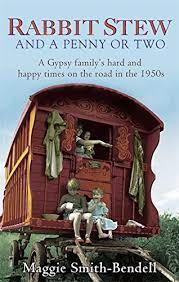
Rabbit Stew and a Penny or Two: A Gypsy family’s hard and happy times in the 1950s by Maggie Smith-Bendell

Rabbit Stew and a Penny or Two: A Gypsy family’s hard and happy times on the road in the 1950s

Maggie Smith-Bendell (Adult Biography)

Many of us were born out on the pea fields. I was born on the pea field at Thurloxton, just up the road towards Bridgwater, so I felt right at home in the peas. Me dad always said that the best pickers were born in the fields, but I knew that was a load of bull to get me to pick faster. He must have thought me daft.

Born the second of eight children, Maggie was a Traveller—where working was a mainstay, where horses were treated better than family, and the seasons determined where you parked your wagon and for how long. It was a life of traditions, culture, and family, but being Romani also meant a way of life met with resistance, discrimination, and abuse. As a child, Maggie flourished in her surroundings. As an adult, she would spend every waking hour fighting to protect and maintain a culture and a people that were under never-ending assault.   

Maggie Smith-Bendell’s biography is a fascinating and rare look into the lives of the Romani Gypsy. Maggie lived within an incredibly tightknit community that valued tradition and thrived on the open road. Their nomadic lifestyle brought plenty of adventure, danger, uncertainty, and joy, but also its share of mistrust and mistreatment from the gorgies (non-Romani people) living in the towns where the Romani came to trade, shop, and sell their goods. Maggie’s words are so mesmerizing and poignant, that we somehow become immersed in her wonderful Gypsy world: smelling the smoke from the family’s campfire; feeling the blackberry brambles tear at our flesh; and weeping as we follow a casket moving slowly to its final resting place. It’s quite an accomplishment given what little formal education she received.

Perhaps the most inspirational part of Maggie’s story was her tireless advocacy work on behalf of the Romani people and her commitment to preserving their culture. Although she could have settled for a quiet, married life raising her children, she chose to dedicate her adult life to fighting for the Romani’s right to own and live upon their own land and to help them acquire homes, an education for their children, and healthcare. Maggie mentions the obstacles, defeats, and setbacks in her work, but she knows that it’s the victories that matter. The chance for another Romani to be able to claim a little piece of this planet as their own. As Maggie put it, “There is no feeling like the peace that comes with having a base to live from, to have a gate of your own to shut at night. The settled community take this security for granted, having known no other way of living. This is right and proper, but for us to share that security is really something else. It’s like catching up with the rest of the world.”

At eighty years of age, Maggie continues to fight for the rights of Gypsies and their way of life. Some have branded her a “land grabber” while she—on her Linkedin page—refers to herself as a “trouble maker”. Regardless of titles, she seems to take it in stride. After all, she knew from quite early on that the world was made up of different kinds of people—those who would accept her people and those who would curse their very existence. Maggie describes an encounter her father had with a police officer and wrote, “Some people did stop to have a word with us, and we enjoyed it when they took the time to speak. Others would pass us by, keeping their eyes on the road or in the hedge, not even glancing at the side of the road where we were stopped. Me dad always said that it took all sorts to make the world. It wouldn’t do for us all to be the same, would it?” Perhaps not all the same, Maggie, but a few more Gypsies might not be so bad.

Rating: 5/5

* Book cover image attributed to: www.amazon.com
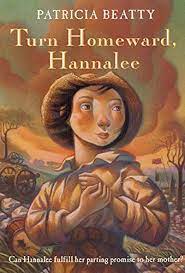
Turn Homeward, Hannalee (J Historical Fiction)

Turn Homeward, Hannalee

Patricia Beatty (J Historical Fiction)

The Civil War has been raging for three years now. Twelve-year-old Hannalee Reed’s father died in an Army hospital last winter and her older brother was currently in Virginia fighting for the Confederacy. She and her little brother, Jem, spend their days working in the mill making cloth for the soldiers while her mother awaits the birth of her fourth child. When Union soldiers arrive in her hometown of Roswell, Georgia, they burn down the mill and gather all of the millworkers—charging each one with treason and sending them to Tennessee and Kentucky by train. Before Hannalee is taken away, her mother pulls a button from her blouse and tells her daughter, “Wherever you go, keep this to remind yourself to come home. Turn your heart to me. Turn homeward, Hannalee!” Despite the miles between them and the impossible odds that lie ahead of her, Hannalee made her mother a promise that she would find a way home again and that is what she intended to do.

Precious is the book that not only entertains the soul of a young reader, but also enlightens their mind as well. Patricia Beatty’s Turn Homeward, Hannalee is such a book. The first half of Beatty’s book is based on actual events that occurred in July 1864 when the Yankee cavalry arrived in Roswell, Marietta, and New Manchester, Georgia, rounded up nearly two thousand mill workers, and put them all on trains heading north to either work in Union mills or to provide household or farm help to northern families. Like most of the soldiers before them, most of these workers were never heard from again—their futures forever remaining a mystery. Although Beatty targets her book for readers aged ten and older, she doesn’t shy away from depicting the cruelty, ugliness, and inhumanity that comes with war. Hannalee and Jem get to witness first-hand the horrors of the battle of Franklin, which lasted only six hours but was a terrible defeat for the Confederacy. Hannalee described the bloody scene before her by uttering, “I reckoned it was like looking into hell, and I felt sick inside.”

Although Beatty provides readers with a lot of facts and details surrounding the war, her book reads less like a history lesson and more like a thrilling action and adventure story where a new danger or challenge awaits our fearless heroine at every turn of the page. And even though Hannalee Reed sprang from Beatty’s wonderful imagination, it would be nice to think that among the eighteen hundred Georgian mill workers that simply vanished from government records, that there were a few girls—like Hannalee Reed—who traveled hundreds of miles through battlefields and blood and who survived hunger and the elements to make their way back home. That they did all of this because they had made a promise to their mothers and that was a promise worth keeping.

Rating: 4/5

* Book cover image attributed to: www.amazon.com
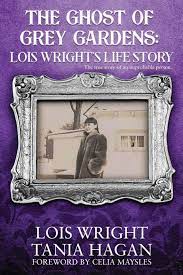
The Ghost of Grey Gardens: Lois Wright’s Life Story by Lois Wright & Tania Hagan

The Ghost of Grey Gardens: Lois Wright’s Life Story

Lois Wright and Tania Hagan (Adult Biography)

She didn’t mind being a ghost, as she had come to think of herself. She seemed to be in the background at Grey Gardens, in the film and in real life. No one knew she was there, and no one cared to look for her.

For decades, an eccentric mother/daughter duo captivated the attention and imagination of the world. Voluntarily confined to their deteriorating twenty-eight room mansion in East Hampton, New York, Edith Bouvier Beale (paternal aunt of Jacqueline Kennedy Onassis) and daughter Edie Beale lived a reclusive existence that was detailed in numerous documentaries, films, books, and even an award-winning musical. Theirs was a complex life with only a few allowed to enter it. One of those few was Lois Erdmann Wright and her story spans over ninety years.

This review may seem a little cold-hearted and harsh and should by no means be a reflection on Lois Wright personally or the life that she led and continues to do so (she will celebrate her 94th birthday in July 2022 and I wish her all the best). Every life is precious, but not every life is worthy of a book. This is one of those instances.

Lois Wright led a remarkable life, but to describe it as “improbable”—as she does so on the book’s cover—may be a bit of a stretch. She was a palmist, painter, and TV personality born into a well-off family that was loving and supportive. Her mother became friends with Edith Beale and so it was natural for the women’s daughters (Edie and Lois) to become tight as well. Their friendship was more like family and lasted decades. The Beale women hobnobbed with the best that society had to offer, but their status received an unexpected bounce when Jacqueline not only married the handsome John Kennedy, but became First Lady when her husband was elected the 35th President of the United States. Although Lois exhaustively described herself as “shy” and “introverted”, the added glare of the spotlight and its effects were surely not lost on her. While reading this book, I was reminded numerous times of the quote, “The lady doth protest too much, methinks.”

Out of all the media pertaining to Grey Gardens, only two were exclusively about Lois Wright: My Life at Grey Gardens: 13 Months and Beyond and The Ghost of Grey Gardens: Lois Wright’s Life Story. Both were written (or co-written) by Wright herself and both were independently published. Why? Simply—and respectfully—put, Lois Wright is NOT the story. She is merely a woman who knew two women who were related to a woman who married a man who later became president. No matter what Lois Wright accomplished or regardless of her maybe/possible/perhaps lineage that she professes in the book, the simple fact is that her life, no matter how interesting, is not what captivated the curiosity of the world.

Another problem I had with the book is the layout and the occasional sloppy editing. Hagan does thank her editor for her “speedy and accurate work” although I’m not sure about accurate and perhaps a little less speedy might have been helpful. There are tons of photos that Wright provides for this book (several being the same photo just taken at a different angle) that are placed haphazardly amongst the text and having little or nothing to do with the subject at hand. There are photos of people that we haven’t been introduced to yet along with a confusing image of Wright’s driver’s license and a copy of a certified mail receipt from a letter sent to Jacqueline Onassis. If these last two are the “never-before-seen documents” mentioned in the synopsis, maybe there’s a good reason that they remained unseen. Also, if you are going to include the names of your more famous clientele, it’s important to ensure that their names are spelled correctly. Liza Manelli (sic) and Mathew (sic) Broderick would probably appreciate it.

Lois Wright seems like an interesting woman, but she clearly is a woman full of contradictions: she complained of loneliness, but was determined not to marry or truly devote herself to a relationship; she claimed to be devoted to family, but moved away from her severely ailing brother after less than a month away from home; and she asserted time and time again of loathing attention while bemoaning her absence in one documentary while celebrating her inclusion in another. In the words of Salman Rushdie, “Now I know what a ghost is. Unfinished business, that’s what.” If Lois Wright does indeed consider herself to be the ghost of Grey Gardens, I hope that this book will finally put her business to rest and that whatever she is seeking—relevance, notoriety, validation, or peace—is eventually found.

Rating: 2/5

* Book cover image attributed to: www.amazon.com
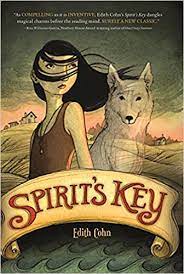
Spirit’s Key by Edith Cohn (J Mystery)

Spirit’s Key

Edith Cohn (J Mystery)

They get quiet. I’ve come outside, so they reward me with their silence. But it’s only because they want me to follow them. They lead me across the island to the edge of the woods, where they wait. Their eyes are filled with that intense urgency that says Follow me. It’s hard not to be taken in by it. There’s something in the woods they want to show me, but I don’t think it’s as harmless as a horse. I think it’s something actually dangerous.

Twelve. That’s the age where a Holderness receives their gift to be able to see into a person’s future. But Spirit hasn’t received her gift yet and her father’s gift has started to become more and more unreliable—causing business and the community’s confidence to wane. Her dad says that she must reconcile with her present before she can see the future, but her beloved baldie, Sky, is dead and she somehow can’t seem to get over her loss. Worse, other baldies—the wild dogs that roam Bald Island—are dying and a mysterious illness is starting to affect the townspeople…including her father. Could the baldies be the cause? When Spirit’s beloved Sky reappears, he keeps drawing her into the woods and toward the baldie cave. Could the answer to everything plaguing the island lie within that darkened entryway?

Cohn delivers an age-appropriate and suspenseful mystery whose underlying theme is the importance of protecting and respecting life. She communicates the necessity of preservation without being overly preachy and does so through the wonderful relationship between a girl and her dog. Any child who has ever loved and lost a pet will immediately be connected to Spirit and will understand the unique bond she shares with Sky, as well as the profound emptiness she feels upon his death. She also provides so many other valuable lessons: the value of friendship (Everyone needs a friend to watch their back.); the reluctance to accept things that are different (Why do people fear things they don’t understand?); and the importance of living in the now (The present isn’t something we can squander.).

Books for young readers that have a principled and strong female protagonist are my favorites. Spirit is loyal, kind, passionate, and is not afraid to stand up for her convictions. She’s the kind of girl that you would be proud to call daughter and lucky to have as a friend. Most of all, she says the two most courageous and powerful words that anyone can speak: I care. When others around her falter and surrender to fear, Spirit stands up for those unable to defend themselves. She gives a voice to those unfairly targeted and hunted and reminds everyone that outsiders have a place in the world, too. Spirit is not extraordinary because she can hold a key and see into the future or that she can communicate with animals. She’s exemplary because she cares, and the world could use a lot more people like Spirit in it.

Rating: 5/5

* Book cover image attributed to: www.amazon.com
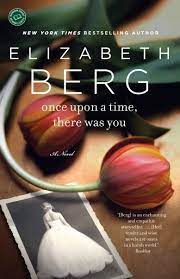
Once Upon a Time, There Was You by Elizabeth Berg

Once Upon a Time, There Was You

Elizabeth Berg (Adult Fiction)

DISCLAIMER: This is going to deviate a lot from my normal review format because I just can’t bring myself to devote any more time to this book, so here goes…

Synopsis: Two people (John and Irene) who never wanted to get married to each other get married to each other, have a kid (Sadie), get divorced, and are brought together again because their now eighteen-year-old daughter did something ridiculously and mind-numbingly stupid.

Why I read this: I read Berg’s Open House and rated it 3/5. It was okay enough that I decided to take another chance and read The Story of Arthur Truluv, which I rated 4/5. I was feeling pretty good and dived into Once Upon a Time, There Was You. I now find myself in a hate-love-hate relationship with Elizabeth Berg. I blame Arthur for this false sense of security.

Questions: First, What was the actual point of this book?!; Second, What in the world was Berg thinking when she wrote the event involving Sadie that sets the stage for her parents’ reunion? It felt forced and came absolutely out of left field. I don’t mind a shocking event if it’s going to add some depth to the story, but this one felt wildly out of place and came and went faster than promises made on election day; Third and Fourth, Who wrote the synopsis for this book and Did they even read the book? When tragedy strikes, Irene and John come together… Tragedy? That’s REALLY overstating what happened. What takes them longer is to remember how they really feel about each other. That might be the case if it wasn’t for the fact that Irene’s mouth has been estranged from her brain for quite a while so that any relationship involving her is doomed as soon as her lips part. There are more examples, but my brain is beginning to hurt a little bit now.

My rating: Every book I read automatically begins with a star. I mean, the author actually published a book and I haven’t so there’s that. I gave it another star because the relationship between Sade and her father was nice and the ending between John and Irene—unlike other parts of the book—actually made sense and was appropriate.

Moral of the story: Always go with your gut instincts, no matter how terrifying or humiliating the consequences may seem to be. Just suck it up, buy yourself an iced white chocolate mocha, hide under the covers, and wait for common sense to kick in…or the sugar and caffeine, whichever comes first.  

Rating: 2/5

* Book cover image attributed to www.amazon.com

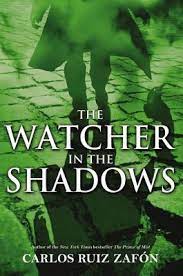
The Watcher in the Shadows by Carlos Ruiz Zafon (YA Horror)

The Watcher in the Shadows

Carlos Ruiz Zafón (YA Horror)

Fourteen-year-old Irene Sauvelle and her family are left desperate and destitute when Irene’s father dies and leaves them buried in debt. They happen upon some good luck when a family friend offers Irene’s mother, Simone, a job working for Lazarus Jann, a reclusive toymaker and inventor who lives in a mansion called Cravenmoore. Their new life in the seaside village seems idyllic until a young girl is brutally murdered. As events surrounding Cravenmoore become more disturbing, Irene begins to reconsider the veracity behind the local ghost stories and becomes curious about the secrets being closely guarded by the brilliant yet mysterious Lazarus Jann.

Carlos Ruiz Zafón, who was taken from us MUCH too soon, gives us a spine-tingling, hair-raising, and heart-pumping story that is begging to be brought to the screen (hint, hint Netflix, Disney+, and Amazon Prime Video). The Watcher in the Shadows—which is book three in the Niebla series, but can be read as a standalone—is a suspenseful, young adult horror that wastes no time in bringing the story’s action to full steam. Each chapter brings an escalation in the danger, as well as several eye-opening revelations that keep the reader guessing until the end.   

Given the current horror offerings inundating cable and movie screens lately, I was hesitant to pick up anything in this genre, but I knew Zafón would hand me a winner…and he did. Rather than going for the instant and predictable shock value by filling pages with copious amounts of guts and gore, he instead delves into your deepest fears by setting his scenes in darkness and using various light sources to allow walls, ceilings, and floors to become the playground for shadows that slither, slink, and stalk. Zafón exploits our primal fears by writing about situations involving drowning, delirium, confinement, abandonment, and isolation and he does so with calculated effectiveness.

This book is written for grades seven and up, but its underlying theme of technology vs humanity is one that any age could benefit from. Zafón wrote The Watcher in the Shadows in 1995, which coincided with the widespread adoption of the World Wide Web as a global medium for information access. Fast forward almost thirty years later and we’re now a society where gadgets and gizmos control almost every aspect of our life. And while The Watcher in the Shadows is not an overtly cautionary tale of automation overtaking humanity, it does serve as a subtle warning of the dangers that can occur when we depend on technology to fill the void left by loneliness and grief…an emptiness that once was filled by humans.   

Rating: 5/5

* Book cover image attributed to www.goodreads.com

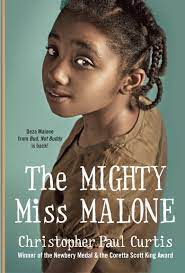
The Mighty Miss Malone by Christopher Paul Curtis (J Historical Fiction)

The Mighty Miss Malone

Christopher Paul Curtis (Juvenile Historical Fiction)

The best-laid schemes o’ mice an’ men/Gang aft a-gley

And leave us nought but grief and pain/For promised joy.

Her teacher told her that it was from a poem by Robert Burns called “To a Mouse”. Deza didn’t quite understand what those words meant—especially the “gang aft a-gley” part—but Mrs. Needham said that it just meant that even the most carefully planned out things could go wrong. Deza knew about this since a lot of the Malone family plans haven’t been quite working out lately. But if there’s one thing that the Malones do well it’s sticking together. After all, their motto was “We are a family on a journey to a place called Wonderful”. Before the Malones could get to Wonderful however, Deza and her family would have to travel through a whole lot of awful first.

Set against the backdrop of the Great Depression, homeless camps, speakeasies, and the much-hyped 1936 boxing match between Joe Louis and Max Schmeling, Curtis gives us yet another story centered around a tough-as-nails, plucky, and absolutely endearing main character. At twelve, Deza Malone is the smartest in her class and destined for something special. With a dictionary in one hand and a thesaurus in the other, she’s more than ready to take on the world one adjective and adverb at a time. Deza is charming, loyal, fiercely protective of her family—especially of her older brother, Jimmie—and principled to a fault. Deza is not a girl who’s afraid to take matters into her own hands in order to set things right…even if it means a little forgery or rule breaking now and then. Struggling to make something of herself while fighting racial prejudice, financial hardship, and social injustice may prove to be formidable challenges for some, but not for the mighty Miss Malone.

The Mighty Miss Malone is the second book by Curtis that I’ve read (the first being Bud, Not Buddy). In both stories, he gives us a main character who rises above their circumstances with grace, dignity, and integrity. His stories are built around the strength of family, the importance of hope, and the resilience of the human spirit. Through Deza Malone, Curtis reminds us that even though plans “gang aft a-gley”, tomorrow is always a brand-new day that brings with it another opportunity to get a little bit closer to a place called Wonderful.

Rating: 5/5

* Book cover image attributed to www.amazon.com

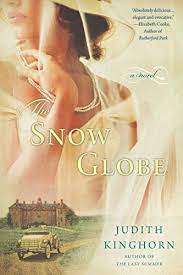
The Snow Globe by Judith Kinghorn (Adult Historical Fiction)

The Snow Globe

Judith Kinghorn (Adult Historical Fiction)

Inside her room, Daisy paced in circles. She’d been kissed. She’d been kissed at last, but not by the one she had wanted to kiss her. The one she wanted to kiss her said he loved her but seemed reluctant to kiss her. The one she didn’t want to kiss said he might love her and that he wanted to marry her. And the one she had kissed considered it a mistake.

It was Christmas 1926 and the residents of Eden Hall are preparing for another festive holiday. But this year, war still hangs heavy over everyone’s lives, the disappearance of famed mystery author Agatha Christie has the world gripped in intrigue, and eighteen-year-old Daisy Forbes’ heart is being torn apart by her feelings for her childhood friend, a few potential suitors, and a newly discovered secret about her adored father. As Christmas gives way to spring, the women of Eden Hall struggle to find their own voice, their own way, and their own sense of happiness and they’ll do all of these…even if it means leaving their beloved home behind.

I am a huge fan of the series Downton Abbey and so it’s no surprise that Kinghorn’s novel hit just the right chord with me. Full of conflicts without being overly dramatic and providing plenty of romance without being too schmaltzy, The Snow Globe shows us that the wealthy and well-to-do are not immune to such problems as betrayal, jealousy, pettiness, and all the other sins and shortcomings that make us human and fallible.

Although I always enjoy a good story showcasing the resilience of the human spirit and the power of overcoming impossible odds, there is also something to be said for a story that simply takes us back to a time and place where you could enjoy elevenses in front of a roaring fire in the family study or dance until dawn in the family garden while friends sip champagne under the moonlight. These little “reading retreats” of mine serve as an important reminder that there IS no place like home, that absence does indeed make the heart grow fonder, and that you shouldn’t stop making wishes on your snow globe because you never, ever know when one just might come true.   

Rating: 5/5

* Book cover image attributed to www.amazon.com

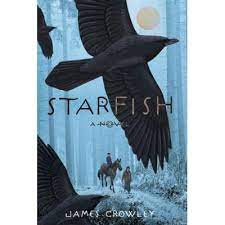
Starfish by James Crowley (J Fiction)

Starfish

James Crowley (J Fiction)

Orphaned at a young age, nine-year-old Lionel and his older sister Beatrice have lived at the Chalk Bluff boarding school on the Blackfeet Indian reservation for six years. Beatrice defiantly holds on to the traditions of her people, which causes growing tensions between her, the priests, and the officers who live in the nearby military outpost. When Beatrice is finally pushed to the brink, she steals the captain’s prized horse and escapes with Lionel into the wilderness in search of their grandfather. Grandfather will know how to help them, but first they must survive the harshness of the Montana winter.

James Crowley’s Starfish is packed with action and adventure and provides readers with a powerful female protagonist who is fearless, principled, and wise beyond her twelve years. The writing is detailed and the chapters are short, which add to the tale’s rapid and charged pace. Readers share in Beatrice and Lionel’s struggle to survive the elements and hunger; cheer their ability to outrun and outwit bounty hunters (they are understandably considered horse thieves); and support their loyalty to their customs and beliefs. Crowley creates a suspenseful story through wonderful storytelling that is a love letter to nature and Native American culture. Although the novel is littered with mild profanity (it’s nothing that younger audiences wouldn’t hear in a standard Marvel movie) and contains a few instances of violence, these shouldn’t discourage the targeted age range of 8-12 from reading it.

I loved the insights into Blackfeet tradition and I’m a total pushover for stories that highlight strong sibling relationships; however, the only thing that held back a five-star rating was the ending. It felt abrupt and awkward and didn’t match the same feel and flow of the rest of the book. I am not one that demands a happy ending in order to fully enjoy a story, but I do need an ending that is thoughtful and provides adequate closure. Because Crowley spent so much time and care giving readers such a well-developed story, it felt as if he ran out of steam at the end.

I find that with nearly every book, the last few pages will either make or break a story for me and in this case, those last pages of Starfish just felt incomplete and hollow. Unlike the ravens and eagle that soared high in the Montana sky, this story doesn’t reach the heights that I hoped it would, but it still manages to lift the spirits and take us on an unforgettable journey.

Rating: 4/5

* Book cover image attributed to www.goodreads.com