
Book Review: The Family Under the Bridge by Natalie Savage Carlson

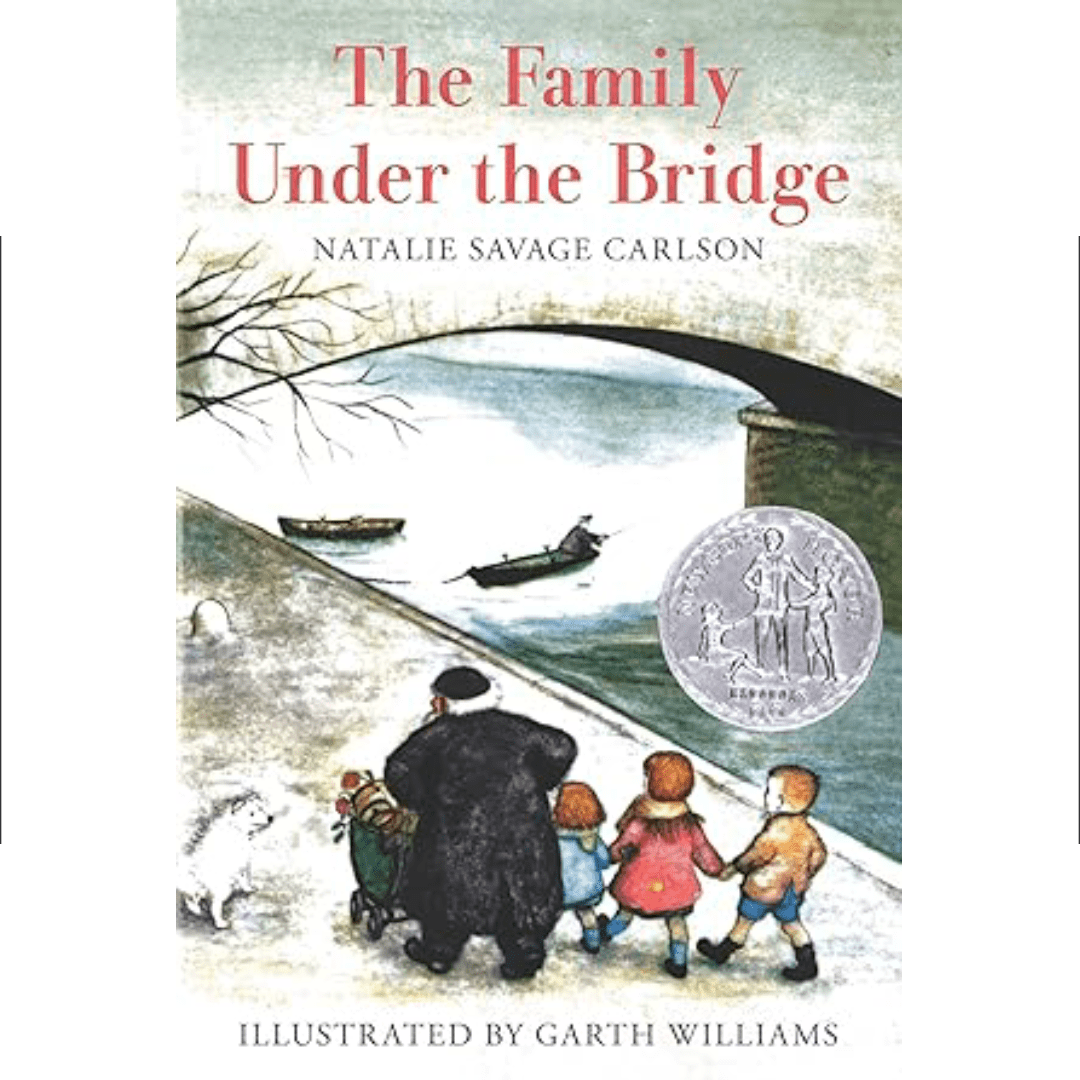
Children! Pah! Children were like starlings—witless, twittering, little pests. Besides, children meant homes and responsibilities and regular work and Armand was perfectly content living under a bridge in the city he loves more than anything else. But his perfect life changes when a gypsy woman grabs his arm and says, “You will meet with adventure today.” Then Armand meets three red-headed children, a shaggy dog that should have been white, and a proud mother determined to keep her family together. Oh, lá, lá! Adventure has certainly found Armand!

Recipient of the 1959 John Newbery Medal, The Family Under the Bridge is a charming, heartwarming story set against the backdrop of the picturesque and historic city of Paris. Natalie Savage Carlson’s story is brimming with the sights, sounds, and smells of one of the world’s most romantic cities and gives us a curmudgeon with a heart of gold through our reluctant hero, Armand Pouly. Despite his most valiant efforts, Armand opens his home and heart to this irresistible brood and becomes all the better for it.

The author sets her story during Christmas time, which is fitting as it is the season of hope, faith, and family. Family is a strong theme throughout Carlson’s book, as the children and their mother struggle against financial and social pressures to stay together. As the eldest child, Suzy, is always saying, “We’re a family and we have to stick together.” Themes of humility, kindness, and pride also permeate this lovely story as the children’s mother lets go of her pride to accept the help she greatly needs and Armand realizes that perhaps having your heart stolen by starlings isn’t such a bad thing after all.

Perhaps Armand himself sums it up best when he says, “It isn’t walls and furniture that make a home. It’s the family.” Armand always wanted adventure. Little did he know at the time that the family under the bridge would provide him with the adventure of a lifetime.

Rating: 5/5
The Wild Robot by Peter Brown

The Wild Robot

Peter Brown (J Fiction)

“Hello, I am ROZZUM 7134, but you may call me Roz. While my robotic systems are activating, I will tell you about myself.”

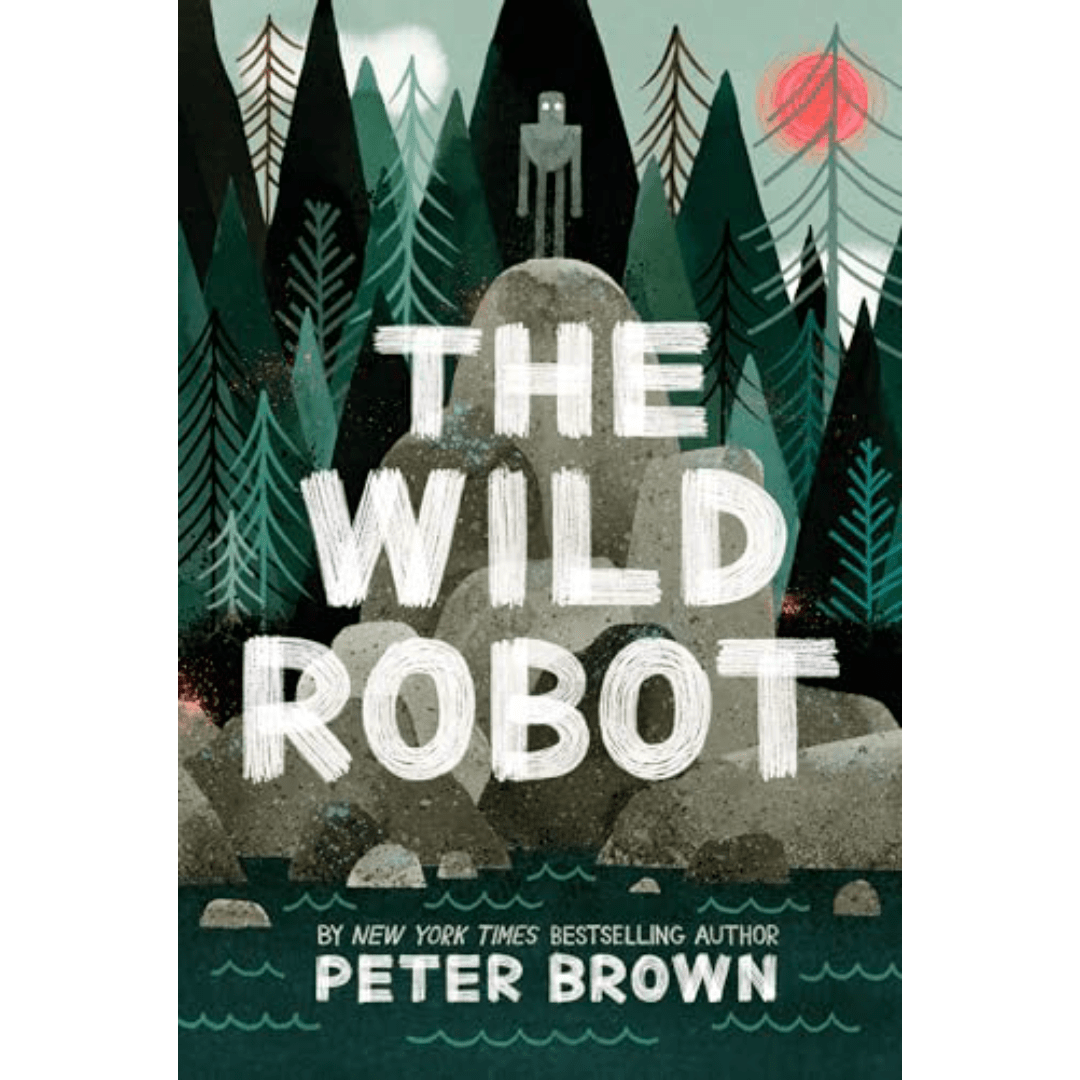
A robot named Roz is washed onto a remote island after a hurricane rips her cargo ship apart. The sole surviving robot, Roz is accidentally activated and soon begins exploring the unfamiliar habitat and its inhabitants. As days turn into weeks, Roz begins adapting to her strange environment by learning the language of her fellow occupants and starting to understand the importance of trust, honor, and friendship. When she inadvertently becomes the caregiver to an orphaned gosling, Roz’s world becomes even larger as she experiences the joy that comes with being a mother, and the heartbreak it bears when it’s time to let go.

A beautiful and heartwarming story of family, acceptance, and sacrifice. Brown’s storytelling is first-rate as he takes the reader on a journey of self-discovery, survival, and friendship. The heart of this story is the evolving relationship between Roz and her “son” Brightbill, the gosling she raises after a tragic accident robs him of his entire family. Roz receives some valuable advice from an old grey goose on how to act like a mother: provide food, water, and shelter; make him feel loved, but not TOO much; keep him safe; and teach him how to walk, talk, swim, fly, get along with the others, and look after himself.  “And that’s all there really is to motherhood.” Easy, right?

In addition to the countless lessons Brown teaches his readers throughout his book, The Wild Robot is a touching love letter to mothers everywhere. The happiness Roz feels when she sees her son making his first friend, the pride of seeing her son fly for the first time, the sadness of watching him fly south for the winter and the elation and relief and seeing him return, and the satisfaction of watching him go from an awkward gosling to a confident leader. Every single one of these instances are relatable to anyone who has raised a child and experienced all of the ups, downs, diagonals, and sideways that come from having the single most important and underrated job on the planet…being a mom.

The Wild Robot is a story that begins on the ocean and ends in the sky. What happens in between is an unforgettable lesson in selflessness, honor, courage, appreciating differences, finding your purpose, and the power of family. For a while, Brightbill struggles with having a robot for a mother, but after careful thought he finally says, “We’re a strange family, but I kind of like it that way,” to which Roz responded, “Me too.” Actor and activist Michael J. Fox once said, “Family is not an important thing, it’s everything.” And for a while, a robot named Roz had a family made up of fur, fins, scales, feathers, claws, flippers, talons, and teeth. Predators or prey, they all came together in the end to protect one of their own. That’s what a family does, because family is everything.

Rating: 5/5

Share The Wild Robot with your class with our study guide: https://www.teacherspayteachers.com/Product/Study-Guide-The-Wild-Robot-by-Peter-Brown-12986641

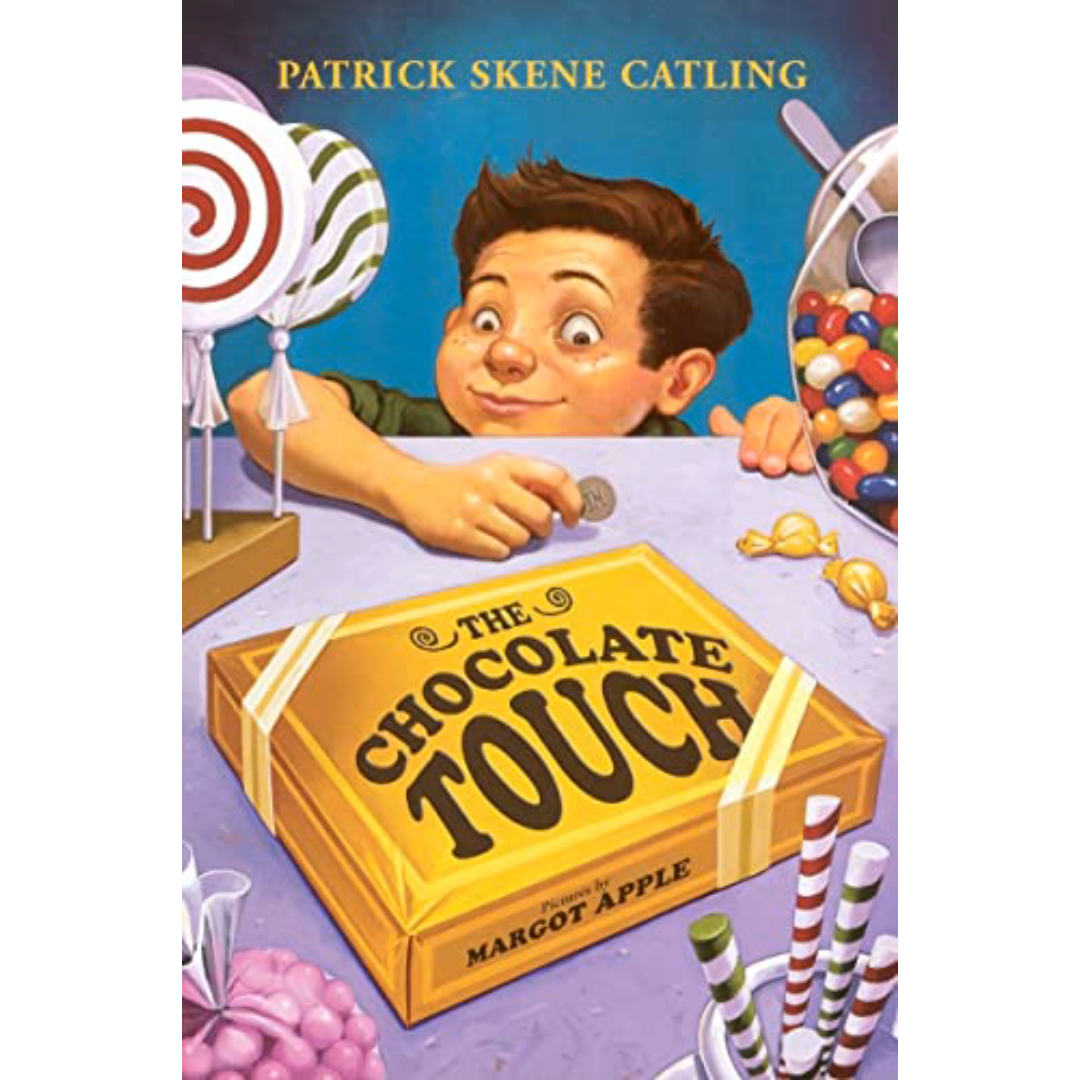
The Chocolate Touch by Patrick Skene Catling

Most of the time John Midas was a very nice boy. Every now and then, of course, he broke a rule…

The Chocolate Touch

Patrick Skene Catling (J Fiction)

Most of the time John Midas was a very nice boy. Every now and then, of course, he broke a rule…

John Midas loves candy. He especially loves chocolate. In fact, John is candy mad, but worse is that John doesn’t share. Not one little bit. Not with his parents or with his little sister or even with his best friend, Susan Buttercup. Yep. John was greedy and he’s about to learn a very bittersweet lesson when he finds a strange coin on the sidewalk. A coin that unlocks John’s secret wish of wanting to eat chocolate all day, every day. A coin that would have John questioning whether you CAN have too much of a good thing.

Patrick Skene Catling gives readers a cautionary twist of the classic tale of King Midas and his golden touch. In this story, a selfish and greedy boy is suddenly given the ability to turn anything that goes into his mouth to chocolate. Toothpaste, tonic, eggs, orange juice, and eggs are suddenly chocolatey treats that easily and willingly go down his throat—much to the delight of his overly concerned mother who thinks that John is finally making good food choices. But John soon realizes the downside of his powers when the things most precious to him fall victim to his chocolate touch.

The Chocolate Touch is an excellent read-aloud book ideal for either classroom discussion or a shared bedtime story. Valuable lessons such as being careful what you wish for and happiness is not always found through material gain will be recognized by readers who will most likely predict what will happen next as John continues his chocolate transformations. There are plenty of opportunities to talk about actions and consequences, accepting responsibility, and placing someone else’s needs above your own to make this a funny and effective learning tool.

Author Thomas Harris wrote, “Nothing makes us more vulnerable than loneliness except greed.” John realized this lesson as his greed began to isolate him and ultimately cost him his dignity, health, friends, and even his beloved mother. Lucky for him, a good dose of humility—which may have been more unappetizing to digest than his daily tonic—ultimately saves him from a life that even Willy Wonka may have declined.

Rating: 4/5

Bring The Chocolate Touch to your class with our study guide: https://www.teacherspayteachers.com/Product/Study-Guide-The-Chocolate-Touch-by-Patrick-Skene-Catling-12313062

By the Great Horn Spoon! by Sid Fleischman (J Historical Fiction)

By the Great Horn Spoon!

Sid Fleischman (J Historical Fiction)

Jack’s Aunt Arabella is about to lose their beloved home due to financial hardships so he, along with the family’s faithful butler Praiseworthy, stowaway on a sailing ship headed to California in hopes of striking it rich. Young Jack wants adventure, but is he ready to face the perilous sea, dangerous outlaws, and the back-breaking life of a prospector for the slim chance of finding gold? By the great horn spoon he is! And with his loyal butler by his side, he’s sure that there’s no problem they can’t solve, no scoundrel they can’t outwit, and no gold they can’t find.

By the Great Horn Spoon! is one of the best—if not the best—Gold Rush books for kids that I’ve come across. It’s a high-stakes thriller that’s packed with action, adventure, and plenty of twists to keep any reader engaged. At the center of it all are two of the unlikeliest prospectors to ever live between the covers of a book: a spunky yet naïve 12-year-old boy and a reserved, intelligent butler. Jack and Praiseworthy are the heart of this story and their relationship is one centered on trust, mutual adoration, and loyalty. Through their own personal growth, we see their bond strengthen and their relationship evolve from one of servant and master to father and son. What is most appealing are the virtues that Praiseworthy imparts on Jack: always keep your word, offer compassion whenever possible, and stand up for what you believe in.

The storyteller Aesop once wrote, “No act of kindness, no matter how small, is ever wasted” and Praiseworthy proves this time and time again. Whether he’s helping a prospector look his best for his new bride, defending a known criminal to help fulfill the wish of a dying friend, or protecting the honor of a young woman in Boston, our proper gentleman with his white gloves, reliable umbrella, and black bowler hat always seems to know the right thing to do and is there to reap the unexpected rewards of his actions.

Praiseworthy spends the entire book thinking himself unworthy of the affections of a certain miss back home because of his social status, but as his name suggests, this humble and mild man is truly worthy of praise and his generosity and kindness make him far richer than any amount of gold he might find.   

Rating: 5/5

Bring Jack and Praiseworthy to your class with our study guide: https://www.teacherspayteachers.com/Product/Study-Guide-By-the-Great-Horn-Spoon-by-Sid-Fleischman-12249210

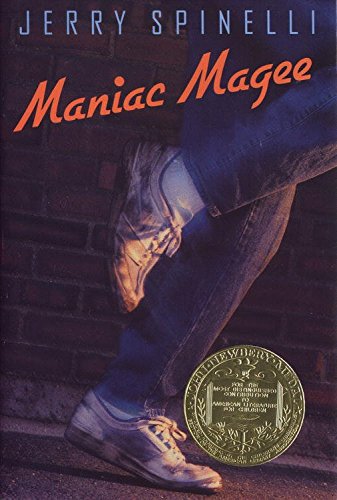
Maniac Magee by Jerry Spinelli (J Fiction)

They say Maniac Magee was born in a dump. They say his stomach was a cereal box and his heart a sofa spring. They say he kept an eight-inch cockroach on a leash and that rats stood guard over him while he slept. They say.

Maniac Magee

Jerry Spinelli (J Fiction)

They say Maniac Magee was born in a dump. They say his stomach was a cereal box and his heart a sofa spring. They say he kept an eight-inch cockroach on a leash and that rats stood guard over him while he slept. They say.

In a world where it’s hard to tell what’s real, slight exaggeration, or utter nonsense, one thing that’s undeniably true is that the boy known as Maniac is a straight-up legend. This scraggly orphan with the blown-out sneakers does more than just rescue Arnold Jones from Finsterwald’s backyard, runs along the steel rail of the railroad tracks, sleeps alongside a baby buffalo, and scores an inside-the-park homerun by bunting a frogball. No, sirree. This mythological marvel did what few would even think—nay—dare to do and that’s take on that foul and odious beast separating East End from West End in Two Mills, Pennsylvania. What beast would that be you ask? Racism.

It’s no wonder why Jerry Spinelli’s book received the highest honor in children’s literature—the John Newbery Medal. This heartwarming story of racial division, acceptance, family, and loyalty is as relevant and important today as it was when it was written in 1990. It tackles the ugliness and unfairness of racial prejudice head on with humor and heart and in a way that young readers can understand and absorb its important message of unity and understanding.

Maniac Magee tells the story of twelve-year-old Jeffrey Lionel “Maniac” Magee and his rise from runaway orphan to unforgettable legend. By performing impossible feats, he earns himself not only a spot in town folklore, but also in the hearts of just about everyone he meets. Yet despite his talents and charisma, there are still a few folks—on both sides of Hector Street—who have suffered so much pain and mistreatment in the past that they are unable to forgive, forget, and move on to face a different future.  

In his 1990 Boston Globe-Horn Book Award acceptance speech for Maniac Magee, Spinelli answered the question that so many of his fans and admirers have asked him over the years: “Were you Maniac?” And, in true Jerry Spinelli fashion, he responded, “I sure was. Weren’t we all?” Perhaps none of us will never experience the fame and notoriety of one Maniac Magee, but one thing’s for sure and that’s the world could certainly use a few more just like him right about now.

Rating: 5/5

NEW!! Want to share this book with your homeschooler or classroom? Download our study guide: https://www.teacherspayteachers.com/Product/Study-Guide-Maniac-Magee-by-Jerry-Spinelli-11348884

The Hundred Penny Box by Sharon Bell Mathis (J Fiction)

The Hundred Penny Box

Sharon Bell Mathis (J Fiction)

Michael loves counting the pennies in his great-great Aunt Dew’s old wooden box. There’s one hundred in total—each one representing a year of her life and more importantly, a memory. Aunt Dew may forget a lot of things, but she remembers every milestone that each penny represents, and Michael enjoys hearing her tell these stories over and over again. But Michael’s mother wants to get rid of the box. She says it’s old and gets underfoot. Aunt Dew has lost so much already, Michael can’t allow her to lose her beloved box as well. How can he make his mother understand its importance when all she sees is an ugly old box?

Recipient of the Newbery Honor Book award in 1976, The Hundred Penny Box is a compassionate and heartfelt book that depicts aging and caring for the aged in a realistic and thoughtful manner. It’s a moving, multi-generational story of a young boy and his beloved great-great aunt and the simple pleasures they share while counting old coins and reliving cherished memories. While their relationship is sweet, Mathis also depicts the challenges of caring for the elderly as she places all of the stress and anxiety of daily care squarely on the shoulders of Michael’s mother, Ruth. Readers will most certainly view her as the story’s villain and who can blame them when even Michael apologizes to Aunt Dew for his mother’s mean behavior.

At 47 pages—including the beautiful watercolor illustrations by Leo and Diane Dillon—this book is probably one of the shortest (if not the shortest) books to win a Newbery; however, its brevity should not be confused with simplicity for its complex themes of empathy, respect, compassion, and love make this a book that needs to be read slowly and savored. Author Tia Walker wrote, “To care for those who once cared for us is one of the highest honors.” The pennies in Aunt Dew’s box may have only added up to a dollar, but Aunt Dew was a woman whose warmth and faith made her a priceless treasure that no box could contain and whose worth could never be measured.

Rating: 5/5

NEW!! Want to share this book with your homeschooler or classroom? Download our FREE study guide: https://www.teacherspayteachers.com/Product/Study-Guide-The-Hundred-Penny-Box-by-Sharon-Bell-Mathis-11285435

The Mouse and the Motorcycle by Beverly Cleary (J Fiction)

The Mouse and the Motorcycle

Beverly Cleary (J Fiction)

Ralph is reckless. Ralph is impatient. Ralph is his mother’s greatest worry. Worst of all…RALPH IS BORED! He is a mouse yearning for excitement and danger, and he’s about to get it when young Keith Gridley and his family check into Room 215 at the Mountain View Inn—home to Ralph and his mouse family. When Ralph spies Keith’s beloved diecast motorcycle on the nightstand one day, Ralph HAS to ride it because that red beauty is his one-way ticket to adventure. It also starts a chain reaction that sees Ralph trapped in a wastebasket, narrowly escaping a vacuum cleaner, tangling with a pillowcase, inciting an excitable pooch, and braving the outdoors—all while trying to reclaim the lost motorcycle, win back the trust of a friend, and prove that he CAN be a responsible mouse.

Inspired by real-life events involving a spooky old hotel, a sick little boy, a set of miniature cars, and a little mouse caught in a garden bucket, Beverly Cleary gives young readers another timeless and unforgettable story—one full of heart and the importance of accountability, responsibility, selflessness, and friendship. At the story’s heart is an unlikely friendship between a young boy and a mouse who find commonality over their love of motorcycles. Through Keith, Ralph begins to understand that putting other’s needs first doesn’t mean sacrificing your own wants and in the long run, the benefits received are far richer and more rewarding than imagined.  

This is an ideal classroom or read-aloud book as the lessons learned are worth discovering and discussing. For a young reader to watch Ralph’s evolution from being self-indulgent and reckless to thoughtful and considerate is satisfying to witness and teaches that the only thing more important than being responsible is accepting accountability and making sure that a wrong is made right and trust is restored. British Prime Minister Winston Churchill once said, “The price of greatness is responsibility” and a young mouse with a thirst for speed shows us that greatness isn’t having a shiny red motorcycle, but having someone that believes in you and calls you friend.

Rating: 5/5

NEW!! Want to share this book with your homeschooler or classroom? Download our affordable study guide: https://www.teacherspayteachers.com/Product/Study-Guide-The-Mouse-and-the-Motorcycle-by-Beverly-Cleary-11217785

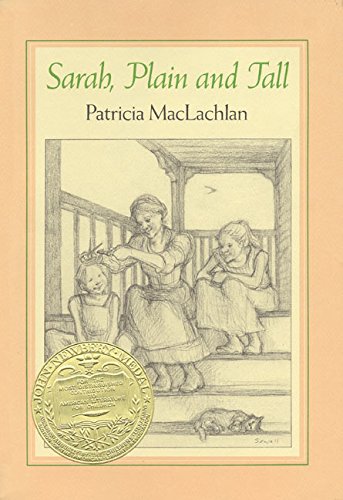
Sarah, Plain and Tall by Patricia MacLachlan (J Fiction)

Sarah, Plain and Tall

Patricia MacLachlan (J Fiction)

Sarah Wheaton is from Maine and loves the sea. She can braid hair, make stew, and bake bread, but would rather paint and build bookshelves. Her favorite colors are the colors of the sea: blue, gray, and green. She can keep a fire going at night, has a cat named Seal, and isn’t quite sure if she snores or not. Perhaps the most important thing to know about Sarah is that she’s traveling to the prairie to be a wife to Jacob Witting and a mother to his two children: Anna and Caleb. She’s coming and the children are hoping beyond hope that she won’t leave like their mother did so many years ago when she died soon after childbirth. Is it possible for Sarah—who loves the sea—to be happy with fields and grass and sky and nothing else? Can she make a home without her beloved blue and gray and green? After thirty days, they’ll know for sure.

Sarah, Plain and Tall is the first in a five-book series by Patricia MacLachlan and is one of the shortest books to ever win the Newbery Medal, which was awarded to MacLachlan in 1986. Based on a true story about the author’s ancestors, the book tells the story of an independent and stubborn woman from Maine who enters the home and lives of the Wittings. While the family introduces Sarah to haystacks, cow ponds, and lambs, she shares strange shells, tales of the sea, and a new word from Maine: ayuh meaning yes. Between her naiveté about farm life (she names the sheep and chickens) and her audacity to swim in the cow pond and wear overalls (have you ever heard of such a thing?), Sarah charms everyone around her and begins to heal a broken family.

MacLachlan takes readers back to the late 1800s with a timeless story about home and family set during a time when life was simple, struggles were many, and family meant everything. Through kindness, patience, and love, a plain and tall woman from Maine made the Witting’s house a home again by filling it with songs and treasures from the sea. So, was it possible for Sarah to be happy surrounded by fields and grass and sky and nothing else? Ayuh.

Rating: 5/5

NEW!! Want to share this book with your homeschooler or classroom? Download our affordable study guide by visiting https://www.teacherspayteachers.com/Product/Study-Guide-Sarah-Plain-and-Tall-by-Patricia-MacLachlan-11171286

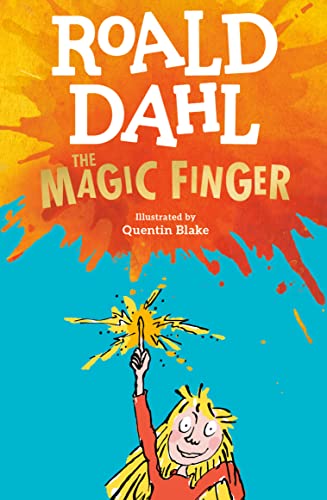
The Magic Finger by Roald Dahl (J Fantasy)

The Magic Finger

Roald Dahl (J Fantasy)

There was once an eight-year-old girl who lived next to Mr. and Mrs. Gregg and their two boys. The little girl enjoyed playing with the little boys and the little boys enjoyed playing with her. Everything was fine and dandy UNTIL the little girl discovered that Mr. Gregg and his boys liked to hunt. No, not just liked to hunt, but LOVED to hunt. They loved hunting more than anything else in the world, and THIS the little girl didn’t like. In fact, she disliked it so much that it made her turn red and hot all over. One Saturday, she saw them carrying a young deer out of the woods. Red, red, red. The next Saturday they carried out sixteen birds. Red, red, red, hot, hot, hot. The little girl got so cross, that she started to tingle and then… Well, that’s when the story really gets interesting because when the little girl gets red and hot and tingly all over, who knows what her magic finger is capable of.

Narrated by a nameless girl, The Magic Finger tells the story of a principled protagonist who directs her indignation at her offenders resulting in certain body parts turning into animal features: whiskers, tails, wings, the sky’s the limit when you choose to insult or anger this little lady! Although their punishment might seem severe, it’s hard to argue that they didn’t have it coming.

This is a delightful, cautionary tale told as only Roald Dahl can. The Magic Finger is a quick read that introduces us to a girl doing a rather wrong thing for the right (at least in her mind) reason. While some people have been known to wear their heart on their sleeve, she holds her angst in her finger and when you become the object of her displeasure, you better run, duck, and cover! But fear not for a happy ending is just a sincere apology and a promise kept away to ensure that everyone has learned their lesson, and our little girl is happy once again. But, for how long?

Rating: 5/5

* Book cover image attributed to: www.abebooks.com

NEW!! Want to share this book with your homeschooler or classroom? Download our affordable study guide by visiting https://www.teacherspayteachers.com/Product/Study-Guide-The-Magic-Finger-by-Roald-Dahl-11122038.

The Bears on Hemlock Mountain by Alice Dalgliesh (J Fiction)

There are no bears on Hemlock Mountain, no bears at all. There are no bears on Hemlock Mountain, no bears, no bears, no bears, no bears at all.

The Bears on Hemlock Mountain

Alice Dalgliesh (J Fiction)

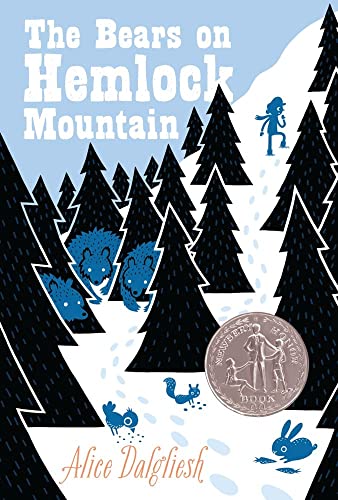
Everybody knows that there are no bears on Hemlock Mountain, no bears at all. There are no bears on Hemlock Mountain, no bears, no bears, no bears, no bears at all. Under this well-known belief, Jonathan’s mother sends him across the mountain alone to bring back an iron pot from his Aunt Emma. As Jonathan crunch, crunch, crunches his way across the snowy ground, he hopes upon all hope that there really ARE no bears on Hemlock Mountain because if there are, what would one, lonely eight-year-old boy possibly do?

Recipient of the Newbery Honor Book award in 1953, The Bears on Hemlock Mountain is a quick read full of fun, repetitive phrases such as crunch, crunch, crunch and tick-tock, tick-tock, which makes this an ideal read-aloud book. Helen Sewell’s pen and ink illustrations give the story a genuine folklore feel and wonderfully complements this story based on a Pennsylvanian tall tale. This book is recommended for readers ages 5 to 9 and grade levels 1 to 4.

The story of Jonathan’s journey to his aunt’s home and back teaches the importance having courage, facing your fears, and following through on your commitments. At the end of the book, there is an inference about a bear (or bears) being shot and killed, which is fairly unexpected as Dalgliesh takes great care in establishing Jonathan’s love of animals and the respect he has for them. This last-minute act of violence may be disturbing to sensitive readers.

While I was researching quotes about courage and perseverance to use in this review, I came upon one by Japanese author Haruki Murakami that perfectly encapsulates what happens to our young hero: “When you come out of a storm you won’t be the same person that walked in. That’s what the storm is all about.” Jonathan’s mother would have never let her young son make the trek across Hemlock Mountain if she was certain there were bears (or we would hope so). Jonathan himself was worried about bears, although he’s not fully convinced that there are any either. But when the time comes for Jonathan to face his fears, he’s rational and clever and, as a result, finds that the boy who went up the mountain is very, very different from the young man who returned home.

Rating: 5/5

* Book cover image attributed to: www.abebooks.com

NEW!! Want to discuss this book with your homeschooler or classroom? There’s a FREE study guide available. Visit www.teacherspayteachers.com/store/The-Dusty-Jacket and download your free copy today!