

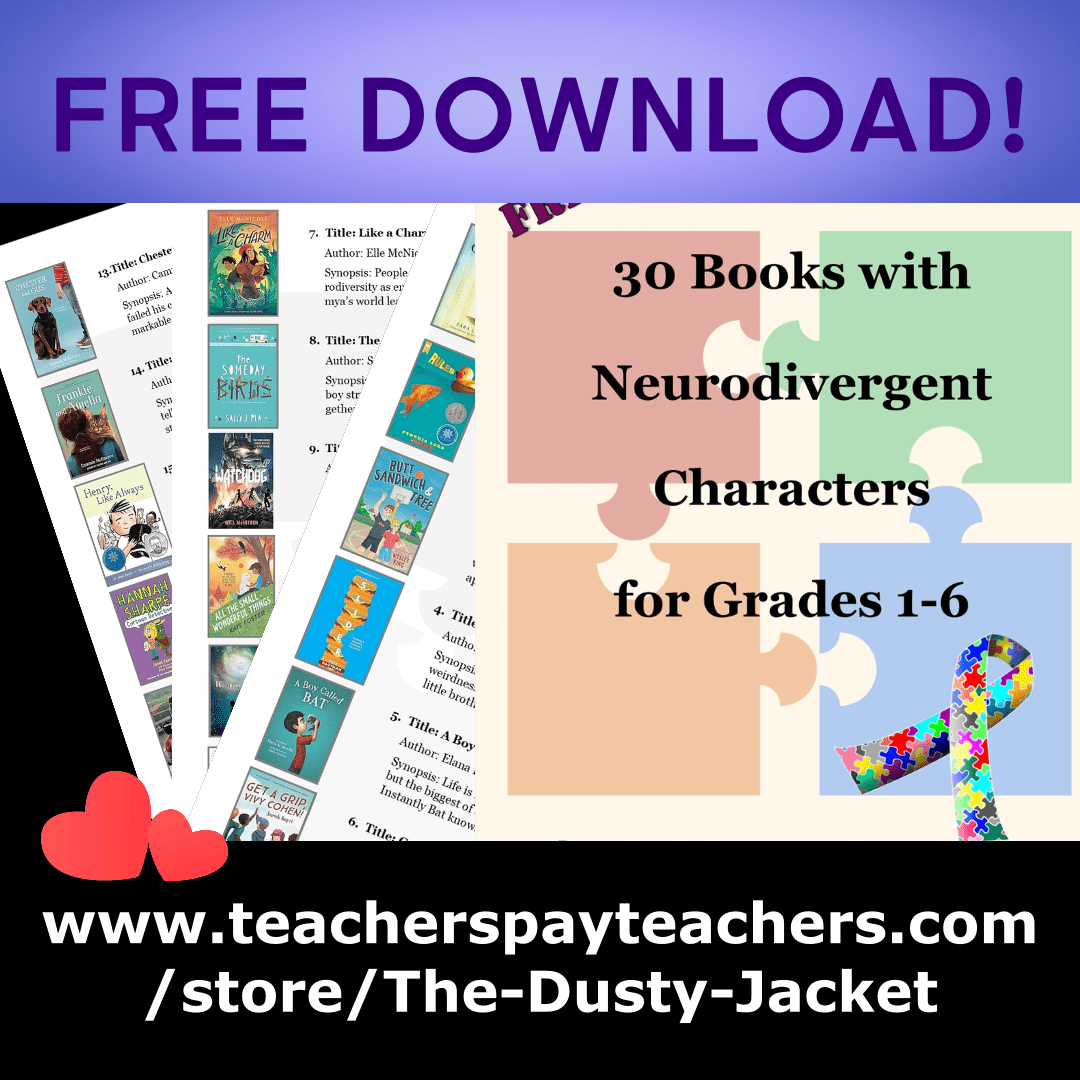
April is National Autism Acceptance Month. Promote acceptance and understanding of individuals with autism with your young learner with these books featuring neurodivergent characters. Different doesn’t mean less and these stories will inspire and educate about the importance of inclusion. Download your FREE copy today!
Tag: autism
Slug Days by Sara Leach (Juvenile Fiction)

Slug Days
Sara Leach (Juvenile Fiction)
Lauren has two kinds of days: slug days and butterfly days. Slug days are the worst and spent trying not to flip out, figuring out how other people are feeling, and so many other things that make Lauren feel slow and slimy. But butterfly days are the best! The days that she’s able to control her temper, friends want to play with her, and she gets ice cream with her mom. It’s not easy having Autism Spectrum Disorder. With so many rules, surprises, and changes, a butterfly day can quickly turn into a slug day with just a shove or a snicker. BUT a slug day can also turn into a butterfly day if you make your baby sister laugh or happen to meet the perfect friend.
Leach has over twenty years’ experience in education and has taught and worked closely with ASD students. Her knowledge of coping mechanisms and behavioral characteristics is evident in this thoughtful and touching story about a girl struggling to fit in and be understood. It’s a quick read filled with beautiful illustrations by Rebecca Bender that give life to Lauren and her world filled with uncertainty and unpredictability. Leach’s story also demonstrates the importance of a strong support system—one that ensures Lauren has the resources she needs at school and home to thrive. From calming erasers and rubber balls to a home safety plan, Slug Days shows us that it truly does take a village to ensure that these wonderfully unique individuals are included and succeed.
This book is targeted for readers ages 7 to 9, but slightly younger readers can also enjoy and benefit from this story. Slug Days is told from Lauren’s point of view and gives readers a peek into one of her weeks at home and school. This is not a how-to kind of book, but more of a hey-I-can-see-me-through-her story that allows neurodiverse individuals to connect with Lauren and relate to her everyday obstacles and triumphs. The book is also a great tool for introducing some important discussion points about how certain behaviors can be misinterpreted and what can be done differently. For example, Leach has Lauren engaging in a few instances of inappropriate physical contact such as touching, kissing, hugging, and playing with a classmate’s hair. These instances are innocent but are important to identify and remedy, especially in today’s social climate.
Author Drishti Bablani wrote, “There is a beauty in difference that only understanding reveals.” Recent CDC reports show that around 1 in 36 children in the U.S. has been identified with autism so books like Slug Days will continue to play an important part in increasing awareness and promoting understanding and inclusion. Now wouldn’t THAT be beautiful.
Rating: 5/5
* Book cover image attributed to: www.abebooks.com
We’re now posting videos of some of our book reviews! Follow us on Facebook at www.facebook.com/thedustyjacket or on Instagram @tdjreviews and join in on the fun!
A Boy Called Bat by Elana K. Arnold (Juvenile Fiction)
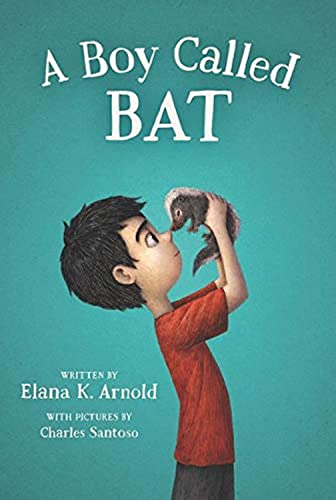
A Boy Called Bat (Bat Trilogy #1)
Elana K. Arnold (Juvenile Ficiton)
Bixby Alexander Tam, nicknamed Bat, has a long list of things he doesn’t like: unspoken rules, people rumpling his hair, eating leftovers, food smashed together, cheese that has to be sliced, loud sounds, and waiting. But one thing that Bat DOES like is the orphaned newborn skunk that his veterinarian mother brings home one day. Although it’s hard for Bat to connect with people, he forms an instant bond with the kit and silently promises the animal that he will figure out a way to keep him. With the help of his third-grade teacher, Bat forms a plan that’s sure to make the baby skunk a permanent member of the Tam family. Afterall, Bat made a promise and he never lies. Lying makes him feel itchy…another thing that Bat doesn’t like.
A Boy Called Bat is the first in a series of three books in the Bat Trilogy. Written with candor and warmth, Arnold gives young readers a story of a boy on the autism spectrum who struggles to regulate his emotions, understand non-verbal social cues, navigate unexpected circumstances, and just adjust to life in general. We wince as we watch Bat say things without thinking, misread body language, and overreact to situations that all end in awkward and painful outcomes. Arnold accurately captures the nuances that are associated with the autism spectrum such as dealing with the subtleties of sarcasm or taking idioms literally. Spoken language along with unspoken facial cues and body gestures are just everyday landmines that Bat has to constantly tiptoe around with one wrong step spelling disaster.
Although I am a sucker when it comes to brother-and-sister relationships that are all cuddles and kisses and unicorn wishes, I did appreciate Arnold portraying Bat’s sister Janie realistically. She often loses her temper with Bat, she knows exactly what buttons to push when she wants a reaction out of him (and she DOES push), and yes, she thinks he’s weird. But Janie’s human and you really can’t fault her for wanting a predictable trip out or just ONE boring dinner with no drama. Yes, she’s a stinker because she knows better than anyone else how many things are out of Bat’s control, but I think that’s why I like her so much. She’s every sibling out there who assumes the dual roles of defender and detractor and it’s rewarding and exhausting at the same time. For every Bat, there’s one or two Janies and they deserve attention, patience, and understanding as well.
I think my favorite part of the book was how Bat viewed his mom: “Then he followed Mom through the door that separated the waiting room from the back and watched as she took her white coat from its hook. She put it on, and then Mom was Dr. Tam. A veterinarian. Better than a superhero.” Valerie Tam wasn’t a superhero because she was able to make sick animals well. She was extraordinary because she championed and believed in a boy who thought himself to be less than perfect. Parents of neurodiverse children put on a cape every single day—not because they want to, but because they have to because they know exactly who they’re fighting for and what they’re fighting against and they won’t ever, ever give up. Take that, Superman.
Rating: 5/5
* Book cover image attributed to: www.abebooks.com
We’re now posting videos of some of our book reviews! Follow us on Facebook at www.facebook.com/thedustyjacket or on Instagram @tdjreviews and join in on the fun!
A Corner of the Universe by Ann M. Martin (YA)
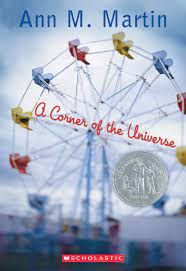
A Corner of the Universe
Ann M. Martin (YA Fiction)
Hattie Owen lives in the third largest house in the small town of Millerton. Her grandparents live in the second largest. But unlike her Nana and Papa’s house, Hattie’s house isn’t filled with fancy furniture. It’s filled with boarders. Hattie doesn’t mind living with people who aren’t her family. What she does mind is living with secrets—one big secret especially. Hattie is about to find out that her mother has a younger brother, which means that she has another uncle. An uncle who, until recently, had been attending a “school” for the mentally disabled, but will now be moving back to Millerton to live with Nana and Papa. Even though Hattie’s Uncle Adam is family, she realizes that she knows more about her parents’ boarders than her own flesh and blood, which begs the question, “If a person is kept a secret, is he real?” Hattie Owen is about to find out.
A 2003 Newbery Honor book, A Corner of the Universe covers so many complex and complicated topics, it’s really difficult to choose where to begin. Based on events in her own life, Ann M. Martin explores mental illness and the effects it has on both the individual and those around them. Twenty-year-old Adam Mercer, displaying symptoms of autism and schizophrenia, is seen as quirky, unpredictable, temperamental, and largely high-spirited by his twelve-year-old niece. However, as is the case with diseases of the brain, it only takes a minor deviation from a structured routine or an ill-delivered repudiation or rejection to set off a downward spiral of uncontrollable outbursts and dangerous reactions. Through Hattie’s lens, Adam is a person being denied fun and freedom by her controlling and rigid grandmother. Through Nana’s eyes, Adam is a child who requires constant supervision and well-defined boundaries. In reality, Adam is a little of both.
A Corner of the Universe is recommended for grades 5-8, and I certainly would not recommend this book to any reader younger than this. With topics of mental illness and suicide, as well as a few sexually implicit situations and some mild profanity, this is clearly meant for young adult readers—although the themes of acceptance, tolerance, inclusion, and kindness transcend all age groups. Martin gives us a perfect look into an imperfect world and shows us the devastation of living with guilt and regret, as well as the unintended consequences that follow seemingly good yet naïve intentions.
Hattie often said that she and her Uncle Adam had a lot in common. That they both felt like outsiders—always on the outside looking in. Hattie once told her uncle that she felt like she was a visiting alien to which Adam replied, “And aliens don’t belong anywhere except in their own little corners of the universe.” Sadly, it’s so easy to misjudge people who don’t fit into a preconceived category or check a certain box. What’s even sadder is the ease with which we tend to discount these same people—forgetting that they too have thoughts, feelings, hopes, and dreams. Although both Hattie and Adam often felt unwanted and out of place, both were able to find an unexpected friend in one another and for a brief moment, they were able to turn their corner of the universe into a very accepting, forgiving, and happy place.
Rating: 5/5
*Book cover image attributed to www.amazon.com
**Want more? Visit our Facebook page at www.facebook.com/thedustyjacket
Memoirs of an Imaginary Friend by Matthew Dicks
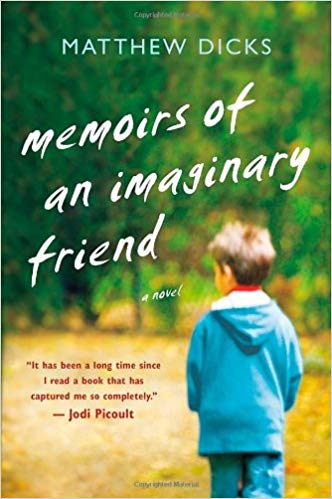
Memoirs of an Imaginary Friend
Matthew Dicks (Adult Fiction)
Max Delaney is eight years old, in the third grade, and likes rules. In fact, he likes lots and lots of rules. Rules like bedtime is at 8:30 p.m. (no sooner and no later) and no breakfast after 9:00 a.m. or only wearing seven pieces of clothing at one time (not counting shoes). This is who Max is and this is his world and nobody knows this world better than Budo—Max’s imaginary friend. Budo knows Max inside and out. He talks to him, plays with him, and watches him every night before he goes to sleep. Budo is Max’s best friend and as long as Max thinks Budo is real, Budo won’t disappear and NOT disappearing is very important to Budo. But when Max doesn’t come home from school one day, Budo is forced to decide between Max’s freedom and his own possible extinction.
Memoirs of an Imaginary Friend is narrated by Budo who invites us to share his life with an extraordinary little boy with autism. According to the Center for Disease Control, approximately 1 in 59 children was diagnosed with an autism spectrum disorder (ASD) in 2018, so it is very likely that you (like me) know someone with autism. Dicks’s description of Max and his habits, daily activities, and mannerisms are meticulously detailed and painfully accurate. Those familiar with autism know all too well the helplessness that Max’s parents experience on a daily basis. Their never-ending quest for “normalcy” only adds to their compounded stress while their desire to connect with their child is heartbreaking in its futility.
Dicks just doesn’t deliver an accurate portrayal of a child who, as Budo says, “…doesn’t live on the outside. Max is all inside.”, but he also gives us a book of devotion and friendship. It’s a story about putting someone else’s wants and needs above your own; about doing what is right versus what is expedient; and about finding that inner strength that you never knew you possessed. Budo often said that Max was the bravest little boy in the world: “Max is not like any other person in the whole world. Kids make fun of him because he is different. His mom tries to change him into a different boy and his dad tries to treat him like he is someone else. Even his teachers treat him differently, and not always nicely. With all that, Max still gets out of bed every morning and goes to school and the park and the bus stop and even the kitchen table. But you have to be the bravest person in the world to go out every day, being yourself when no one likes who you are.”
This novel successfully checks all the boxes: suspenseful, emotional, insightful, compelling, humorous, heartwarming, chilling, and simply unforgettable. Max and Budo will stay in your heart and mind long after you’ve read the last page. People often said that Max couldn’t see the forest for the trees, as people with autism generally hone in on the small details without seeing the overall bigger picture. Perhaps Max can’t see the forest for the trees, but he does see the blade of grass and the rock and the ladybug and the clover and perhaps that alone is something to be celebrated and appreciated.
Rating: 5/5
*Book cover image attributed to www.amazon.com
 The Dusty Jacket