

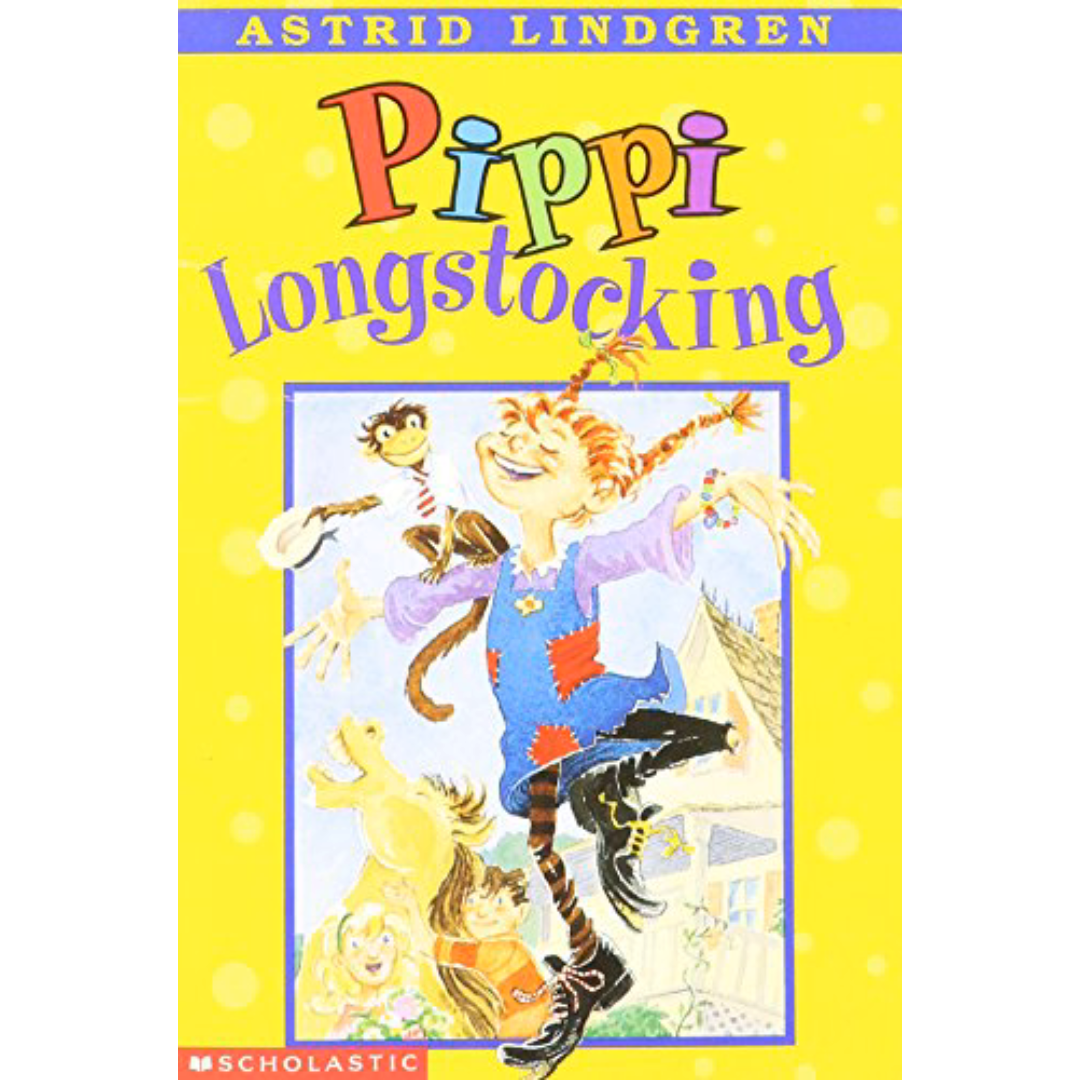
Pippi Longstocking
Astrid Lindgren (J Fiction)
Way out at the end of a tiny little town was an old overgrown garden, and in the garden was an old house, and in the house lived Pippi Longstocking.
Whether she’s waving hello to her mother in heaven or waving goodbye to the sailors on her late father’s boat, Pippi Longstocking always says the same thing: “Don’t you worry about me. I’ll always come out on top.” And if you knew Pippi Longstocking the way her friends and the people of her little town did, you’d know that she does just that. From finding things in odd places and putting a bully in his place to engaging policemen in a friendly game of tag and teaching would-be burglars the schottische, you can count on the girl with the mismatched stockings, wild hair, and too-big shoes to turn any outing into an unforgettable adventure.
Move over Hermione Granger, Anne Shirley, and Jo March! When you talk about feisty, fearless, pragmatic, precocious, brave, boisterous, and benevolent female characters, there’s none that ranks higher than Astrid Lindgren’s red-headed heroine. Although her forthrightness is often mistaken for rudeness and her lack of respect for authority is merely an absence of parenting, our nine-year-old orphan is fair, just, and generous. Raised for the most part by sailors, Pippi says what she means and means what she says and looks beyond social, political, and economic status to treat all people equally. One would be hard pressed to find a more loyal friend whose sincere kindness and desire to behave make her penchant for exaggerating and interrupting forgivable.
Written in 1950, this classic hasn’t aged as well as most other children’s books of this era. With a mention of animal abuse (Pippi nonchalantly breaks off the horns of a bull), child endangerment (a nine-year-old left alone to fend for herself), a total lack of respect for rules or authority, and a small matter of Pippi firing two pistols into the air (need to make sure they’re not loaded!) before handing them over to her friends as gifts, it’s easy to understand how Pippi Longstocking might not be viewed as the spirited and light-hearted adventure story that Lindgren intended. Critics may view young Pippi as nothing more than a rude, troublemaking liar who holds no respect for herself or others, but fans know that beneath Pippi’s brash exterior is a heart of gold and a genuine desire to do right.
One of my favorite quotes about celebrating differences is from author and speaker John Mason who said, “You were born an original. Don’t die a copy.” Hate, love, fear, or admire her, Pippi Longstocking is here to stay and her neverending optimism, graciousness, and fearless zest for life are things we should all aspire to.
Share Pippi with your class with our study guide: https://www.teacherspayteachers.com/Product/Study-Guide-Pippi-Longstocking-by-Astrid-Lindgren-12389118

 The Dusty Jacket